Who owns the city's computers?
Amsterdam has a ten-year plan to move off foreign clouds, starting with 30% European cloud services by 2030. The Netherlands is designing an open-source government cloud; Switzerland is building its own for CHF 319 million, before migration costs. London's policing office turned down a Palantir contract the Met had proposed. What cities are doing about dependence on a few suppliers, what it costs, and how far they have got.
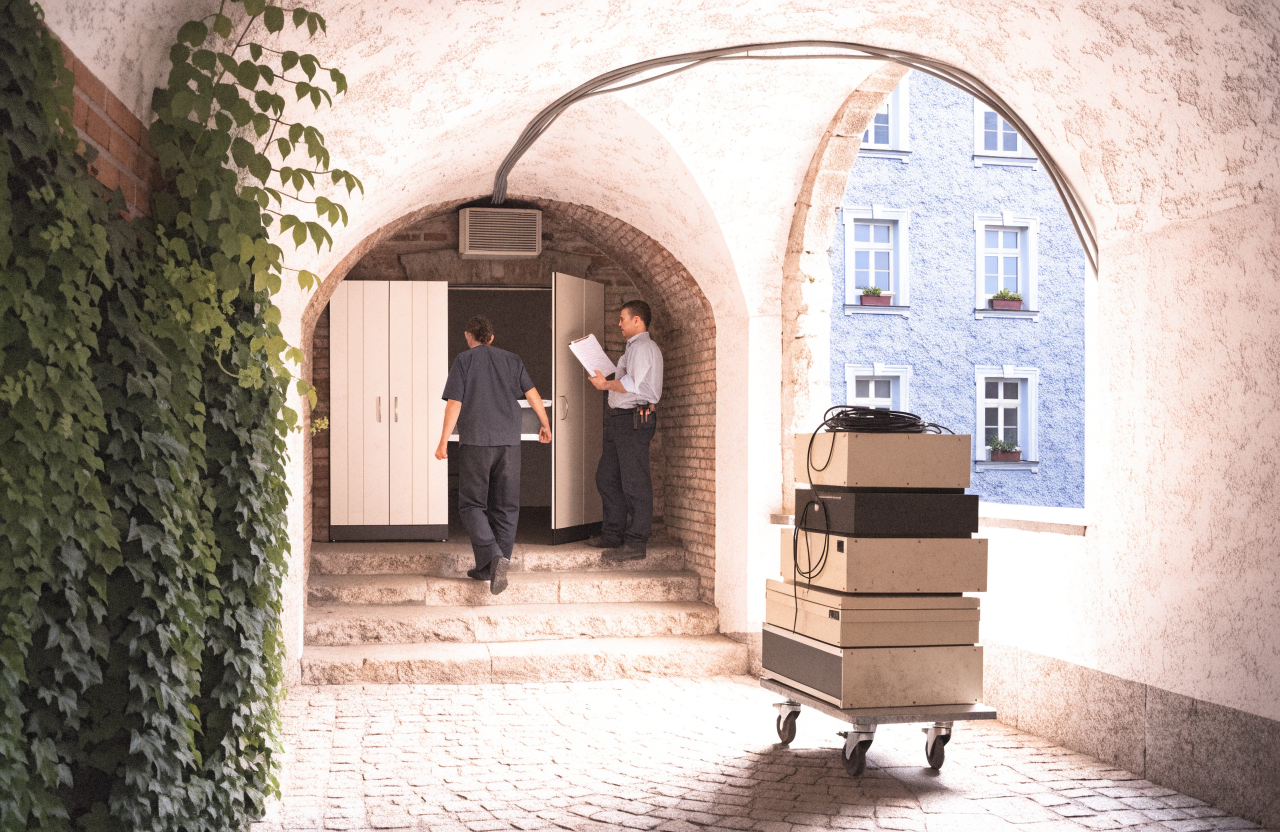
The contract London did not sign
The Metropolitan Police proposed a contract for what it calls Unified Operational Analytics. In May 2026 the Mayor’s Office for Policing and Crime (MOPAC), which examines the Met’s spending proposals, decided not to enter it. MOPAC and the software company Palantir ended up in High Court proceedings.
On 14 October 2026 MOPAC said those proceedings had been resolved and that both sides had withdrawn the allegations they had made against each other. Its statement also set out what the decision had not been about.

MOPAC’s decision in May 2026 not to enter a UOA Contract in response to the Metropolitan Police Service’s (MPS’s) initial proposal was not based on Palantir’s values or ethics or any wider reporting about the company.What it was based on, MOPAC says, was its statutory job: testing a spending proposal against the law and the guidance on procurement, governance, affordability and value for money, with the information it had at the time. It has never had a policy of not contracting with Palantir. The analytics services are being procured again, and every software company, Palantir included, is free to bid. The Mayor added that London’s public services must be able to use modern technology, as long as every procurement is lawful, fair, transparent and good value.
So a decision that drew press attention was, by the buyer’s own account, a value-for-money test. Hold on to that. Across Europe, cities and states are now asking which suppliers they can afford to depend on, and the tools they reach for are the same: a budget line, a buying rule, a contract that can be left. The timeline shows how fast the subject moved from council motions to money.
- 28 Mar 2024[source]
Amsterdam’s council asks for independence
The council unanimously backs a proposal to make the city less dependent on big technology companies.
- Dec 2024[source]
Swiss Parliament funds a government cloud
A commitment credit of CHF 246.9 million for the Swiss Government Cloud.
- 20 Jan 2026[source]
Amsterdam adopts a ten-year strategy
Digital autonomy becomes a core value; at least 30% of cloud storage and applications from Dutch or European suppliers by 2030.
- May 2026[source]
London declines a police analytics contract
MOPAC decides not to enter the contract the Met had proposed.
- 1 Jul 2026[source]
The Dutch cabinet chooses a sovereign cloud
An open-source design under central control, tested as a proof of concept.
- 14 Oct 2026[source]
London settles and buys again
MOPAC and Palantir resolve their High Court proceedings; the contract is re-procured, open to all bidders.
The decisions this read follows, in date order. Most are plans, tests or reviews; none reports a finished move away from a supplier.
None of these is a finished migration. Together they put one question to every city: how can it choose at all, when the systems it runs on were chosen years ago, one contract at a time?
Amsterdam gives itself ten years
Ask Amsterdam where its software lives and the honest answer is: in about 1,300 places. That is how many software-as-a-service applications the city uses, each running with its own supplier, and nearly 80% of its applications are bought this way. Its own developers build on Microsoft Azure, its staff work in Microsoft 365, and the city no longer has any data centres of its own.
In March 2024 the city council asked, unanimously, for less dependence on big technology companies. The answer is the Meerjarenstrategie Digitale Autonomie, adopted by the mayor and aldermen on 20 January 2026. Following the Dutch association of municipalities, it names three risks: services that stop if a foreign cloud is switched off under political pressure, residents’ data within reach of other countries’ laws, and contracts too hard to leave. The plan is careful to say this is not about poor work by today’s suppliers. It is about keeping the choice.
Because the far end is hard to see, the plan works in three phases. Read the timeline from now to the horizon, and notice how the targets loosen as they get further away.
- 2026–2027[source]
Phase 1: the basics and six pilots
List the critical processes (due 2026), classify the sensitive data (due 2027) and buy by a new rule: reuse before buy before build.
- 2027–2028[source]
Many contracts run out
The plan wants its buyers trained before they do.
- By 2030[source]
Phase 2: 30% autonomous
At least 30% of cloud storage and applications from Dutch or European suppliers, the national strategy’s ambition too, and every business-critical process on Dutch or European platforms.
- 2035 and after[source]
Phase 3: as autonomous as possible
All critical processes and sensitive data on a fully autonomous cloud with no technical or legal access for outsiders. How, the plan says, can hardly be predicted yet.
Phases and targets as set in the strategy adopted on 20 January 2026. Phase 2 covers the 2026–2030 term of the city’s new executive.
The price is the part the plan is least sure of. Deloitte was asked to cost five large systems: the office workplace, the Azure cloud, and the systems for benefits, finance and contact with residents. They cost about €41 million to run in 2026, out of total IT spending of about €240 million. Making them autonomous would cost about €24 million more over ten years. The plan calls this a rough indication, and its own yearly averages for the same estimate do not agree with each other.
The first phase is priced line by line, at €3.2 million to €4.5 million. The chart sets its parts against each other; look at which one costs most.
Phase 1 (2026, partly 2027), upper end of each estimate. Most lines depend on money from the city’s new executive. Source: Gemeente Amsterdam, Meerjarenstrategie Digitale Autonomie 2026–2035 (adopted 20 Jan 2026)
The costliest test tries to move one application onto Logius, the Dutch state’s own cloud platform, which the law currently reserves for central government; the city hopes a trial fits within the rules. NextCloud, an open-source office suite, would be tried by a group of staff alongside Microsoft’s.
Then the plan admits what it cannot know. Some steps towards autonomy will first look like steps back, as data moves into Microsoft’s cloud before the whole can move out. And a supplier can change hands: the plan cites the possible takeover of Solvinity, the city’s brand-new public-cloud provider, as proof that even a Dutch company can be bought from outside the EU. Funding was left to the next city executive. In their coalition agreement for 2026–2030, PRO Amsterdam and D66 promised money for the strategy and repeated its target for 2030. A city can plan its exit. It still needs somewhere to go.
Building a government cloud
Amsterdam’s plan leans on a cloud that does not exist yet. On 1 July 2026 the Dutch state secretary for the interior told parliament where it stood. On cloud technology, the letter says, government is in a situation that is “no longer tenable”. After an open dialogue with the market from November 2025 to January 2026 and a study of scenarios with Gartner, the cabinet chose the most sovereign route: a new government cloud under central control, housed where possible in the state’s own data centres, so that government holds the hardware, physical access and location in practice and in law.
Its first design is a container platform that meets Haven, the standard Amsterdam’s own plan names for keeping applications portable, and it is built on open source so that no single supplier holds the keys. A proof of concept has started. If it goes well, the first applications could run on the sovereign cloud by the end of 2026 at the latest, and the design is to be published so that others can use it and add to it. How it will be paid for is left to the next phase. The letter is plain that it works only if enough of government brings its infrastructure budgets with it.
Switzerland is further along and has put a number on it. The federal government’s current cloud, Atlantica, is ageing. In December 2024 Parliament approved a commitment credit of CHF 246.9 million for a Swiss Government Cloud, to be built between 2025 and 2032 at a planned cost of CHF 319.4 million. In October 2025 the Swiss Federal Audit Office reviewed its business case. The chart sets the two figures side by side; the caption says what neither contains.
The costs of using the cloud services and of migrating applications are not included in either figure. The federal offices that use the cloud pay them. Source: Swiss Federal Audit Office, Swiss Government Cloud audit CDF-25155 (10 Oct 2025)
The auditors’ findings read like a list of questions any city should ask before it builds. The economic benefit for the federal administration as a whole had not yet been shown; the programme planned to calculate it in 2026. Using the new cloud will not be compulsory, and the offices expected to use it have not committed to how much. Migration, planned for 2027 to 2030, is staffed and paid for by those same offices, and the programme rightly counts it among its biggest risks. The administration was also still working on a general definition of digital sovereignty.
What does this mean for a city that cannot build its own? Amsterdam has ruled out a new data centre; at most it would bring server rooms in its own buildings back into use. Its route is to join. It calls this the peloton: the big cities take turns at the front so the others can shelter behind them. For most cities, then, the thing to watch is the national design and the standard it speaks.
Open source as city policy
By 2032 Berlin wants 70% of the software on its standard office workstation to be open source. Its open-source strategy, which the state parliament asked for, sets a target for nearly every year until then: every application assessed for digital sovereignty by 2027, half of the proprietary products checked for open-source substitutes by 2029, and by 2031 at least half of annual software spending going on open-source software or services. ITDZ, the state’s own IT provider, is to become its open-source programme office.

What has actually happened is in Berlin’s progress report to the parliament’s main committee, at the end of 2025. A multi-cloud strategy was finished that year and endorsed unanimously by the digital cabinet in October, with a Senate decision planned for early 2026. The project to build a cloud competence centre at ITDZ ended on schedule, the first usable cloud services were due in 2026, and the budget line rose from €282,500 to €1,575,000. The Data Hub, an open-source urban data platform, came out of its pilot with a plan for regular operation. The same report lists a new Microsoft-based directory service for the state’s IT. A strategy does not unplug old dependencies overnight.
Barcelona got there earlier. Its Digital City Plan 2023–2027 puts technological sovereignty first: new software open source by default, proprietary software to be justified, and contracts with clauses on data ownership and portability. Its sensors report through Sentilo, an open-source platform. The thinking behind that turn, from Evgeny Morozov and Francesca Bria, is discussed in After the pilot.
Copenhagen’s strategy for 2026–2027 reaches the same place from the other end. With about 50,000 IT users and 100,000 devices, the city wants “digital freedom of action”: fewer critical dependencies, more European suppliers, and a plan built on its own 2025 analysis of its reliance on the tech giants. Berlin’s data governance principles and the Open Urban Platform reference architecture add the shared rules and a common blueprint. The matrix sets four cities against four steps, from a plan to something running; read down the last column.
Every city has a plan. Far fewer have moved anything: the only cell marked running is Barcelona’s sensor platform.
For smaller cities, shared code is the route. Amsterdam has rewritten its buying rule so that collective reuse comes first. Prague runs its data platform, Golemio, through a municipal company and publishes the source code. A town of thirty thousand will not write its own cloud. It can run what Berlin, Prague or the Dutch state publish, if someone in the town hall knows how to buy it.
Buying differently
Amsterdam’s shared office files show where sovereignty is really decided. Its Microsoft contract includes 226 TB of storage for group documents; the city already holds about 310 TB, and the difference is bought from Microsoft as well. The plan notes that the extra could just as well come from a Dutch or European supplier. Nothing needs inventing for that. It needs a buyer who asks.
Asking well is harder than it sounds. In 2024 the Ada Lovelace Institute read the 16 pieces of guidance, law and policy that English councils have when they buy AI and data-driven systems. It found no clear account of how to buy them in the public interest. There were 14 different terms for fairness, eight for transparency and more than fifty for public benefit, used loosely and sometimes interchangeably, in negotiations marked by an imbalance of expertise between companies and under-resourced councils. Its advice includes open standards and royalty-free licences, so a council can turn to another supplier later.

Switzerland’s cloud shows the same craft at national scale: framework contracts paid for by use, with volumes estimated from the needs of cantons and communes but not binding on the offices that will use them. London’s decision was, in MOPAC’s telling, a buyer applying value-for-money tests.
Residents, asked directly, seem to reward working institutions more than clever technology. The 2026 IMD Smart City Index surveys residents of 148 cities. Across them, how people rate a city’s structures predicts its overall score better than how they rate its technology, and almost every city in the bottom twenty scores higher on technology than on structures. The dot plot places this read’s cities in that ranking; lower is better.
IMD Smart City Index 2026: ranks among 148 cities, built from residents’ survey answers about their city’s structures and its technology; a shorter bar is a better rank. It measures satisfaction, not software policy. Source: IMD World Competitiveness Center, Smart City Index 2026
Barcelona, whose sovereignty agenda is widely cited abroad, sits far below Zurich and Copenhagen. The ranking says nothing about any one contract. It does say that what residents notice is whether institutions work, and buying well is one of the things institutions do.
Sovereignty, then, is mostly a procurement skill: knowing which contracts expire when, writing exit and portability clauses, asking for open standards and buying with others. Amsterdam is spending €150,000 in 2026 on training and advice for exactly that, because so many of its contracts run out in 2027 and 2028.
Start with a peer
No city in this read has finished, which makes the early movers easier to call: they are still working it out. Who to ring depends on the step you are on.
- A plan with phases and a price: Amsterdam, whose strategy costs every pilot and names the years its contracts run out.
- A cloud to join rather than build: the Dutch sovereign cloud design, which is to be published for others to use, and the Swiss audit, for the costs a business case leaves out.
- Open code: Berlin’s open-source programme office at ITDZ, Prague’s Golemio and Barcelona’s Sentilo, each run by the city or its own company.
- Buying: Amsterdam’s procurement pilot with the Digital Autonomy Competence Centre, and the Ada Lovelace Institute’s practical steps for councils.
Urban Tech Map is built to make those calls easier: it maps who runs what and connects cities facing the same problem. Shared standards and platforms are gathered under Open Data, Standards & Interoperability; joint procurement and open-source partnerships under City Networks, Procurement & Innovation. If your city is drafting its own exit plan, or has already moved something, say so on the participate page, so the next city knows whom to call.
References
From our libraries15
- Statement: MOPAC and Palantir (Mayor's Office for Policing and Crime, 14 October 2026) — Knowledge
- Meerjarenstrategie Digitale Autonomie 2026–2035 — Knowledge
- Jouw stad is mijn stad. Coalitieakkoord 2026–2030 PRO Amsterdam en D66 Amsterdam — Knowledge
- Kamerbrief stand van zaken verkenning soevereine overheidscloud (Kamerstuk 26643 nr. 1537, 1 juli 2026) — Knowledge
- Prüfung des Schlüsselprojekts Swiss Government Cloud mit Schwerpunkt Business Case (Eidgenössische Finanzkontrolle, CDF-25155, 10 October 2025) — Knowledge
- Open Source Strategy for the State of Berlin (Secondary Source) — Knowledge
- 7. Umsetzungsbericht E-Government-Gesetz Berlin und IKT-Zukunftsbericht (Bericht des Regierenden Bürgermeisters an den Hauptausschuss, rote Nummer 0400 J) — Knowledge
- Barcelona Digital City Plan 2023-2027 — Knowledge
- Sentilo — Barcelona IoT Platform — Project
- Digitaliseringsstrategi 2026–2027: Mennesker først. Fælles retning. Stærkere fundament. — Knowledge
- Berlin Data Governance Framework: Principles for Municipal Data Use — Knowledge
- Referenzarchitekturmodell Offene Urbane Plattform (OUP) — Knowledge
- Golemio – Prague Data Platform — Knowledge
- Buying AI: Is the public sector equipped to procure technology in the public interest? — Knowledge
- 2026 IMD Smart City Index: The quest for trust and transparency — Knowledge
Further sources8
- Mayor’s Office for Policing and Crime (MOPAC), statement of 14 October 2026 — Mayor’s Office for Policing and Crime (MOPAC), statement of 14 October 2026
- Gemeente Amsterdam, Meerjarenstrategie Digitale Autonomie 2026–2035 (adopted 20 Jan 2026) — Gemeente Amsterdam, Meerjarenstrategie Digitale Autonomie 2026–2035 (adopted 20 Jan 2026) · 28 Mar 2024
- Swiss Federal Audit Office, Swiss Government Cloud audit CDF-25155 (10 Oct 2025) — Swiss Federal Audit Office, Swiss Government Cloud audit CDF-25155 (10 Oct 2025) · Dec 2024
- Kamerbrief soevereine overheidscloud, Kamerstuk 26643 nr. 1537 (1 Jul 2026) — Kamerbrief soevereine overheidscloud, Kamerstuk 26643 nr. 1537 (1 Jul 2026) · 1 Jul 2026
- Open Source Strategie für das Land Berlin — Land Berlin
- 7. Umsetzungsbericht EGovG Bln und IKT-Zukunftsbericht — Senatskanzlei Berlin · 2026-03
- Barcelona Digital City Plan 2023–2027 — Ajuntament de Barcelona
- Digitaliseringsstrategi 2026–2027 — Københavns Kommune