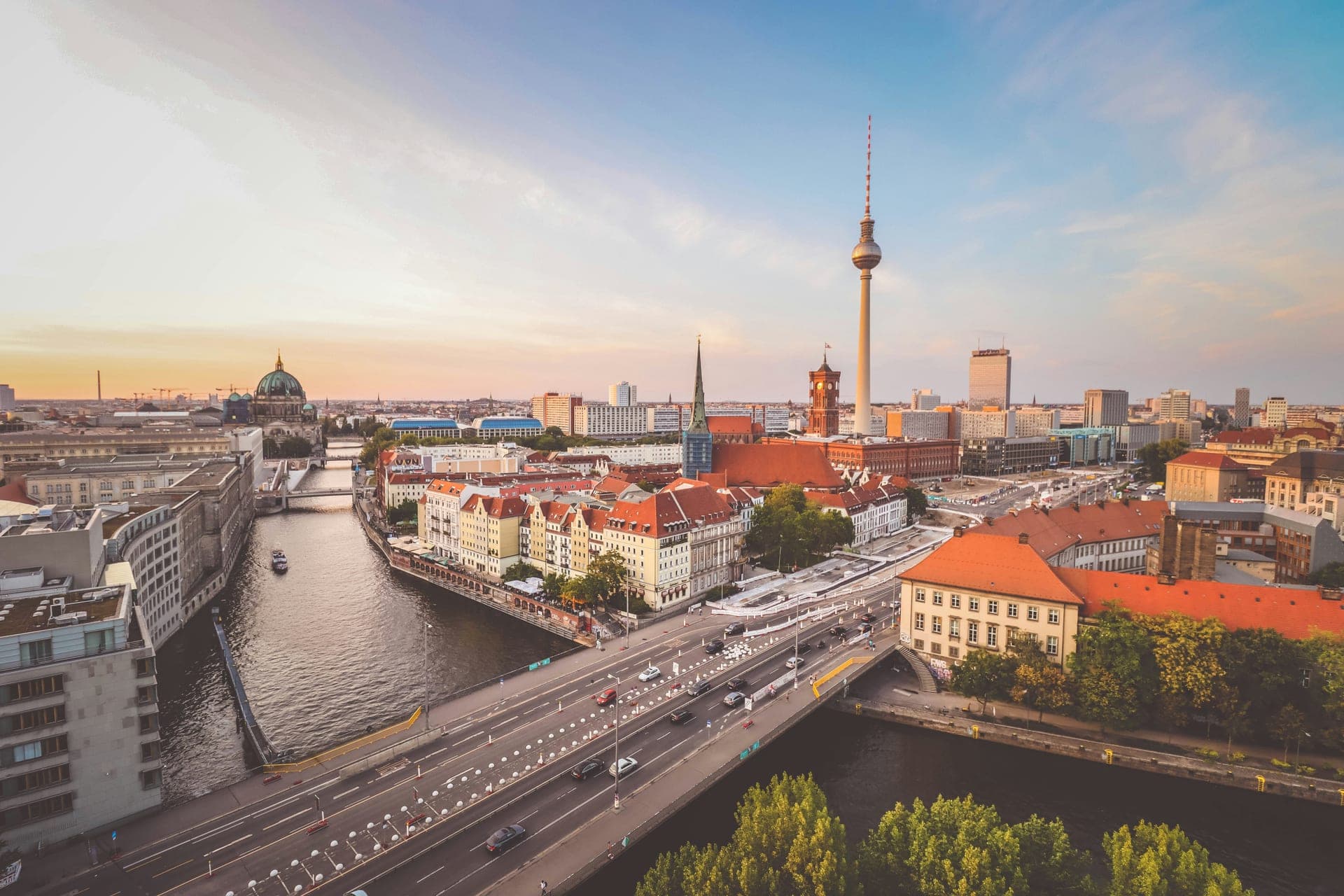
A growing city, a climate deadline and a back office still on paper
Berlin has a habit of deciding its future in public. In 2014 residents voted by 64.3% to keep the former Tempelhof airfield as an open park rather than build on its edges. In 2023 a referendum to bring the city’s climate-neutrality deadline forward to 2030 won 50.9% of the votes cast but missed the required quorum. A smart-city plan has to win over the same public.
The city is growing. Its official population, estimated from the 2022 census, was 3.7 million at the end of 2025. The residents’ register, which counts everyone registered at an address, shows 3.91 million, 8.4% more than ten years earlier.
Most trips are made without a car. In the city’s own 2023 mobility survey, SrV, run by TU Dresden for the Senate (Berlin’s state government), 78.3% of residents’ weekday trips were on foot, by bike or by public transport. 46% of households own no car. With 330 cars per 1,000 residents, Berlin has the lowest car ownership of any German state.
Share of all trips made by Berlin residents on an average weekday, 2023. About 40,000 people kept travel diaries for the survey. Source: SrV 2023 (TU Dresden for the Senate Department for Mobility)
Berlin’s climate law sets dated targets: CO₂ emissions 70% below 1990 by 2030, 90% below by 2040 and climate neutrality by 2045. By 2024 the city had cut 54.3%, to 13.4 million tonnes. Meeting the 2030 ceiling means cutting about 0.77 million tonnes a year, against an average of 0.46 million since 1990.
million tonnes of CO₂
Show the numbers
| Measured | Legal ceiling | |
|---|---|---|
| 1990 | 29.23 | — |
| 2000 | 25.22 | — |
| 2010 | 22.31 | — |
| 2015 | 19.29 | — |
| 2020 | 14.57 | — |
| 2024 | 13.37 | 13.37 |
| 2030 | — | 8.77 |
| 2040 | — | 2.92 |
| 2045 | — | 1.46 |
Energy-related CO₂, with electricity and heat counted where they are used (aviation excluded), as Berlin’s climate law measures it. 2024 is provisional. The second line joins the latest figure to the ceilings the law sets for 2030, 2040 and 2045. Source: Amt für Statistik Berlin-Brandenburg; Berlin Climate Protection and Energy Transition Act
Heat is the other half of the task. The city’s climate-adaptation law requires at least 440,000 street trees by the end of 2027; at the end of 2025 there were 439,348.
Two arson attacks on the power grid have added a further test. In September 2025 the Adlershof science park lost power for three days. In January 2026 about 45,400 households and 2,200 businesses in the south-west lost power. Some were cut off for almost five days, until the evening of 7 January.
The connections are largely in place. By mid-2026, 96.3% of homes and business premises could get gigabit internet and 59.5% could get fibre to the building. The open-data portal, live since 2011, lists 2,627 datasets, and ODIS, a small public help desk, has helped authorities publish data since 2018. More than 460 administrative services can be applied for online.
The gap lies in how the administration works. Its most visible test is the Bürgeramt, the local office where residents register an address or renew a passport. In March 2023 only 48.5% of people who wanted an appointment within 14 days got one. After 100 new posts and four new offices, the Senate reports 100% for March 2026, a figure it calculates from surveys rather than measured waiting times.
The back office has moved more slowly. A 2016 law required electronic files from 2023. By September 2023 the failed roll-out had already cost more than €41m. In March 2026 about 10,000 staff accounts had been set up, and about 3,600 people used the system at the same time, against a target of about 60,000 users. The Senate’s own report blames software that needs improving and an understaffed project team. By the end of July the Senate had accepted the system from its supplier, Materna, with 30 minor defects still to be fixed.
Not everyone is online, or reading in German. In 2025, 51.1% of adults in Germany used the internet to deal with public authorities, against 57.7% across the EU; Eurostat publishes no figure for Berlin alone. And 24.9% of Berlin’s registered residents are foreign nationals.
At that time we had the impression that Berlin’s digitalisation was very sluggish, and that many ideas were talked to death in endless rounds of coordination instead of simply being tried out.A public lab, bought-back grids and campuses on old industrial land
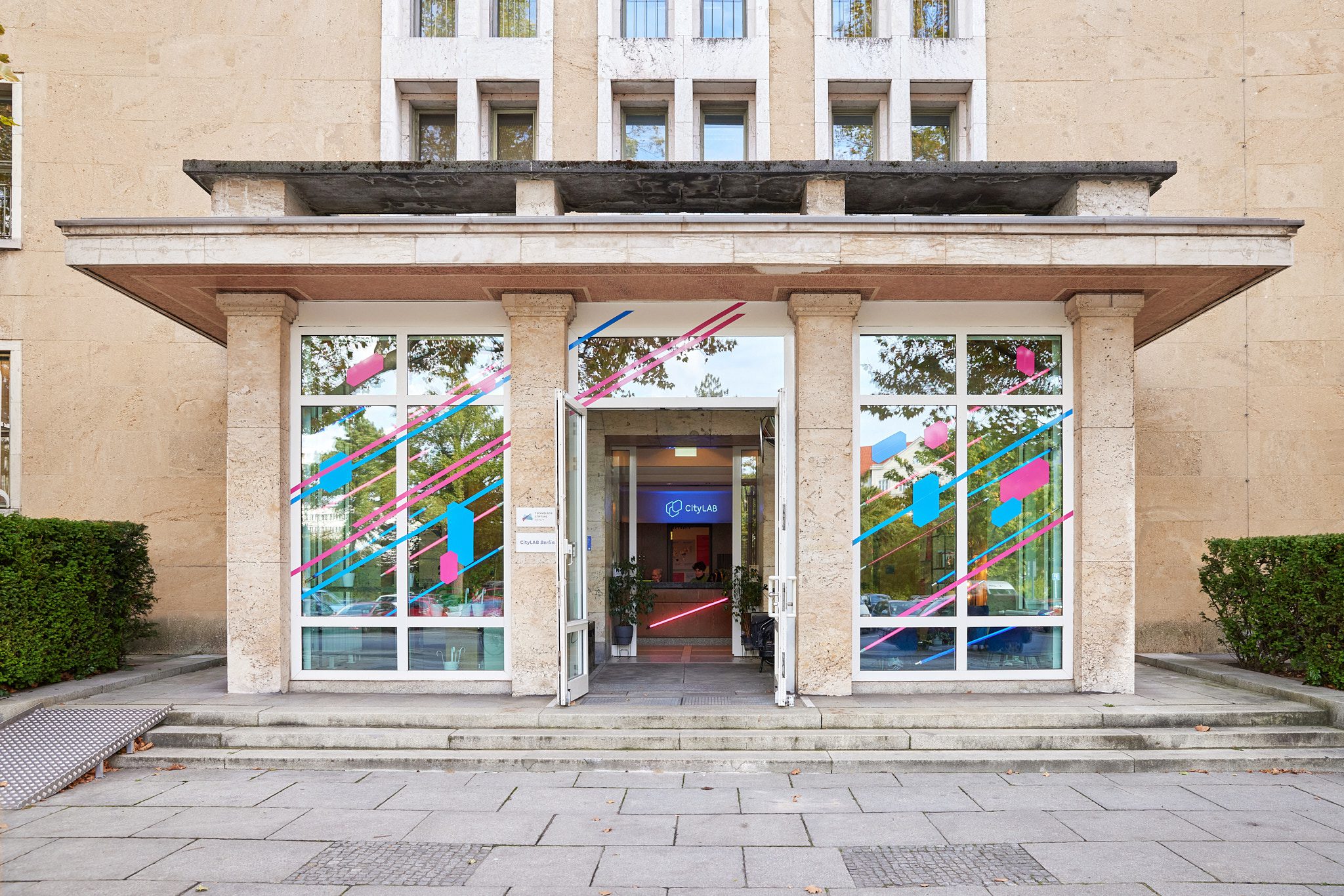
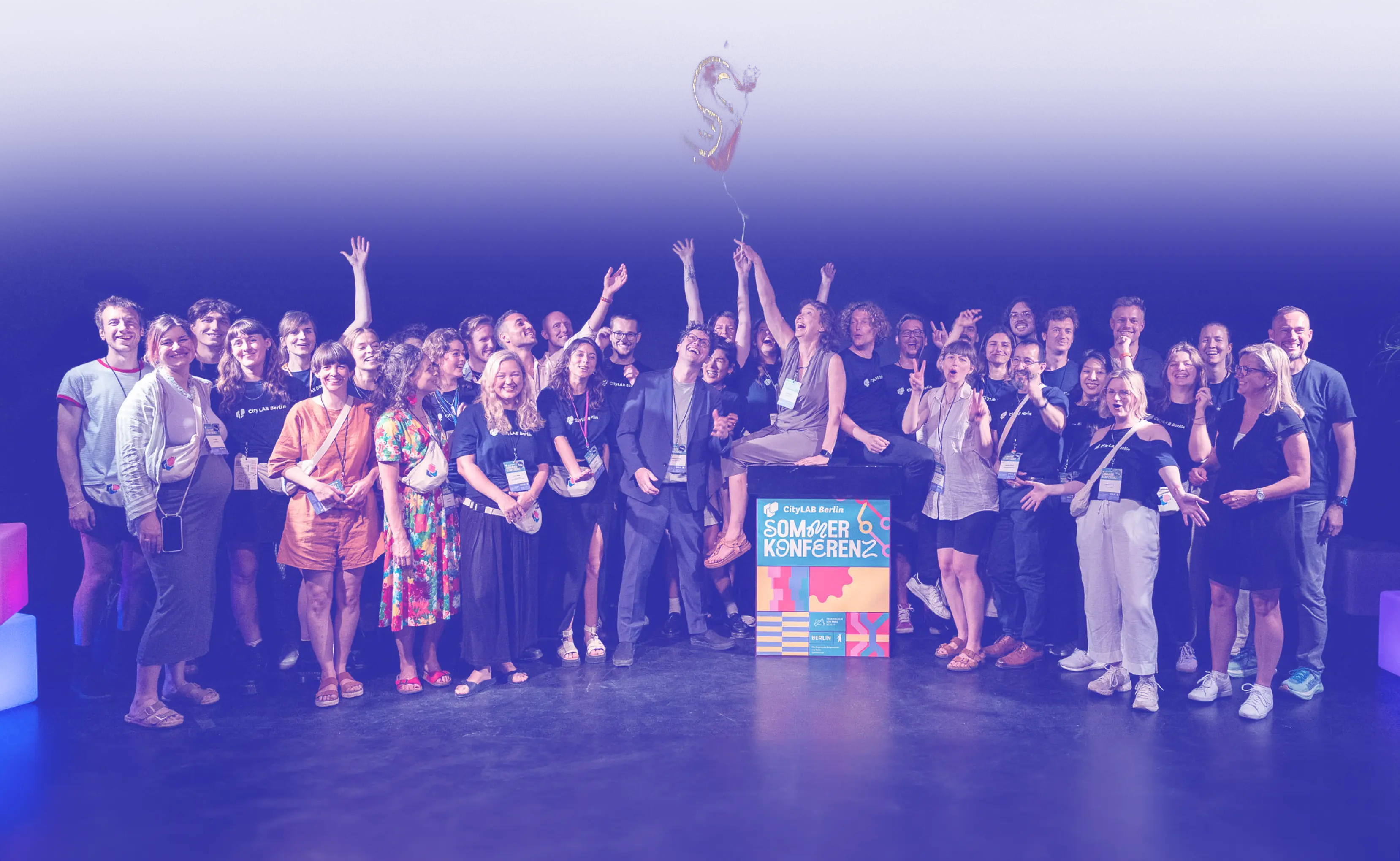
CityLAB Berlin is the state’s public-innovation lab, where prototypes are built with the administration. It opened in June 2019 in the former officers’ mess of Tempelhof Airport, run by the Technologiestiftung Berlin (the state-funded technology foundation) for the Senate Chancellery. The team now numbers more than 40 people. Its work ranges from Parla, an AI search over parliamentary papers, to BärGPT, an AI assistant owned by the state and switched on for civil servants in November 2025. BärGPT was built as open-source software.
The networks under the streets are public again. Berlin bought back its electricity grid, Stromnetz Berlin, for €2.06bn in 2021. In May 2024 it paid about €1.4bn for Vattenfall’s district-heating business, now called BEW, whose 2,000 km of pipes serve about a third of households. The water company, Berliner Wasserbetriebe, part-privatised in 1999, was bought back from RWE and Veolia in 2012 and 2013. Owning the grids gives the city access to their data. It does not tell it which sensors pay. The waste company BSR (Berliner Stadtreinigung) told one district in 2024 that its litter-bin fill-sensors had not paid off. The sensors were fragile and costly to maintain, and in a network as dense as Berlin’s, fixed emptying rounds work out cheaper. BSR still tests sensors in large and underground containers.
Research gives the city depth. Technische Universität Berlin and the other universities share the Einstein Center Digital Future, a public–private partnership launched in 2017 to fund 50 new professorships. Its SimRa app collects cyclists’ near-misses from phone sensors in more than 30 regions. The Weizenbaum Institute studies how digitalisation changes democracy, on about €12m a year of federal money. Fraunhofer FOKUS, an applied research institute for public-sector IT, was among the founders of GovTech Campus Deutschland in 2021. The campus had 132 member organisations by the end of 2024, from federal ministries to start-ups.
Civil society is organised and gets results. The Volksentscheid Fahrrad, a cycling campaign that collected signatures for a referendum, saw most of its demands written into the Mobility Act the state parliament passed on 28 June 2018. The Open Knowledge Foundation Germany runs FragDenStaat, which helps anyone file freedom-of-information requests and publishes the answers. In 2018, after protests in Kreuzberg, Google dropped its plan for a start-up campus in a former substation.
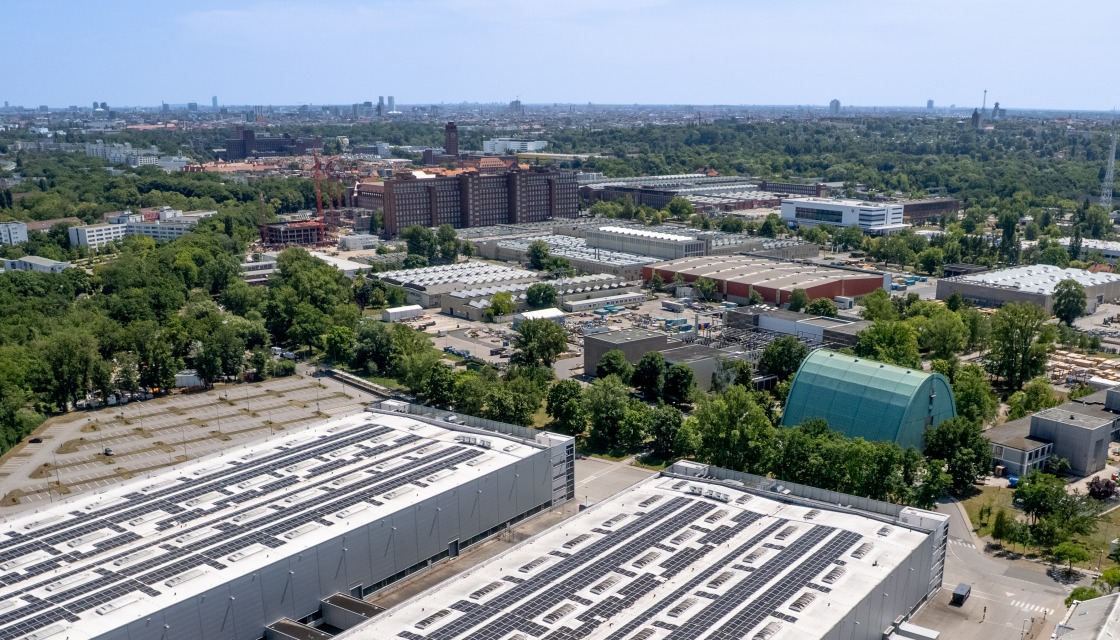
Berlin start-ups raised about €2.7bn in 2025 across 218 financing rounds, second to Bavaria by volume and first by number of rounds. The state also promotes Zukunftsorte, designated technology sites. Adlershof alone counts about 1,300 firms and 29,600 employees. The EUREF-Campus in Schöneberg and Siemensstadt² in Spandau present themselves as smart quarters.
Across the clusters, the bottleneck is often people. In Smart City Matters, a 2025 survey of German municipalities by F.A.Z. Business Media, 67% named staff shortages and missing skills as an obstacle to smart-city projects, second only to funding.
One strategy, four digital chiefs and an open election
Gemeinsam Digital: Berlin (“Digital Together”) is the city’s smart-city strategy. The Senate adopted it in December 2022. It merged smart-city work, the digital strategy and the administration’s own digitalisation under one Chief Digital Officer, then Ralf Kleindiek of the Social Democrats (SPD). CityLAB ran the drafting, with a panel of 70 residents drawn by lot beside a 17-member expert board. The federal government funds it as one of 73 Modellprojekte Smart Cities (model smart-city projects): €17.5m, 65% of it federal, for the strategy and five pilots running until December 2026.
The five pilots are a participatory budget, data governance tested on air-quality management, the Kiezbox emergency network, a redesign of Hardenbergplatz outside Zoo station, and Smart Water, on rain and urban green. No evaluation of them has been published.
The coalition of the CDU (Christian Democrats) and the SPD that took over in 2023 kept the strategy and its name. Its digital leadership has changed three times since. Martina Klement, Chief Digital Officer from May 2023, left in March 2026 to become a minister in Brandenburg. Her successor, Matthias Hundt, asked to be dismissed ten weeks later, after prosecutors in Dresden opened an investigation into him; his lawyer denies the allegations. Florian Hauer has run the brief on an acting basis since 27 May.
In mid-August 2026 criminals stole files from two Senate departments. About 1.44 million of them were later published on the darknet. The Senate called the hack an attack on the state of Berlin and set up a unit under Hauer to review the files and inform the people named in them.
Money has thinned too. The 2025 budget closed a €3bn gap, about two-thirds of it through cuts. It trimmed the e-file programme from €39m to €31m and the budget for central state IT from €32.2m to €18.2m.
Berlin is a city and a state at once. The Senate sets policy and runs the central IT, while 12 districts deliver most services to residents. An administrative reform passed in 2025 and in force since January 2026 is meant to settle which level does what. The districts still go their own ways. Some publish their project lists on meinBerlin, the state’s participation platform, while Charlottenburg-Wilmersdorf declined, citing the staff effort. Berlin is also absent from the EU’s mission for 100 climate-neutral and smart cities by 2030, which includes nine other German cities.
The rules for data and software have moved faster than the money. In December 2025 the Senate adopted an open-source strategy. It makes ITDZ, the state’s IT service centre, its open-source office. It also sets dated targets: half of all software spending on open source by 2031, and 70% of the software on staff computers by 2032. In June the Senate decided to turn its open-source Data Hub prototype into a permanent platform for the whole administration.
The Data Hub is a key project for our city’s digital future. For the first time it creates a shared foundation for data-based administrative action in the state of Berlin.Practice lags the targets. The open-source strategy has no budget of its own. In 2025 and 2026 the administration bought 16 open-source products and 446 proprietary ones.
This makes it clear once again: we need binding targets, otherwise nothing happens.The sharpest argument is about police data. A police-law reform passed by the CDU and SPD in December 2025 allows AI video surveillance at designated locations and automated data analysis. Meike Kamp, Berlin’s data-protection commissioner, warned that linking such data could build detailed movement profiles of individuals. The Senate says it will not use Palantir’s analysis software. Niklas Schrader of Die Linke (the Left party) replied that the law would allow it. In August 2026 the Greens and Die Linke asked the state constitutional court to review the law.
With the SPD, those two parties may now govern. In the election of 20 September 2026 Die Linke came first with 25.7%, ahead of the CDU on 18.8%. Kai Wegner, the governing mayor, had stood down as the CDU’s lead candidate in July after criticism of how he communicated during the January blackout. After a first meeting on 1 October, Die Linke, the Greens and the SPD began exploratory talks on 8 October, once they had agreed a joint statement against antisemitism. The Greens and the SPD broke the talks off on 13 October, after the Left’s new parliamentary group admitted Vanessa Emde, a member criticised over her remarks on Israel. They resumed them two days later. As of mid-October 2026 the talks were still under way, and no party had yet voted on opening coalition negotiations. The next Senate inherits open-source targets without a budget and a police law that two of its likely partners are challenging in court.
- Sept 2011[source]
Open data portal
daten.berlin.de launches as a pilot, one of the first state open-data portals in Germany.
- Sept 2020[source]
Federal model project
Berlin becomes one of 73 Modellprojekte Smart Cities, with funding to the end of 2026.
- Dec 2022[source]
Gemeinsam Digital: Berlin
The Senate adopts the smart-city strategy, drafted with a residents’ panel drawn by lot.
- Dec 2024[source]
The €3bn cut
The 2025 budget closes a €3bn gap, mostly through cuts, and ends the 29-euro public-transport ticket.
- Dec 2025[source]
Open-source strategy
The Senate adopts dated open-source targets for 2028 to 2032, without a dedicated budget.
- Jan 2026[source]
Administrative reform
A new law on what the Senate and the 12 districts each do comes into force.
- Sept 2026[source]
Election
Die Linke comes first; the CDU–SPD coalition loses its majority.
- Dec 2026[source]
Federal money ends
The funding period for Berlin’s five federally backed smart-city pilots closes.
- 2032[source]
Open-source milestone
Target: 70% of the software on administrative workstations is open source.
- 2045[source]
Climate neutrality
The legal deadline for a climate-neutral Berlin.
From an early open-data portal to a smart-city strategy whose federal money ends in 2026, and the targets the next government inherits.
Trees, mobility hubs and the pilots that stopped
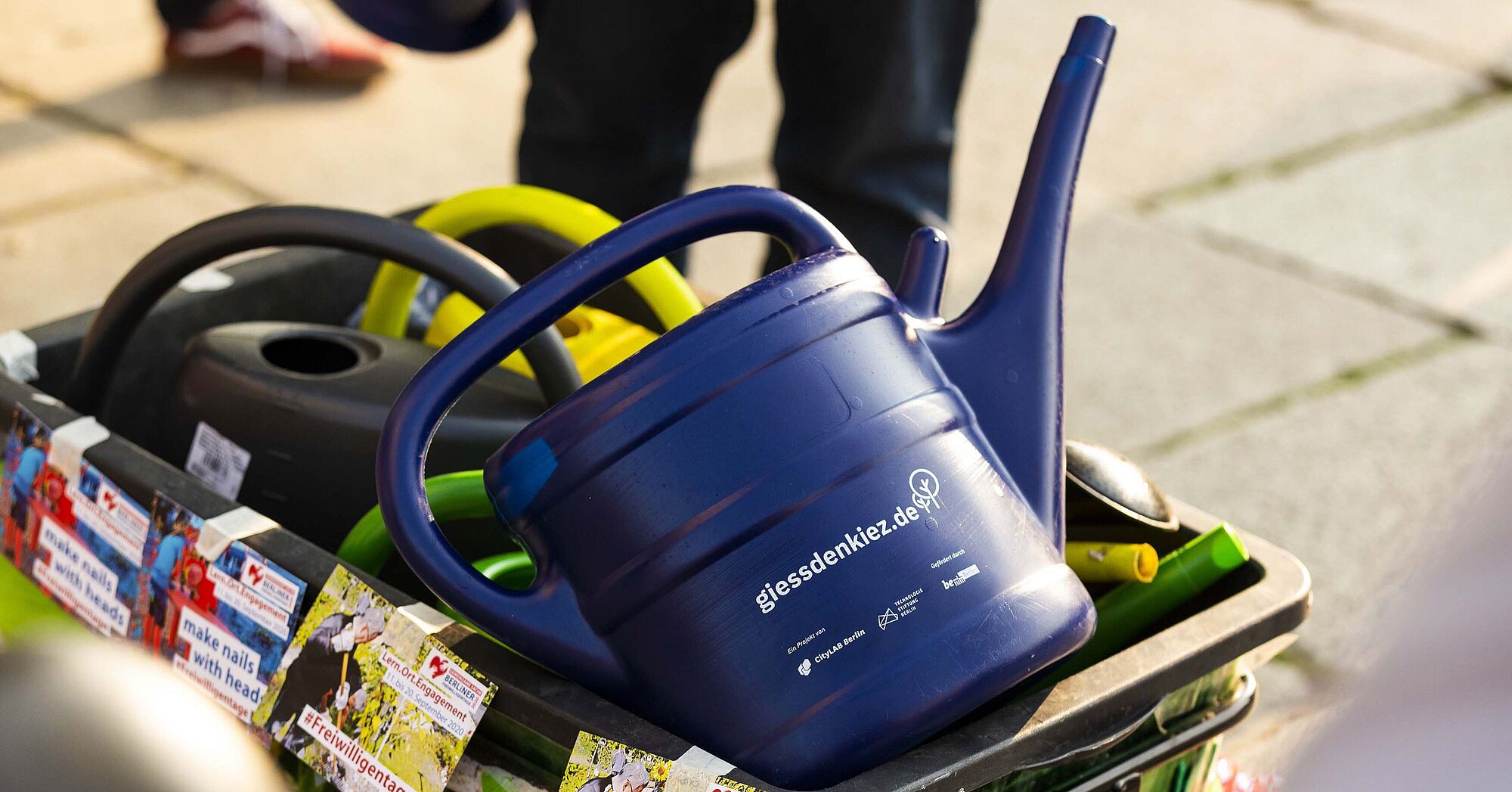
Gieß den Kiez (“water your neighbourhood”) is the civic tool other cities have copied. Its map shows more than 960,000 street and park trees with their age and water needs. Residents adopt a tree and log what they pour: over 2.2 million litres since 2020, with more than 4,100 users active in March 2026. Leipzig and Magdeburg run their own versions of the open code. CityLAB reports how the map is used, not its effect on the trees. A related research project, QTrees, used about 120 soil sensors and AI to forecast drought stress for 415,000 street trees. It ended as planned in September 2023.
Jelbi is the public transport operator BVG’s answer to streets full of rental bikes and scooters. It gathers them at marked hubs next to stations and puts them in one app with buses and trains. Since 2019 it has grown to about 400 locations across Berlin, Potsdam and Kleinmachnow, with about 70,000 bookable vehicles and over 7 million rentals. The state pays for the hubs through BVG’s transport contract: €2.6m of investment and €4.9m of running costs in 2022 and 2023. BVG publishes use, not how many car trips the hubs replace. It is also testing self-driving vans on €9.5m of federal money. Five began test runs over about 15 km² of the north-west in October 2025, with a safety driver and no passengers. Rides with passengers were planned for the first half of 2026; by October BVG had not reported that they had begun.
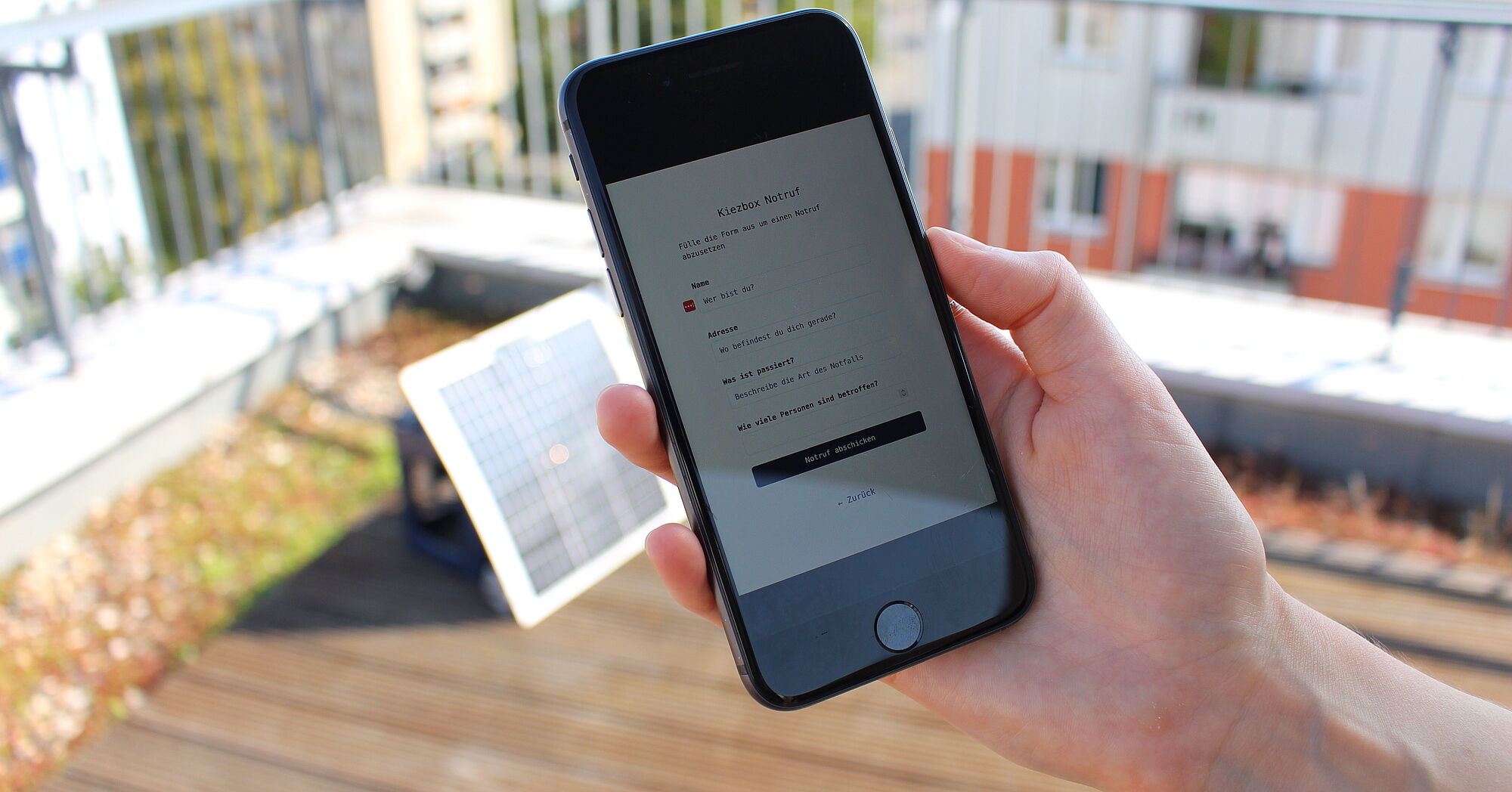
Kiezbox 2.0 was built for the day the power fails. Solar-powered boxes on rooftops form a mesh network that keeps a neighbourhood able to send messages. In a drill in Schöneberg in June 2025 they carried an emergency call to the fire brigade. The Technologiestiftung’s funded test phase ended the next month, and six months later the January blackout struck the south-west, outside the pilot area. The Senate’s model-project team still lists the Kiezbox among the five pilots closing in 2026. No plan to keep the boxes running has been published, nor how many were installed.
The Urban Tech Republic is the plan for the former Tegel airport: a campus for urban technology beside a new district. About 40 technology firms already work in the old workshops and freight hall, and the first building plot went on the market in October 2025. The Schumacher Quartier next door broke ground on 3 September 2026. Its first phase is 327 timber-hybrid flats built by the municipal landlord degewo, with residents expected in early 2029. The move of the BHT, a university of applied sciences, into the old terminal has slipped from 2030 to 2035.
Siemensstadt² is Siemens’ bet on its own former works in Spandau. Its own stake has grown from the €600m it pledged in 2018 to €750m, and the whole project, with partners, is put at €4.5bn by 2035. The first buildings, including the future Siemens headquarters, were topped out in 2026. None is finished, and the S-Bahn line to the site is due to reopen in 2029. Its digital twin, like those Adlershof and Tegel presented in 2022, models one site. Berlin has no twin of the whole city. The federal Connected Urban Twins programme was built by Hamburg, Leipzig and Munich, and Berlin did not take part.
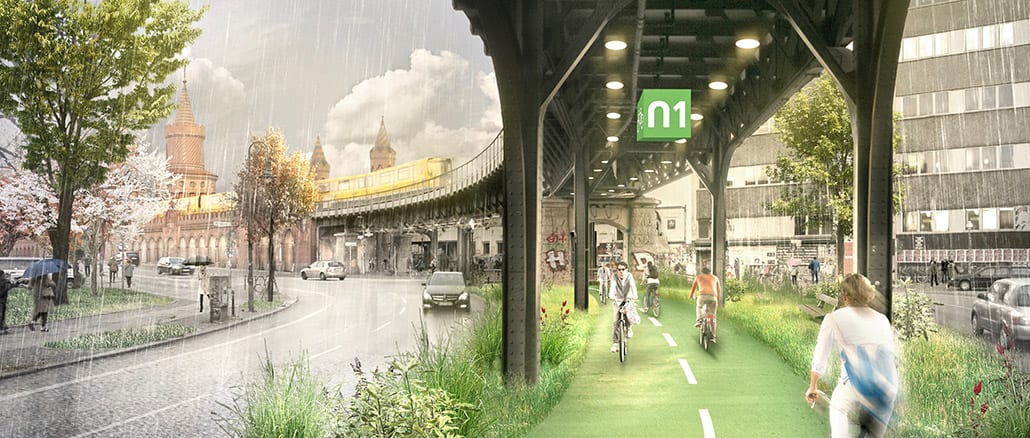
Radbahn shows how a good idea can stall. The plan is a covered cycle path under the elevated U1 line. A 200 m test strip opened in Kreuzberg in April 2024. When the federally funded lab ended, most of its fittings were removed, and by mid-2025 the strip was little used. The Senate calls the concept sensible but has named no next step.
The pilots that lasted found a home: the tree map with CityLAB, the hubs in BVG’s transport contract. QTrees ended with its funding, as planned, and the Kiezbox has no published plan beyond its pilot. The five federally funded pilots now reach the same point. Their money runs out in December 2026, and the Senate that must decide their future has not yet been formed.
References
Statistics1Click on any number to see the source
Population & migration
From our libraries37
- Berlin Open Data Portal — Knowledge
- ODIS — Open Data Informationsstelle Berlin — Project
- CityLAB Berlin — Organisation
- Technologiestiftung Berlin — Organisation
- Berlin Senate Chancellery — Digital — Organisation
- Parla — AI Parliamentary Assistant — Project
- Stromnetz Berlin — Organisation
- Vattenfall Wärme Berlin — Organisation
- Berliner Wasserbetriebe — Organisation
- Berliner Stadtreinigung (BSR) — Organisation
- Technische Universität Berlin — Organisation
- Einstein Center Digital Future — Organisation
- SimRa — Sicherheit im Radverkehr — Project
- Weizenbaum Institute for the Networked Society — Organisation
- Fraunhofer FOKUS — Organisation
- GovTech Campus Deutschland — Organisation
- Open Knowledge Foundation Germany — Organisation
- OKF Germany — FragDenStaat Freedom of Information Platform — Organisation
- Wissenschafts- und Technologiepark Adlershof — Organisation
- EUREF-Campus — Organisation
- Siemensstadt Square — Smart Urban Quarter — Project
- Smart City Matters 2025 – Stakeholder Analysis — Knowledge
- Gemeinsam Digital: Berlin's Smart City Strategy — Knowledge
- Hardenbergplatz Smart Mobility Hub — Project
- meinBerlin — Project
- Open Source Strategy for the State of Berlin (Secondary Source) — Knowledge
- Data Hub Berlin — Project
- Gieß den Kiez — Project
- QTrees — AI-Driven Urban Tree Care — Project
- Jelbi — Multimodal Mobility Platform — Project
- Berliner Verkehrsbetriebe (BVG) — Organisation
- Smart Mobility in Berlin: From Jelbi to Autonomous Driving — Knowledge
- Kiezbox 2.0 — Resilient Community Mesh Network — Project
- Urban Tech Republic (Tegel Projekt) — Project
- Schumacher Quartier — Sustainable Timber City District — Project
- degewo AG — Organisation
- Radbahn — Project
Further sources26
- Berlin House of Representatives election 2026 — official final result — Landeswahlleiterin Berlin · 12 Oct 2026
- Exploratory talks resume after the dispute over the antisemitism declaration (dpa) — Tagesspiegel · 16 Oct 2026
- Hacker attack on the Berlin administration: steering unit in the Senate Chancellery — Senate Chancellery · 5 Sept 2026
- Smart-city strategy Gemeinsam Digital: Berlin — report to parliament (Drs. 19/1198) — Abgeordnetenhaus Berlin · 22 Sept 2023
- Open Source Strategie für das Land Berlin — Senate Chancellery · 14 Jan 2026
- Open source on paper, lock-in in practice — Stefan Ziller (Green group) · 9 Sept 2026
- Berlin budget 2025: IT security and administrative digitalisation under the knife — netzpolitik.org · 24 Nov 2024
- New police law in Berlin — netzpolitik.org · 29 Sept 2025
- Berlin police law: Linke and Greens go to the constitutional court — netzpolitik.org · 28 Aug 2026
- Data Hub Berlin moves into permanent operation — Senate Chancellery · 9 June 2026
- Mobilität in Städten — SrV 2023, Berlin — Senate Department for Mobility · 2024
- Energy and CO₂ balance, Berlin 2024 — Amt für Statistik Berlin-Brandenburg · Dec 2025
- Gigabit-Monitor Berlin — Senate Department for Economics · Q2 2026
- Bürgeramt appointments: 14-day target reached — Senate Chancellery · 15 May 2026
- Five years of CityLAB — interview with Nicolas Zimmer and Benjamin Seibel — CityLAB Berlin · 25 Apr 2024
- Gieß den Kiez — two-pager — CityLAB Berlin · March 2026
- Jelbi’s sixth year — BVG · 29 Dec 2025
- Kiezbox crisis drill in Schöneberg — Technologiestiftung Berlin · 25 June 2025
- Power cut in the south-west of Berlin — Senate Department for Economics · 3 Jan 2026
- Senate answer on the power cut in Steglitz-Zehlendorf (Drs. 19/24735) — Abgeordnetenhaus Berlin · 21 Jan 2026
- The Berlin smart city: the model project ends — Smart City Berlin · 17 July 2026
- Start for the Schumacher Quartier in Berlin TXL — Tegel Projekt GmbH · 3 Sept 2026
- Radbahn: a real-world lab without effect — entwicklungsstadt.de · 26 June 2025
- Intelligent public litter bins for Marzahn-Hellersdorf (BSR response) — Bezirksamt Marzahn-Hellersdorf · 13 Nov 2024
- Berlin completes the buy-back of district heating — Senate Chancellery · 3 May 2024
- Adlershof in figures 2025 — Senate Department for Economics · 23 Mar 2026