One public service in nine is online everywhere
Germany is a federation of 16 Länder, the states, and about 11,000 municipalities. In 2024, 38.9% of Germans lived in cities, about the EU share, and 42.4% in towns and suburbs. Its national smart-city programme funded rural districts and small municipalities alongside the big cities.
In 2021 the Federal Constitutional Court ruled that the climate law must set reduction paths beyond 2030. The Federal Climate Change Act was then tightened: emissions at least 65% below 1990 by 2030, 88% below by 2040 and net neutrality by 2045. Since 2025 the 2045 date has also stood in the Basic Law, Germany’s constitution, which allows a €500bn fund for infrastructure and climate investment, €100bn of it for the Länder.
By 2024 the country’s emissions were 48.1% below 1990, against 38% for the EU as a whole. In 2025 they fell by only 0.1%, as emissions from buildings and transport, the sectors cities can most influence, rose. In May 2026 the Expertenrat für Klimafragen, the council of experts that audits the law, expected the budget for 2021–2030 to be overshot by 60 to 100 million tonnes. Even with the government’s 2026 climate programme in full, it found, none of the legal targets up to 2040 would be met.
index, 1990 = 100
Show the numbers
| Germany | EU-27 | Climate-law path | |
|---|---|---|---|
| 1990 | 100.0 | 100.0 | — |
| 1991 | 96.3 | 97.8 | — |
| 1992 | 92.4 | 94.7 | — |
| 1993 | 91.7 | 93.1 | — |
| 1994 | 90.2 | 92.6 | — |
| 1995 | 89.6 | 93.7 | — |
| 1996 | 91.0 | 95.6 | — |
| 1997 | 88.2 | 94.0 | — |
| 1998 | 86.2 | 93.2 | — |
| 1999 | 83.4 | 91.6 | — |
| 2000 | 83.2 | 91.4 | — |
| 2001 | 84.4 | 92.4 | — |
| 2002 | 82.7 | 92.1 | — |
| 2003 | 82.2 | 93.7 | — |
| 2004 | 80.7 | 93.7 | — |
| 2005 | 78.9 | 93.2 | — |
| 2006 | 80.0 | 93.3 | — |
| 2007 | 76.9 | 92.2 | — |
| 2008 | 77.0 | 90.2 | — |
| 2009 | 71.9 | 84.1 | — |
| 2010 | 74.5 | 85.7 | — |
| 2011 | 72.4 | 83.3 | — |
| 2012 | 73.2 | 81.8 | — |
| 2013 | 74.7 | 80.0 | — |
| 2014 | 71.4 | 77.1 | — |
| 2015 | 71.7 | 78.0 | — |
| 2016 | 71.7 | 78.0 | — |
| 2017 | 70.7 | 78.5 | — |
| 2018 | 67.8 | 76.7 | — |
| 2019 | 63.7 | 73.4 | — |
| 2020 | 58.3 | 67.4 | — |
| 2021 | 60.9 | 70.9 | — |
| 2022 | 59.8 | 69.0 | — |
| 2023 | 53.4 | 63.5 | — |
| 2024 | 51.9 | 62.0 | 51.9 |
| 2025 | — | — | 49.1 |
| 2026 | — | — | 46.3 |
| 2027 | — | — | 43.5 |
| 2028 | — | — | 40.6 |
| 2029 | — | — | 37.8 |
| 2030 | — | — | 35.0 |
| 2031 | — | — | 32.7 |
| 2032 | — | — | 30.4 |
| 2033 | — | — | 28.1 |
| 2034 | — | — | 25.8 |
| 2035 | — | — | 23.5 |
| 2036 | — | — | 21.2 |
| 2037 | — | — | 18.9 |
| 2038 | — | — | 16.6 |
| 2039 | — | — | 14.3 |
| 2040 | — | — | 12.0 |
| 2041 | — | — | 9.6 |
| 2042 | — | — | 7.2 |
| 2043 | — | — | 4.8 |
| 2044 | — | — | 2.4 |
| 2045 | — | — | 0.0 |
Greenhouse-gas emissions excluding land use and international aviation and shipping, indexed to 1990, for Germany and the EU-27. The third line runs straight from 2024 through the Federal Climate Change Act’s targets: at least 65% below 1990 by 2030, 88% below by 2040 and net neutrality by 2045 (drawn as zero, before any removals). One step on the axis is one year. Source: Eurostat, env_air_gge (greenhouse gases excluding land use and international transport)
In our assessment, the programme’s actual reduction effect is likely to be considerably smaller than the federal government assumes.One climate duty did arrive on time. Every municipality must draw up a heat plan, which maps how each street will be heated without fossil fuels; federal law places the duty on the Länder, which pass it down. By the deadline of 30 June 2026, 72 of the 83 cities with more than 100,000 people had one. The plans hand the municipal utilities a large task: district heating is to supply almost half of all heat in their target scenarios, up from about 22%. Many also assume that 2% of residential buildings are renovated each year; in 2025 the real rate was under 1%.
The networks are fast at the top and slow at the door. 5G reaches 99.5% of populated areas, but fibre to the premises passes only 44% of homes, against 74.1% across the EU. In 2016 the regulator let Deutsche Telekom upgrade the copper lines from about 8,000 local exchanges with a technique called vectoring, reaching about 5.9m more households at up to 100 Mbit/s. At the end of 2025, 58.5% of active broadband lines were still copper DSL and 16.5% were fibre.
The bottleneck is now take-up. The 2022 gigabit strategy promised fibre for half of all homes and businesses by 2025. By the count of BREKO, the challengers’ association, 62% of homes could be connected by mid-2026, but only 29.8% were, and about one in four of those who could had booked a fibre line. Challengers and municipal utilities build most of the new fibre: Telekom accounts for 41% of homes passed but 30% of active fibre lines.
Germany is level with or above the EU-27 on 5G and firms using AI, and furthest behind on fibre to the premises and on adults dealing with the authorities online. Coverage figures are for 2025, from the Commission’s Digital Decade report; use, skills and AI figures are Eurostat surveys for 2025; renewables are for 2024. Source: European Commission, Digital Decade (DESI 2026); Eurostat (isoc_ciegi_ac, isoc_sk_dskl_i21, isoc_eb_ai, nrg_ind_ren)
Online services are the gap people notice. A 2017 law required every public service, federal, state and municipal, to be online by the end of 2022. Its principle was “Einer für Alle”, one for all: a Land builds a service once and the others adopt it. In early 2026, 823 of the 7,509 individual services in the catalogue were online everywhere in the country, about one in nine, while 43% were live in at least one town or district of North Rhine-Westphalia. The 2024 revision dropped the deadline and created a right to digital access from 2029, but only to federal services.
In 2025, 51.1% of adults dealt with a public authority online, against 57.7% across the EU. A national survey of internet users found in 2026 that only 29% of those with an ID card had ever used its online function. In 2025 the same survey found that a third had handled all their dealings with the authorities offline in the previous twelve months. Those who went online started at the town hall: 78% of those who began on an authority’s website went to their city’s, and 6% to the federal portal.
Towns own the pipes and the plans, not the services
The Basic Law gives municipalities the right to run all local affairs on their own responsibility, “within the framework of the laws”. It also forbids federal law from handing them any task. Every national duty, from online services to heat plans, therefore reaches a town through its Land. Berlin, Hamburg and Bremen are city-states and hold both sets of powers.
- Broadband: private operators build and the Bundesnetzagentur, the federal regulator, regulates. A town cannot order fibre, but it can apply for federal gap funding, which approved €2bn in 2024 for more than 560 projects in about 1,700 municipalities, or build through its own utility.
- Public transport: under Land law, cities and districts order buses and trams. The price of the main monthly pass, the Deutschlandticket, is set nationally: €63 in 2026, rising to €66.80 in January 2027.
- Streets: traffic rules are federal. Since October 2024 a city may weigh climate, health and urban development when it sets bus lanes or 30 km/h zones near schools, but it still cannot make 30 km/h the rule across town.
- Policing and cameras: police law belongs to the Länder, while the federal police cover stations, airports and ports. A mayor can pay for cameras, but the Land decides whether software may watch them.
- Energy and heat: this is where towns are strongest. They award the concessions for local power and gas grids for up to 20 years, and more than 1,600 municipal companies belong to their association, VKU; many are Stadtwerke, municipal utilities that run grids, heat networks and buses.
- Planning: land-use plans are the municipality’s own. The 2025 “construction turbo”, which lets housing depart from a plan until 2030, works only with the town’s consent.
- Open data: the federal duty to publish raw data binds federal authorities only. Whether a city publishes depends on its Land or on its own choice; Hamburg’s 2012 transparency law made it compulsory there.
- Online services and the e-ID: the federal government and the Länder steer them through the IT-Planungsrat, the IT planning council. Services one Land builds “for all” must be run by every town, which pays to operate them but has only an advisory seat. In December 2025 the federal dashboard counted 1,615 services online in Hamburg, 1,557 in North Rhine-Westphalia and 964 in Baden-Württemberg, though the Saxon Court of Audit notes it cannot show how many meet the law’s standard.
- Procurement and open source: EU and federal procurement law apply everywhere. Since March 2026 standard federal contract terms have existed for buying open source, and where federal money required open code, as in the smart-city programme, towns published it.
- Skills: schools are a Land matter. A second Digital Pact gives €5bn for school digitalisation over 2026–2030. For the nearly 7m people aged 60 and over who are offline, a federal programme had €3.1m for 2023–25, enough for 150 local learning sites.
The split explains a pattern. German towns are strong where they own the asset or the plan, and weak where a service is defined above them and they must only deliver it. The heat plans, a duty with a deadline that landed on utilities the towns own, were delivered on time by most large cities. The online services, a duty without a vote, missed theirs.
And the money is short. In 2025 the municipalities ran a record deficit of nearly €32bn, according to the Bertelsmann Stiftung, a private foundation. In August 2026 Burkhard Jung, Lord Mayor of Leipzig and president of the Deutscher Städtetag, the association of cities, said the mood in the town halls had “never been as bad as it is today”.
The three municipal associations, for cities, towns and rural districts, fill the advisory seats on the IT planning council; in January 2026 the Deutscher Städte- und Gemeindebund asked for “digital only” processes with help in person. The KTS, the smart-city programme’s transfer office, helps towns reuse each other’s work. It is run by DLR Projektträger, the grants arm of the German Aerospace Center, with partners including Fraunhofer, the urban-studies institute Difu and the hacker association Chaos Computer Club.
Around them sit an incumbent, challengers and foreign suppliers. Deutsche Telekom still runs most copper lines, Palantir supplies police analysis software to several Länder, and the applied-research society Fraunhofer builds much of the software towns test. Watching them are civil-rights groups such as the Gesellschaft für Freiheitsrechte and the news site netzpolitik.org, which published an audit-office report on the digital ministry that was not meant for publication.
What the federal level funds, and what it legislates
Friedrich Merz’s coalition of the Christian Democrats (CDU/CSU) and the Social Democrats (SPD) took office in May 2025 and created a federal ministry for digital affairs and state modernisation. Its minister, Karsten Wildberger, came from running the electronics retailer Ceconomy. The ministry took over broadband policy, the steering of online services and a veto over large federal IT purchases. Its promise to towns is to bring them “existing digital services” they do not yet have. The national smart-city programme stayed with the ministry for housing and urban development.
They expect one point of access, not 16 different solutions, or even hundreds of variants.That programme, Modellprojekte Smart Cities, chose 73 municipalities in three rounds from 2019 and announced about €820m for them. It paid 65% of their costs, or 90% for towns in budget distress, and from 2022 required the software it funded to be published as open source on openCode, the public code platform. By 30 November 2024, €146m of the €691m committed had been paid out, 21%. The government blamed procurement, the pandemic and staffing: a quarter of the posts the programme created could not be filled.
Its evaluation of the strategy phases found that towns had left about €28m of their planning money unused by the end of 2023. Only the implementation phases, it said, would show whether the goals were met; the final evaluation is due in 2030. The original funding period ends in 2026, though towns in the third round may stretch their grants, at no extra cost, into 2027 or early 2028. The programme’s spring congress was given over to how towns can keep what they built.
The bigger federal bet is the Deutschland-Stack, which Wildberger describes as a shared digital operating system for the federal government, the Länder and the municipalities. In July 2026 the federal audit office found that the ministry had not mapped its risks or set milestones, and that key decisions were still open. As with online services, the towns would have no vote: the municipal management association KGSt has asked for votes, not consultation, and a clear answer on who pays.
Germany’s recovery plan has €30.3bn in EU grants, 47.5% of it for digital aims, including €2.5bn to put federal and Land services online. Nine German cities are among the 112 in the EU mission for climate-neutral and smart cities by 2030; by November 2025 all but Frankfurt held the mission label for their plans.
Sovereignty is moving into procurement, slowly at federal level and quickly in one Land. ZenDiS, a federal company, develops openDesk, an open-source office suite for the public sector, which in April 2026 was being tested on about 80 workstations in the digital ministry itself. Schleswig-Holstein, a northern Land, is moving its administration off Microsoft: by October 2025, 90% of its staff email accounts ran on open-source software.
The sharpest argument is about surveillance. In February 2023 the Constitutional Court struck down Hesse’s and Hamburg’s laws for automated police data analysis, though not Palantir’s software that ran on them. Bavaria’s contract for that software lets the other Länder and the federal government join. Baden-Württemberg’s interior ministry, led by the CDU, bought it separately for €25m over five years, without exit clauses. In July 2026, 92% of the Green members who voted opposed the contract on a 40% turnout; the vote is not binding, and the Green Minister-President is keeping it until a European alternative is ready.
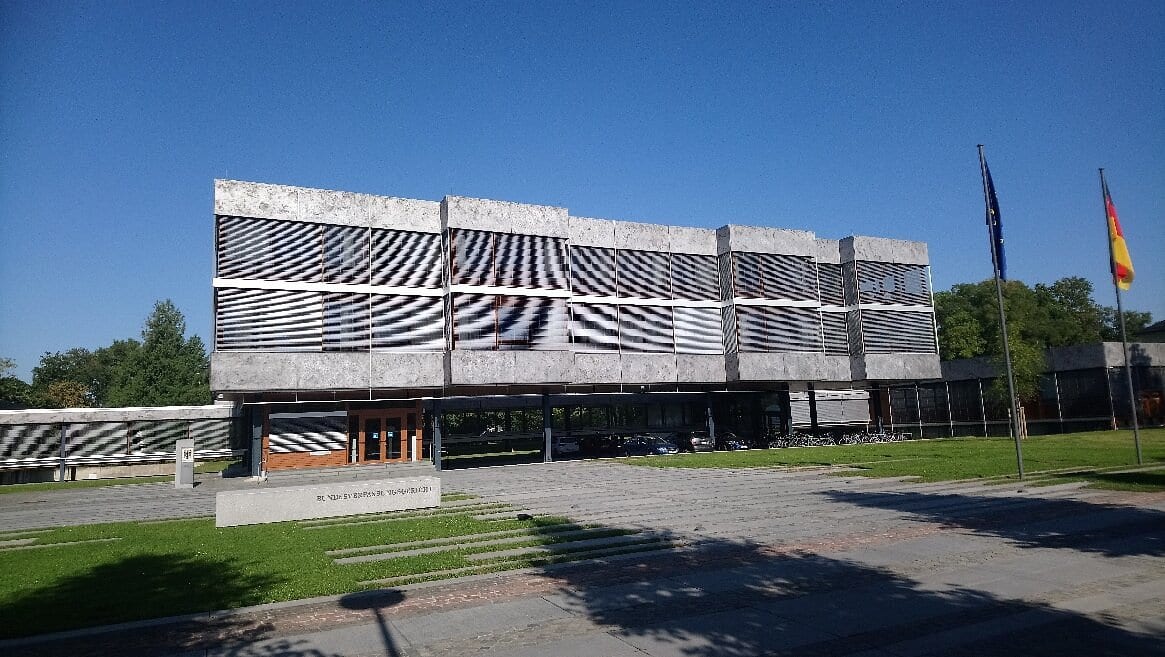
In September 2026 the Bundestag, the federal parliament, passed a law allowing the federal police to use live face matching and behaviour analysis at stations, airports and ports. The vote was a repeat: the July vote had lacked the absolute majority the law requires. The Bundesrat, the chamber of the Länder, approved it the same day. In the July debate Alexander Throm, a CDU member, said the law would “set the standard for the Länder”. Irene Mihalic of the Greens said the coalition was “cutting deep into fundamental rights”. The Gesellschaft für Freiheitsrechte, a civil-rights litigation group, has taken Bavaria’s police law to the Constitutional Court.
Anyone who reports a crime, becomes a victim of one, or is simply in the wrong place at the wrong time can come into the police’s sights through the software.- 2012[source]
Hamburg’s transparency law
Publishing geodata becomes compulsory in Hamburg, the seed of the shared Masterportal.
- 2017[source]
Online Access Act
Every public service is to be online by the end of 2022; a federal Smart City Charter sets out principles.
- 2019[source]
Model projects begin
The first round of the federal smart-city programme; 73 towns, cities and districts by 2021.
- Mar 2021[source]
Climate ruling
The Constitutional Court orders reduction paths beyond 2030; the law moves neutrality to 2045.
- Feb 2023[source]
Police data analysis
The Constitutional Court strikes down Hesse’s and Hamburg’s legal bases for automated police data analysis.
- Jul 2024[source]
OZG 2.0
The revised law drops the deadline missed in 2022.
- May 2025[source]
Digital ministry
The new federal government creates a ministry for digital affairs and state modernisation.
- Sep 2026[source]
Federal police law
After a repeated Bundestag vote, parliament passes live face matching and behaviour analysis at stations, airports and ports.
- Jun 2028[source]
Heat plans everywhere
The deadline for every municipality with fewer than 100,000 people.
- 2029[source]
Right to digital access
People gain a legal right to use federal services online.
- 2030[source]
Climate target
Emissions at least 65% below 1990; the smart-city programme’s final evaluation is also due.
- 2045[source]
Net neutrality
The legal date for a greenhouse-gas-neutral Germany.
From a city-state’s transparency law to the targets the next governments inherit.
What travelled from town to town
The Masterportal shows what travels. Hamburg built the open-source map portal because its 2012 transparency law made publishing geodata compulsory and no product on the market fitted. In 2018 five municipal and state bodies formed a partnership to develop it together. By the end of 2025 it had 56 members, from cities and districts to Land and federal agencies, and Dataport, a public IT provider, runs its office.
Civitas Connect does the same for urban data. Founded in Münster in 2020, the association now has more than 50 cities, municipal companies and public bodies as members, and develops CIVITAS/CORE, an open data platform not tied to any vendor. Version 1.0 was finished in April 2024, and version 2.0, paid for mainly by eight cities, was released for production use in October 2026. The community that steers it has grown to 20 members and wants 40 to 50 towns.
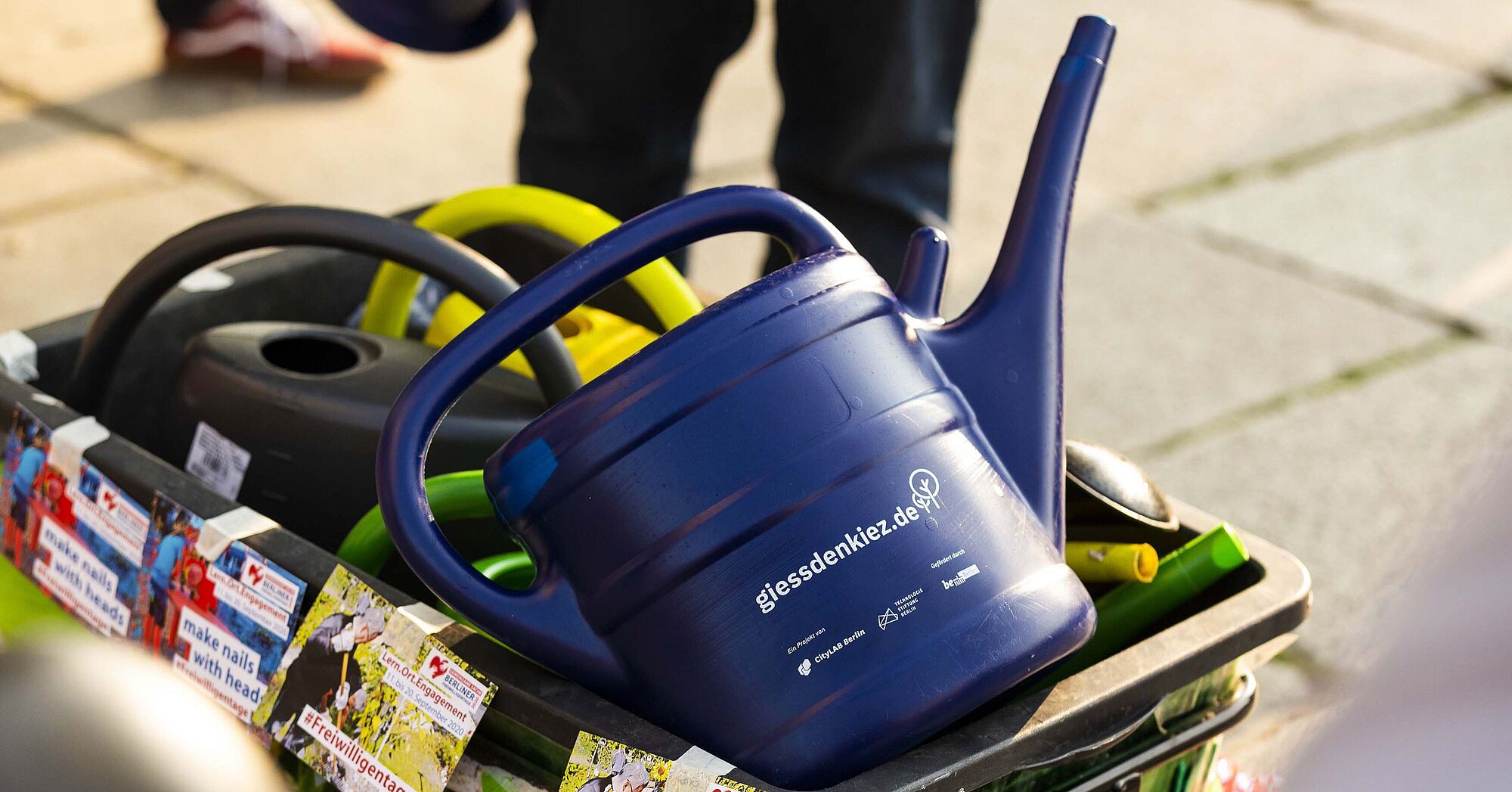
A tree-watering map moved for almost nothing. Gieß den Kiez (“water your neighbourhood”) began at CityLAB, Berlin’s public innovation lab, in 2020. Leipzig launched its own version on the same code in April 2021 with €5,000 of local money, and had over 1,300 users by 2023. Logged watering fell from over 170,000 litres in 2023 to 144,624 in 2024, and since 2025 part-time staff paid by a national volunteering foundation have kept it running. Potsdam has a version too.
Shared apps show what happens when no one pays to coordinate. The Smart Village App came out of the model project in Linz am Rhein and is used by about 50 municipalities, but no permanent funding for central coordination exists. The Open Smart City App, started by Solingen with Wolfsburg and Remscheid, reached about 25,000 users in Solingen, then split into three main versions as the cities wanted different things. Solingen’s version is now maintained by regio iT, a municipal IT company, for a community of customers.
Across the whole programme, the government counted by June 2024 that towns outside it had adopted one of its solutions 46 times, joined 41 development communities and used a project as a model 224 times. The transfer office’s events had reached 388 of those towns. Connected Urban Twins, in which Hamburg, Munich and Leipzig built digital twins of their cities with about €32m, published its results as open source; who has reused them has not been reported.
One idea moved from a city into federal law. Since 2018 Mannheim has run software from the Fraunhofer institute IOSB that looks for movements such as hitting or falling on 46 of its 70 police cameras. The city paid €860,000 for the cameras and the police €190,000 for workstations and video management, while Fraunhofer funds the software. The police say success cannot be shown in figures; street crime in the area is back at its pre-2018 level, and no independent evaluation has been published. Hamburg switched the approach on in September 2025.
Residents notice the counter more than the code. In the IMD Smart City Index, a survey of how residents experience their city, Hamburg ranks 15th of 148, Munich 19th, Berlin 29th and Hanover 66th. But asked whether processing ID documents online has cut waiting times, residents of all four put their cities among the five lowest of 17 in Germany, France, Spain, the Netherlands and Belgium.
IMD’s score from 0 to 100 for how far residents agree with the statement, in 17 cities in Germany, France, Spain, the Netherlands and Belgium; German cities in ink. The IMD Smart City Index surveys residents on how they experience their city; it measures perception, not performance. Source: IMD World Competitiveness Center, Smart City Index 2026 (resident survey)
What travelled was what towns owned and paid to maintain together: 60 public bodies steer the Masterportal through an office at Dataport, and Leipzig took Berlin’s tree map for €5,000. One for all from above has so far put one service in nine online everywhere. The federal programme helped by forcing its code into the open, and the Smart Village App came out of it. But no one yet pays to coordinate that app, and the programme is winding down with no successor announced.
References
Statistics1Click on any number to see the source
Population & migration
From our libraries9
- Expertenrat für Klimafragen: Prüfbericht zu den Emissionsdaten 2025 und den Projektionsdaten 2026 (press release, 18 May 2026) — Knowledge
- Sächsischer Rechnungshof, Jahresbericht 2026, Band I: Umsetzung des Onlinezugangsgesetzes — Knowledge
- eGovernment MONITOR 2025 (Initiative D21 / TU München) — Knowledge
- Antwort der Bundesregierung: Mittelabfluss der Smart-Cities-Modellprojekte (BT-Drucksache 20/14210) — Knowledge
- Ex-Post-Evaluationen der Strategiephasen: Befunde aus dem Förderprogramm MPSC (Modellprojekte Smart Cities) — Knowledge
- Bundesverfassungsgericht, 1 BvR 1547/19 und 1 BvR 2634/20: Regelungen zur automatisierten Datenanalyse in Hessen und Hamburg verfassungswidrig (16 Feb 2023) — Knowledge
- Gieß den Kiez — Project
- Open-Source-Projekte gemeinsam steuern: Community- und Produktmanagement in interkommunalen Entwicklungspartnerschaften (KTS, April 2026) — Knowledge
- Connected Urban Twins — Project
Further sources21
- Basic Law, Article 84 — Bundesministerium der Justiz
- Federal Climate Change Act, § 3 — Bundesministerium der Justiz
- Heat planning: more than half the population lives in a municipality with a finished plan — pv magazine (BBSR monitoring) · 4 Aug 2026
- Telecoms annual report 2025 — Bundesnetzagentur · 5 June 2026
- BREKO market analysis 2026 — BREKO · 2 Sep 2026
- eGovernment MONITOR 2026 — Initiative D21 / TU München · 29 Sep 2026
- Behörden-Digimeter 2026 — Institut der deutschen Wirtschaft Köln · 12 Mar 2026
- Speech at the dbb annual conference — Federal Government · 12 Jan 2026
- Kommunaler Finanzreport 2026: record municipal deficit — Bertelsmann Stiftung · 19 June 2026
- Städtetag warns of municipal financial distress — Sachsen Fernsehen · 11 Aug 2026
- Verwaltungsdigitalisierung: report to the budget committee — Bundesrechnungshof (published by netzpolitik.org) · 31 July 2026
- Germany’s recovery and resilience plan — European Commission
- New federal police law — netzpolitik.org · 10 July 2026
- Federal police law: Bundestag repeats the vote, Bundesrat approves — ZDF heute · 25 Sep 2026
- Smart-city model projects: cost-neutral extension to 2028 — Kommune21 · 16 Dec 2024
- Baden-Württemberg: Green members vote against Palantir — netzpolitik.org · 30 July 2026
- Constitutional complaint against Bavaria’s police software rules — beck-aktuell · 24 July 2025
- Making smart-city projects last — KOMMUNAL · 7 May 2026
- Mannheim’s behaviour scanner — netzpolitik.org · 2025
- Leipzig gießt — app-supported watering of urban trees — Interreg Europe
- Smart City Index 2026 — IMD World Competitiveness Center · 2026