
Fibre came by rule and by département
France has 34,875 communes, the municipalities, grouped into 1,252 intercommunalités that share services and taxes. A third of the population lives in a métropole or an urban community, a third in a mid-sized grouping and a third in groupings of small towns and villages. The country of 69.1 million is ageing: in 2025 deaths exceeded births for the first time since the Second World War, and 22.2% of people are 65 or older.
The Energy Code requires emissions 40% below 1990 by 2030 and carbon neutrality by 2050. By 2024 they were 32.9% below 1990, against 38% for the EU. Energy production is now only 9% of French emissions, against 34% for transport and 21% for agriculture, the sectors where cuts come slowly and where cities hold some of the levers.
In 2025 emissions fell 2.1%, to 359 million tonnes, but half the fall came from lower industrial and livestock output. The Haut Conseil pour le climat, the statutory climate council, says the pace must at least double in 2026–28 to stay within the carbon budget. Its president, Jean-François Soussana, called the progress “tout à fait insuffisant”, entirely insufficient.
index, 1990 = 100
Show the numbers
| France | EU-27 | Energy Code | |
|---|---|---|---|
| 1990 | 100.0 | 100.0 | — |
| 1991 | 104.7 | 97.8 | — |
| 1992 | 102.7 | 94.7 | — |
| 1993 | 98.7 | 93.1 | — |
| 1994 | 97.2 | 92.6 | — |
| 1995 | 98.4 | 93.7 | — |
| 1996 | 101.7 | 95.6 | — |
| 1997 | 100.3 | 94.0 | — |
| 1998 | 102.9 | 93.2 | — |
| 1999 | 101.9 | 91.6 | — |
| 2000 | 100.9 | 91.4 | — |
| 2001 | 101.8 | 92.4 | — |
| 2002 | 100.7 | 92.1 | — |
| 2003 | 101.4 | 93.7 | — |
| 2004 | 101.4 | 93.7 | — |
| 2005 | 101.6 | 93.2 | — |
| 2006 | 99.6 | 93.3 | — |
| 2007 | 97.9 | 92.2 | — |
| 2008 | 97.0 | 90.2 | — |
| 2009 | 93.1 | 84.1 | — |
| 2010 | 93.8 | 85.7 | — |
| 2011 | 89.2 | 83.3 | — |
| 2012 | 89.7 | 81.8 | — |
| 2013 | 89.6 | 80.0 | — |
| 2014 | 83.6 | 77.1 | — |
| 2015 | 84.3 | 78.0 | — |
| 2016 | 84.8 | 78.0 | — |
| 2017 | 85.2 | 78.5 | — |
| 2018 | 81.6 | 76.7 | — |
| 2019 | 80.0 | 73.4 | — |
| 2020 | 72.8 | 67.4 | — |
| 2021 | 77.2 | 70.9 | — |
| 2022 | 74.2 | 69.0 | — |
| 2023 | 69.2 | 63.5 | — |
| 2024 | 67.1 | 62.0 | 67.1 |
| 2025 | — | — | 65.9 |
| 2026 | — | — | 64.7 |
| 2027 | — | — | 63.6 |
| 2028 | — | — | 62.4 |
| 2029 | — | — | 61.2 |
| 2030 | — | — | 60.0 |
| 2031 | — | — | 57.0 |
| 2032 | — | — | 54.0 |
| 2033 | — | — | 51.0 |
| 2034 | — | — | 48.0 |
| 2035 | — | — | 45.0 |
| 2036 | — | — | 42.0 |
| 2037 | — | — | 39.0 |
| 2038 | — | — | 36.0 |
| 2039 | — | — | 33.0 |
| 2040 | — | — | 30.0 |
| 2041 | — | — | 27.0 |
| 2042 | — | — | 24.0 |
| 2043 | — | — | 21.0 |
| 2044 | — | — | 18.0 |
| 2045 | — | — | 15.0 |
| 2046 | — | — | 12.0 |
| 2047 | — | — | 9.0 |
| 2048 | — | — | 6.0 |
| 2049 | — | — | 3.0 |
| 2050 | — | — | 0.0 |
Greenhouse-gas emissions excluding land use and international aviation and shipping, indexed to 1990, for France and the EU-27. The third line runs straight from 2024 through the Energy Code’s targets: 40% below 1990 by 2030 and carbon neutrality by 2050 (drawn as zero). One step on the axis is one year. Source: Eurostat, env_air_gge (greenhouse gases excluding land use and international transport)
Fibre is the national success, and it was built differently from its neighbours’ networks. Operators built the cities with their own money; départements and regions built public networks where operators would not. Between 2010 and 2024 public authorities put €12.7bn into fibre, €8.7bn of it from local authorities, €3.5bn from the State and €0.5bn from the EU. Since 2009 the regulator ARCEP has required every builder to share the final connection with rivals.
Fibre to the premises passes 91.7% of households, against 74.1% across the EU, and all of France’s gigabit coverage is fibre. By the regulator’s own count of all premises, 43.1m of 45.2m could be connected by June 2026. Orange will sell no new copper lines anywhere after January 2027.
In 2017 the Cour des comptes, the national audit court, doubted the plan could meet its deadlines and budget. In 2025 it called it a success, while noting that the build had slowed in dense cities such as Marseille; Bordeaux unblocked its own with a charter negotiated between the city and State services.
France is furthest ahead of the EU-27 on fibre and on adults dealing with the authorities online, and behind it on renewables, firms using AI and, narrowly, 5G. All of France’s gigabit coverage is fibre, so its two network rows are the same. Coverage figures are for 2025, from the Commission’s Digital Decade report; use, skills and AI figures are Eurostat surveys for 2025; renewables are for 2024. Source: European Commission, Digital Decade (DESI 2026); Eurostat (isoc_ciegi_ac, isoc_sk_dskl_i21, isoc_eb_ai, nrg_ind_ren)
More French adults deal with the State online than the EU average: 68.5% did so in 2025, against 57.7% across the EU. Part of it is compulsion. Since 2019 every household with internet access has had to file its income-tax return online, and by 2023 more than 87% used a paperless route.
The gap falls on those who cannot follow. In 2023, 15.7% of people aged 15 and over had not used the internet in three months or had almost no digital skills, INSEE’s measure of digital exclusion; among those over 75 it was 62.2%. The State promised that every essential online procedure would be fully accessible to disabled users by December 2025. In July 2026, 219 of the 243 were fully online, but only 27 were rated fully accessible.
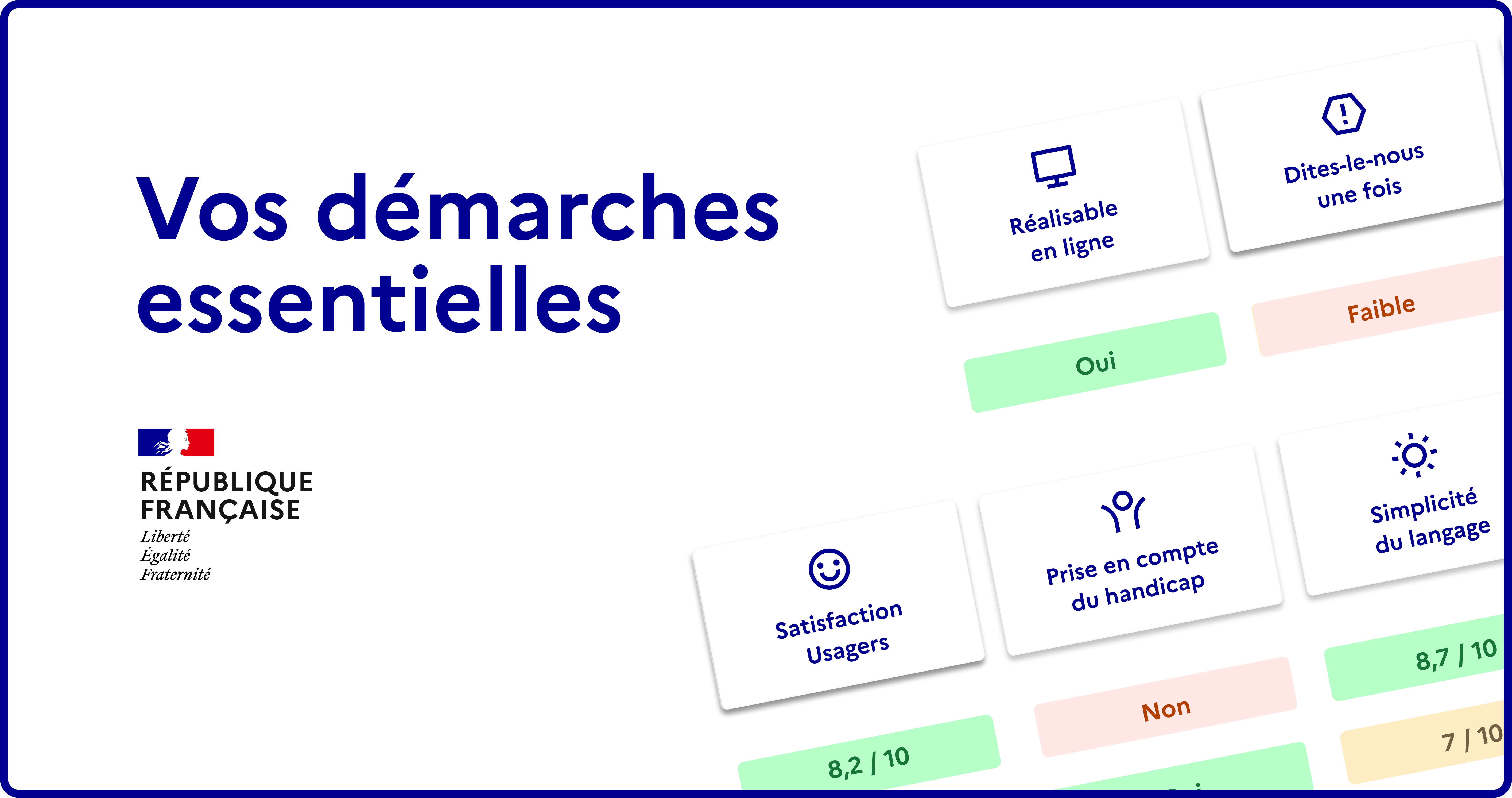
Dematerialisation, as it has been carried out so far, comes with a systemic transfer onto the user of tasks and costs that used to fall on the administration.A city that levies the tax runs the service
French local government has three layers, communes, départements and regions, and the intercommunalités between them. A big city usually acts through its métropole, which holds whole services and, for some, the taxes that pay for them. The State keeps a préfet, its representative, in every département.
- Broadband: operators build in dense areas and départements or regions build public networks elsewhere, under the regulator ARCEP. A big city negotiates street works and heritage permits. It has no say over Orange’s copper switch-off, though ARCEP asks mayors to move their own lines early.
- Public transport: each area has a transport authority, usually the métropole or the agglomeration, which sets fares and routes and levies its own payroll tax, the versement mobilité. Rural groupings could choose to take the role; by July 2021, 53% of 965 had done so.
- Low-emission zones: agglomerations create them under national thresholds, but only Paris and Lyon are obliged to restrict polluting cars. Parliament voted to abolish the zones. On 21 May 2026 the Conseil constitutionnel, France’s constitutional court, struck that vote down as unrelated to the bill that carried it.
- Policing and cameras: the mayor commands the municipal police and owns the cameras, but the préfet must authorise every camera scheme. The data authority CNIL supervises, and video analysed by algorithms is allowed only where a national law permits it.
- Energy: communes and their groupings own the local power and gas grids, but Enedis operates 95% of electricity distribution and GRDF 96% of gas under concession. Every grouping of more than 20,000 people must adopt a climate-air-energy plan; 552 of the 750 obliged had one in March 2025.
- Planning: communes, or their groupings, write the local plan, but the 2021 climate law caps the land they may build on, aiming at no net loss of open land by 2050. The Senate voted in 2025 to loosen the interim target, and a separate relaxation fell with the low-emission-zone vote in May 2026.
- Open data: since 2018 every local authority with more than 3,500 inhabitants and 50 staff must publish its data. There is no sanction; by September 2025, 790 of the 3,346 obliged communes had published anything.
- Online services and the e-ID: the State builds the login FranceConnect, the phone ID France Identité, with 4 million users, and the essential procedures for tax, benefits and documents. Communes keep the civil register and their own services.
- Cloud and procurement: since April 2026 sensitive State data must sit in qualified sovereign clouds, but the rule does not cover local authorities. The law asks administrations only to “encourage” free software.
- Skills and help: the State labels and co-funds France Services counters and funds digital advisers, while councils, La Poste and associations run them; departmental councils carry social action.
The split explains where French cities are strong. A métropole that holds a whole service and its tax, as with transport and waste, can act alone, and départements were allowed to build networks the market would not. Where the State keeps the lever, as with identity, online services, police analytics and the climate rules Parliament keeps reopening, cities wait. Duties without money are met unevenly: under a quarter of obliged communes publish open data. About three in four obliged groupings have a climate plan, a duty the State backed in 2025 with a €200m climate fund and then tried to drop from the 2026 budget.
The State works through agencies. ANCT, the national agency for territorial cohesion, runs the counters programme and the advisers. DINUM, the State’s digital agency, builds its online services, and ARCEP and the CNIL regulate. The Banque des Territoires, part of the public bank Caisse des dépôts, runs the national calls for urban innovation. La Quadrature du Net, a digital-rights group, has fought the camera laws and a school facial-recognition trial in court.
The cities’ associations, from the AMF, the Association of Mayors of France, to Intercommunalités de France and the regions, speak loudly and sometimes win. In May 2026 Françoise Gatel’s ministry tabled a bill to “strengthen the local State”, which would have let préfets step in when a local authority fails and waive national rules. The associations called it recentralisation, and on 25 June 2026 the government took it off the Senate’s agenda.
The State must relax, take care of what it knows how to do, and then let local authorities act.The State is withdrawing from the digital help it launched
Emmanuel Macron’s term ends in May 2027, and the first round of the presidential election is set for 18 April. His prime minister, Sébastien Lecornu, has no majority in the National Assembly; the 2026 budget was forced through without a vote, under article 49.3 of the constitution. Digital affairs and AI sit with a junior minister, Anne Le Hénanff, a former deputy mayor of Vannes. Territorial planning and decentralisation sit with Françoise Gatel, cities and housing with Vincent Jeanbrun.
France Services shows how the State shares the bill. Since 2019 it has labelled more than 2,800 counters where people get help with online procedures, run by councils, La Poste and associations, giving 1.2m pieces of help a month. The Cour des comptes found users largely satisfied and asked for a lasting way to pay for it. In June 2025 the President promised 200 more counters by 2027. State funding was €68m in 2026, enough for about 60; the 2027 draft budget raises it to about €84m, for a target of 3,000 counters against 2,865 today. Local authorities still pay most of the running costs.
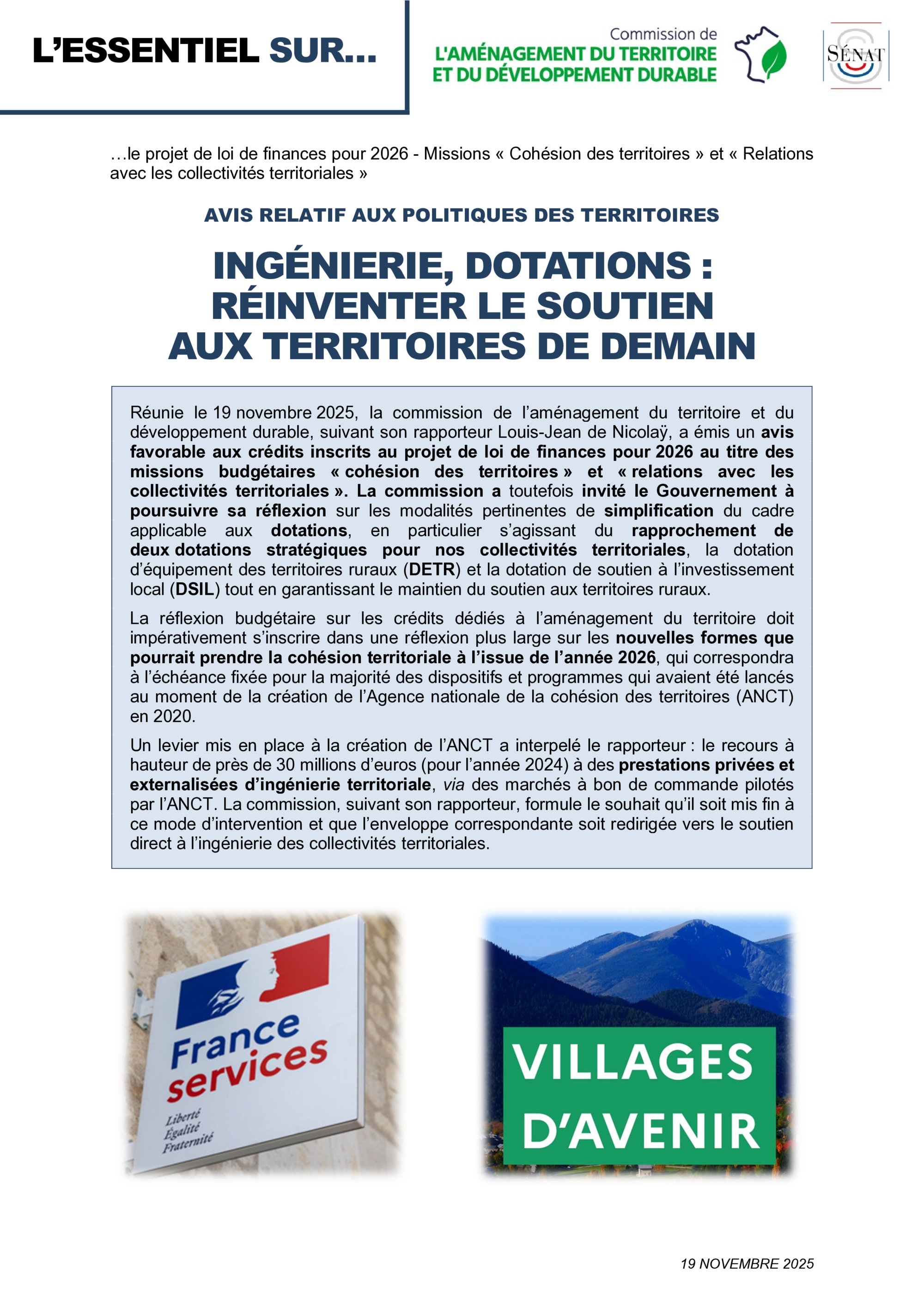
The digital advisers are what the State is now handing over. Launched at the end of 2020 with a goal of 4,000 people who teach others to use online services, the programme funded 2,800–2,900 posts and about 4.5m sessions since 2022. Its State budget line fell from €40m in 2025 to €13.8m in 2026. Intercommunalités de France expects about 1,400 advisers left by the end of the year, and State support to end during 2027.
With 4,000 digital advisers we guaranteed minimum coverage of every territory. We know there is not enough provision today to train people in digital skills.The State funds urban innovation through calls for projects. The Démonstrateurs de la ville durable, the Sustainable City Demonstrators, chose 39 winners from 2021 with a €305m envelope; no evaluation has been published, and in 2025 opposition deputies tabled an amendment demanding one. A €30m call for connected territories picked rural energy syndicates and Toulouse in 2023, promising “easily replicable” solutions; no measured results have been published yet. The main green fund for local authorities, the Fonds vert, fell from €1.6bn in 2024 to about €835m in 2026. The 2027 draft budget raises it to €984m but keeps a fifth for the State’s own buildings, so local authorities’ share would fall to €662m.
European money was larger. France’s recovery plan is €40.3bn, all in grants, 21.6% of it for digital aims. On 29 September 2026 the Commission gave a positive preliminary assessment of the last payment request. Once member states’ officials have given their opinion and the €6.1bn is paid, France will have received the whole plan. Nine French cities are in the EU mission for climate-neutral and smart cities, and all nine hold the mission label for their plans.
Sovereignty is a State project. In January 2026 the government announced that its staff would leave Teams and Zoom for its own video tool by 2027. In April the national health data platform chose the French host Scaleway to replace Microsoft. Local authorities remain free to choose their own clouds.
The aim is to end the use of non-European solutions and to guarantee the security and confidentiality of public electronic communications.The sharpest argument is about cameras. A 2023 law for the Olympics allowed algorithms to analyse video on a trial basis, and the official evaluation in January 2025 found the technical performance uneven. In July 2026 Parliament passed a security law known as Ripost, which extends the trial to the end of 2030 and to any public place exposed to a serious risk. In August the Conseil constitutionnel upheld it, ruling that an authorisation for a permanently exposed place may last no more than three months at a time. La Quadrature du Net warned the surveillance could be authorised “almost permanently”.
- Dec 2001[source]
The first free buses
Châteauroux makes its town buses free to ride.
- 2009–10[source]
Shared fibre
ARCEP’s decisions open the last stretch of every fibre network to rival operators.
- Jul 2015[source]
NOTRe law
Regions take interurban transport; groupings of communes take waste and water.
- Oct 2016[source]
Digital Republic law
Open data by default for larger local authorities.
- Nov 2019[source]
Angers signs for twelve years
The métropole’s single smart-city contract starts.
- Jan 2025[source]
Camera evaluation
The official committee reports on the Olympics trial.
- Apr 2026[source]
Sovereign hosting
A decree requires qualified clouds for sensitive State data.
- Jul 2026[source]
Third low-carbon strategy
SNBC 3 sets carbon budgets to 2038.
- Jan 2027[source]
Copper closes to new customers
No new copper subscriptions anywhere in France.
- Apr 2027[source]
Presidential election
First round on 18 April, second on 2 May.
- Dec 2030[source]
Camera trial ends
The end date of algorithmic video analysis under the Ripost law; 2030 is also the year of the 40% climate target.
- 2050[source]
Carbon neutrality
The legal date for a carbon-neutral France.
From the first free bus to the targets the next president inherits.
Free fares multiplied on a local tax
Free buses are an old French idea: Châteauroux went fare-free in 2001 and Aubagne in 2009. In September 2018 Dunkerque made it big, giving up about €4.5m a year in fares. Its network carried 20.9 million trips in 2022, 125% more than in 2017. Each could do it because a French transport authority sets its own fares and levies its own payroll tax.
Montpellier followed in December 2023, making trams and buses free for residents of the métropole. Its payroll tax, at 2% of salaries, raised €116m in 2023, and 358,000 residents now hold a free pass, against 86,000 paying subscribers before. Ridership in the first quarter of 2024 was 23.7% above the same period of 2019, on a different counting method. In January 2026 the Tadao network around Lens, Liévin and Béthune made buses free across 150 communes and about 650,000 people; no ridership figure has been published yet.
Dijon bought its smart city in one piece. OnDijon, launched in April 2019, is a twelve-year, €105m contract with Bouygues Energies & Services, EDF’s Citelum, Suez and Capgemini, run from a single control room that replaced six. By its first review, €21m of €30m had been invested, 27,000 street lights switched to LED and 269 public buildings monitored remotely. Jean-Patrick Masson, a former vice-president, called the results rather satisfactory, but said some trials had disappointed “because we are not yet ready to manage the data”.
Angers signed a similar contract in November 2019, which it calls unmatched in France: twelve years, up to €178m, €121m of it firm, with Engie’s Ineo, Suez, La Poste and the mutual insurer VYV. By early 2025 it had replaced 21,500 street lights, saving more than 70% of their energy.
Local attempts to have software watch or listen have ended badly. In 2019 the CNIL warned Saint-Étienne that microphones to detect screams in one of its districts had no legal basis, and the city dropped them. In February 2020 a Marseille court annulled the Sud region’s trial of facial recognition at two school gates in Nice and Marseille. At its film festival Cannes, the only local authority in the Olympics trial, logged 37,194 alarms and sent no officer to any of them; later runs did better. In January 2026 the Conseil d’État, the highest administrative court, agreed with the CNIL that no law allowed Nice to have software scan its street cameras for cars stopping illegally outside school gates.
Residents are guarded with their data, but not with cameras. In the IMD Smart City Index, a survey of how residents experience their city, Paris ranks 71st of 148, Lyon 92nd, Bordeaux 96th, Lille 107th and Marseille 111th. Asked whether they would give up personal data to ease traffic, fewer than half agree in each French city, the only five of 17 in Germany, France, Spain, the Netherlands and Belgium where that is so. Yet 57–68% say they are comfortable with face recognition to lower crime, much as their neighbours do.
Share of surveyed residents who agree or strongly agree, in 17 cities in Germany, France, Spain, the Netherlands and Belgium; French cities in ink. The IMD Smart City Index surveys residents on how they experience their city; it measures attitudes, not outcomes. Source: IMD World Competitiveness Center, Smart City Index 2026 (resident survey)
Fibre reached nine premises in ten because the State set the rules and départements paid where operators would not. Free fares multiplied because a transport authority can tax payrolls for them: Dunkerque, Montpellier and the Lens basin each paid their own way. The twelve-year contracts stayed in the two métropoles that signed them, and the State’s smaller innovation calls have not yet published what their winners achieved. Cameras that analyse themselves are the State’s to authorise, now to 2030.
References
Statistics1Click on any number to see the source
Population & migration
From our libraries5
- Organisation de la fermeture du réseau cuivre d'Orange (Arcep) — Knowledge
- Observatoire de la qualité des démarches en ligne — Vos démarches essentielles (DINUM, édition 14, juillet 2026) — Knowledge
- Projet de loi visant à renforcer l'État local, articuler son action avec les collectivités territoriales et sécuriser les décideurs publics (Sénat n°651, 2025-2026) — Knowledge
- Avis sur le projet de loi de finances pour 2026 — Politiques des territoires : « Ingénierie, dotations : réinventer le soutien aux territoires de demain » (Sénat, commission de l'aménagement du territoire, 19 novembre 2025) — Knowledge
- Expérimentation de traitements algorithmiques d'images légalement collectées au moyen de systèmes de vidéoprotection — Rapport du comité d'évaluation (janvier 2025) — Knowledge
Further sources18
- Code de l’énergie, art. L.100-4 — Légifrance
- Haut Conseil pour le climat, annual report 2026 (presentation) — HCC / LSCE · 16 July 2026
- Cour des comptes on the national fibre plan — Maire-info · 7 Apr 2025
- Illectronisme in France — INSEE · 14 Oct 2025
- Low-emission zones: the Conseil constitutionnel censures their abolition — LCP · May 2026
- Open data: the governance of data — Banque des Territoires
- Government withdraws the État-local bill — Acteurs publics · 25 June 2026
- France Services — ANCT
- Digital inclusion budget sharply cut in 2026 — Acteurs publics · 15 Oct 2025
- France’s recovery and resilience plan — European Commission
- Loi Ripost adopted: the assessment — La Quadrature du Net · 9 Sept 2026
- Décision n° 2026-915 DC (loi Ripost), in brief — Conseil constitutionnel · 14 Aug 2026
- Fonds vert and the 2027 draft budget — Maire-info · 5 Oct 2026
- Dunkerque: five years of free buses — Transbus · Sept 2023
- Free public transport in Montpellier: ridership up — Banque des Territoires · 2024
- OnDijon: a first review — Cityramag
- Facial recognition in lycées: the Marseille court annuls the region’s decision — Banque des Territoires · Feb 2020
- Smart City Index 2026 — IMD World Competitiveness Center · 2026