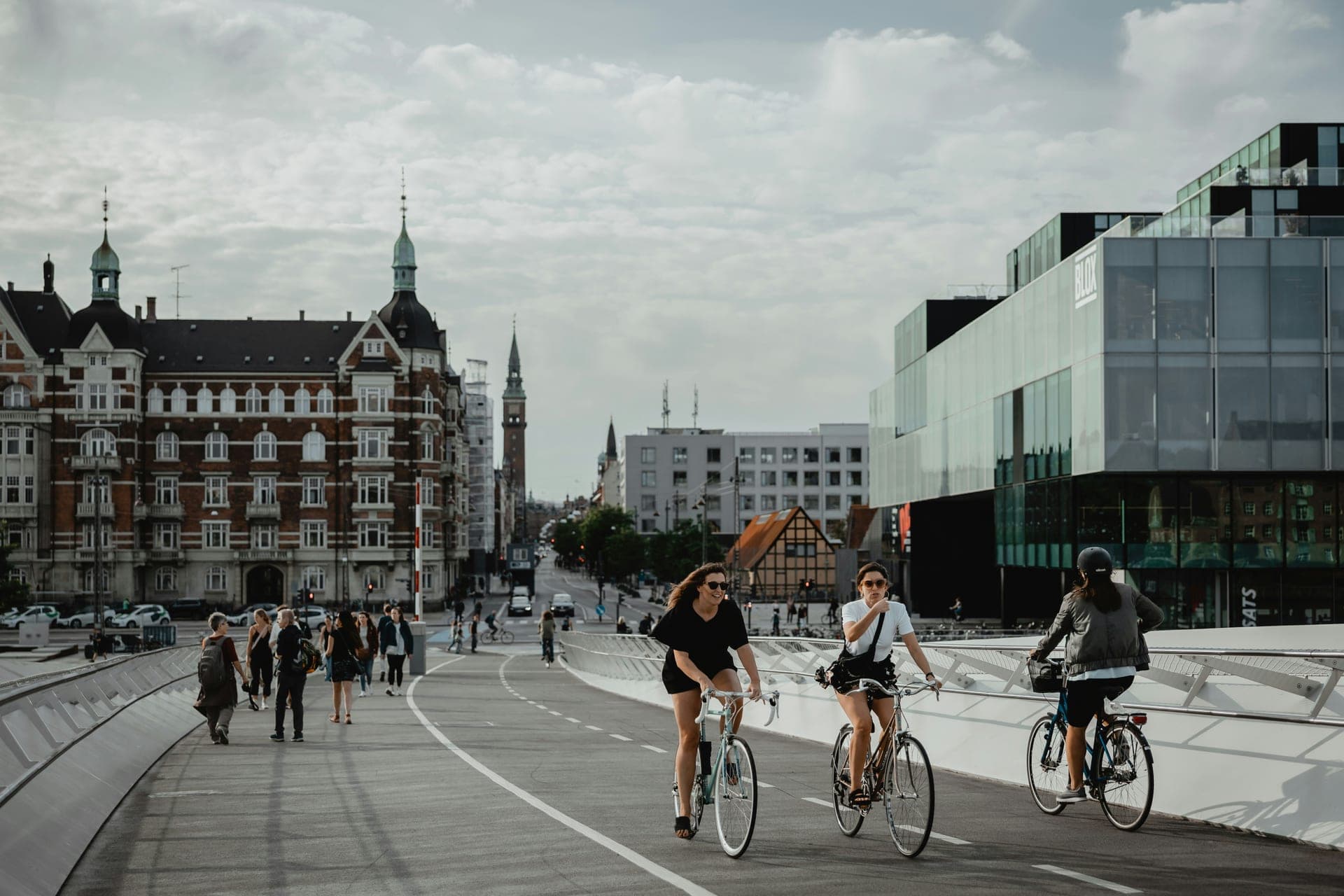
A city that prints the targets it missed
Copenhagen counts its bicycles. In 2025 its residents owned 754,200 of them, more than the 670,389 people who live in the municipality. The city also prints the targets it missed. Its annual CO₂ account marks each of the 19 goals of its 2012 climate plan as on course or not, and its mobility report does the same for cycling, cars and charging.
The figures here cover Copenhagen Municipality (Københavns Kommune), the city proper. Frederiksberg, a separate municipality of 105,947 people, lies entirely inside it and is counted apart. The municipality has grown by 15.5% since 2015. In the IMD Smart City Index 2026, 84.4% of residents surveyed named affordable housing among their five most urgent priorities.
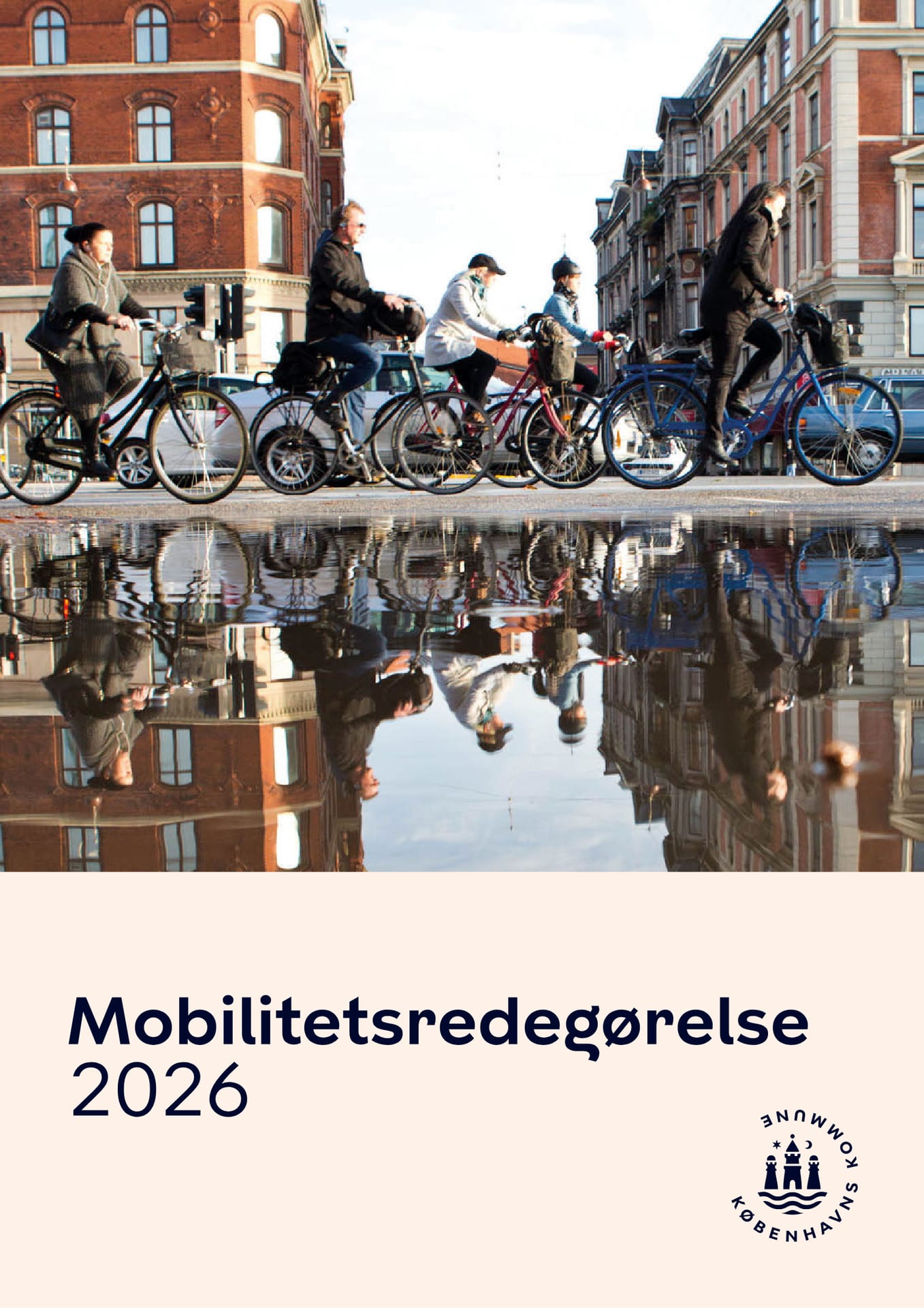
In 2025, 78% of Copenhageners’ trips were on foot, by bike or by public transport, according to the national travel survey run by DTU, the Technical University of Denmark. Counting everyone who travels to, from and within the city, the share was 74%, short of the 75% the climate plan had set for 2025. The goal that half of all trips to work or study in the city would be by bike was missed too: 43% in 2025. Residents own 250 cars per 1,000 adults.

Share of all trips made by residents of Copenhagen Municipality in 2025, inside and outside the city. About 1,500 Copenhageners are interviewed a year; the stated uncertainty is 3–5%. Source: Københavns Kommune, Mobilitetsredegørelse 2026 (DTU national travel survey, TU)
The 2012 plan, KBH 2025, promised a carbon-neutral capital by 2025. The city dropped that goal in August 2022, after ARC (Amager Ressourcecenter), the waste company several municipalities own, did not apply to a state fund for carbon capture at its Amager Bakke incinerator. The measured fall is still steep. Territorial emissions were 72.5% lower in 2024 than in 2010. The city’s long-standing method, which also credits renewable electricity and heat from plants it part-owns, gives 78.6%. The city notes that turbines HOFOR owns in other municipalities can count in several accounts, and its new climate strategy changes how the credit is counted. In 2024 emissions fell only 1.4% gross, or about 3% with the credit. The goal now is to be climate-positive by 2035, with net emissions below zero.
thousand tonnes CO₂e
Show the numbers
| Gross | With renewables credit | |
|---|---|---|
| 2005 | 2,480 | 2,204 |
| 2010 | 2,432 | 2,129 |
| 2020 | 957 | 671 |
| 2021 | 840 | 566 |
| 2022 | 832 | 549 |
| 2023 | 678 | 471 |
| 2024 | 669 | 456 |
| 2035 | — | — |
Territorial emissions (scope 1 and 2: fuel burnt in the city plus the electricity and district heat it uses). “Gross” counts every tonne; “with credit” subtracts renewable electricity, heat and gas from plants in the city or part-owned by it. The 2035 goal is net emissions below zero, on a new method with a 2019 baseline, so no target line is drawn. The city expects the measures it has funded to cut emissions by about 68% from 2019, and says the rest needs carbon capture in Copenhagen. Source: Københavns Kommune, CO2-regnskab 2024 (Table 2-1); Klimastrategi 2035 status note, June 2026
Air and rain add further pressure. At the city’s three monitoring stations, air has met EU limits but not the World Health Organization’s guidelines in any year from 2021 to 2025. The plan to protect the city from cloudbursts, sudden downpours that overwhelm the drains, has been cut back under national rules.
Fibre is available to 90% of homes, and 98.6% can get gigabit speeds on some fixed line. The city lists 216 datasets on Open Data DK, a portal it shares with other Danish municipalities, but only 22 of them have changed since the start of 2025. Letters from the city arrive in Digital Post, the national public mailbox opened with MitID, the national digital ID, unless a resident is granted an exemption.
The gap shows up in that mailbox. The Citizens’ Adviser (Borgerrådgiveren), the council’s complaints office, regularly hears from residents who cannot answer the city’s digital letters because the reply function has been switched off. Complaints to the office rose 7.3% in 2024 and 9.4% in 2025, and its 2025 report asks every administration to work on digital inclusion. The city’s new digital strategy accepts that residents’ digital skills differ widely, and the council added a promise of universal design before adopting it.
Residents’ scores point the same way. Asked by IMD in 2026, they gave online ticketing for museums and shows 81.7 out of 100, but only 53.6 for the claim that reporting a maintenance problem online gets it fixed quickly. IMD ranks Copenhagen 5th of 148 cities on such answers, which measure perception rather than performance.
As a municipality, we must take responsibility for our digital solutions, also where they temporarily or permanently reduce legal certainty and the service residents experience.A solutions lab that does not hold the purse
Copenhagen Solutions Lab is the city’s own test bed for urban technology, inside the Climate, Environment and Technical Administration. Its current work covers air quality, AI for energy use in buildings, data on how people move and the circular economy. The lab can lead projects, but it does not normally decide their priority, funding or roll-out, the city told a Social Liberal councillor, Emil Moselund Østergaard, in June 2026. Copenhagen has had no central innovation unit since it closed its Innovation House in 2019, so projects depend on the backing of the separate administrations that hold the budgets.
Much of the climate work belongs to companies. HOFOR, the utility that Copenhagen owns with neighbouring municipalities, runs the Amagerværket combined heat and power station, which supplies about a quarter of the city’s district heat. ARC burns waste for its owner municipalities at Amager Bakke. Metroselskabet, which builds and runs the metro, is 50% owned by the city, 41.7% by the state and 8.3% by Frederiksberg.
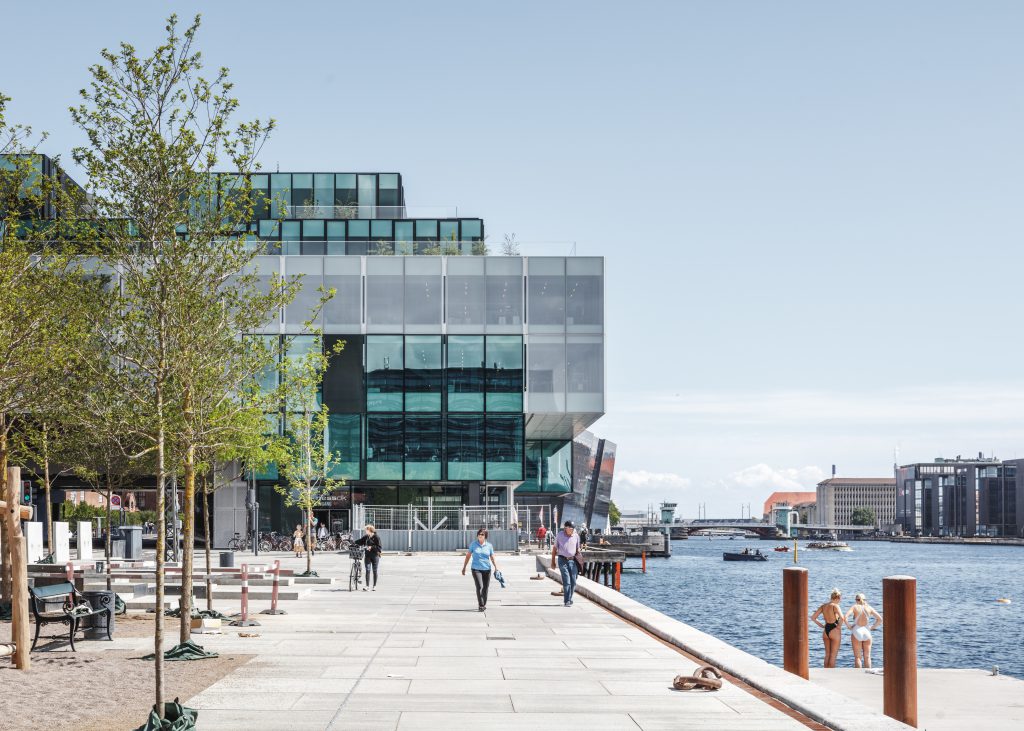
EnergyLab Nordhavn tested from 2015 to 2019 how a new harbour district could share heat and power. DTU, the city, the port developer By & Havn, HOFOR, ABB and Danfoss took part, and it closed in 2021. BLOXHUB, a members’ hub for urban innovation in the BLOX building on the harbour, counts about 350 companies, research institutions, organisations and public bodies. Gate 21 works on similar projects across the wider region.

Some of the shared work runs between municipalities. The Health and Care Administration has its own Welfare Innovation Unit and runs a collaboration of six Danish cities on welfare technology, with joint projects and one entry point for suppliers. A joint secretariat plans the super cycle highways for 27 municipalities. Innovation District Copenhagen gathers the city, the state, universities, hospitals, foundations and firms around life science and quantum technology. The city’s planning director sits on its board.
Published tallies of start-up money are national, not for the city. By one commercial count, 74 Danish start-ups raised €886m in 2025. EIFO, Denmark’s state export and investment fund, reported venture activity down 44% in the first half of that year.
Climate-positive by 2035, on one condition
Copenhagen is governed by its council, the Borgerrepræsentationen, with 55 seats, and by seven mayors who each lead an administration. After the election of November 2025, Sisse Marie Welling of SF (Green Left) became Lord Mayor on 1 January 2026. By the political news site Altinget’s account she is the first from outside the Social Democrats in over 100 years. Enhedslisten (the Red–Green Alliance) won the most seats, 13. Eight parties holding 46 seats signed the agreement that made Welling Lord Mayor. The Social Democrats stayed outside it, but still took one of the seven mayoralties, for employment, integration and business.
There is no chief digital officer. The Lord Mayor chairs the Finance Committee, which holds digitalisation, and the Finance Administration wrote the digital strategy for 2026–2027. The council adopted it on 21 May 2026, with DKK 150m for joint digital development to 2029, after four parties added commitments on universal design and residents’ differing digital skills. It sets no quantified targets. Professional judgements, decisions on residents’ cases and the relationship with residents are not to be automated. The city also wants to use more European suppliers. That builds on an analysis the council ordered unopposed in March 2025, of how it could avoid depending on the tech giants.
The Parliamentary Ombudsman, who oversees public authorities for the national parliament, is looking at how such lines work in practice. In August 2026 the office opened general investigations into selected municipal AI projects. One is a Copenhagen system that uses software robots and machine learning to fetch and read the child-protection and criminal-record certificates needed for hiring. The office asks how the model decides which cases a person must handle.
Klimastrategi 2035, the city’s climate strategy adopted on 18 September 2025, has three goals for 2035: a climate-positive territory, and halving both residents’ consumption footprint and that of the city’s own purchasing. The first status report, in June 2026, expects territorial emissions to fall by about 68% from 2019 with the measures already funded. It states that climate positivity can only be reached if carbon capture is built in Copenhagen before 2035. Purchasing is on course for only about 30% of its target.
Neither of the city’s capture projects won state support. E.ON, ARC’s partner at Amager Bakke, submitted no bid in August 2025 after the partnership ended. In December 2025 HOFOR and Elimini, a carbon-capture firm owned by Britain’s Drax, decided not to make a final bid for a plant planned at Amagerværket. They cited uncertainty over where the carbon would be stored and the large guarantees required. In May 2026 the state’s DKK 28.7bn tender went to a single winner, the cement maker Aalborg Portland. The city’s environment mayor has said national rules make a congestion charge impossible for the city to introduce.
The argument over capture is older. When ARC did not apply to the state fund in 2022, Line Barfod of Enhedslisten, then the city’s mayor for technical and environmental affairs, blamed the government’s criteria.
It is completely incomprehensible that the government, which wants to promote CO2 capture and has based its own climate plan on exactly that, sets criteria for support to develop the technique that rule out in advance probably the most obvious site.The state’s answer has not changed. In April 2023 the climate minister, Lars Aagaard of the Moderates, defended the financial conditions in a written statement. Barfod holds the renamed climate, environment and technical post in the new council.
When the state pays out large subsidies, it is reasonable that certain requirements on the companies’ finances follow.- Aug 2012[source]
KBH 2025 Climate Plan
The council adopts the goal of a carbon-neutral city by 2025.
- Nov 2015[source]
Cloudburst investment plan
A 20-year plan of surface projects against a 100-year rainstorm is adopted.
- Aug 2022[source]
2025 goal dropped
With no carbon capture at Amager Bakke in sight, the city gives up carbon neutrality by 2025.
- Dec 2024[source]
Cloudburst projects cancelled
The council cancels most surface projects not yet started, under the 2021 national rules.
- Aug 2025[source]
No bid at Amager Bakke
E.ON, ARC’s capture partner, submits no bid to the state’s carbon-capture tender.
- Sept 2025[source]
Klimastrategi 2035
The council adopts the goal of a climate-positive city by 2035.
- Dec 2025[source]
HOFOR drops its bid
HOFOR and Elimini decide not to make a final offer for a plant at Amagerværket.
- May 2026[source]
Tender awarded
The state’s carbon-capture contract goes to Aalborg Portland; no Copenhagen plant is in it.
- May 2026[source]
Digital strategy
The council adopts the digital strategy for 2026–2027.
- Jan 2027[source]
Cloudburst deadline
Projects built to the old 100-year standard must have started.
- 2030[source]
Mobility target
Cars are to make up at most 25% of trips.
- 2035[source]
Climate-positive
Target: net territorial emissions below zero, which the city says requires carbon capture.
From a carbon-neutral promise for 2025 to a climate-positive goal that depends on carbon capture.
What the evaluations found
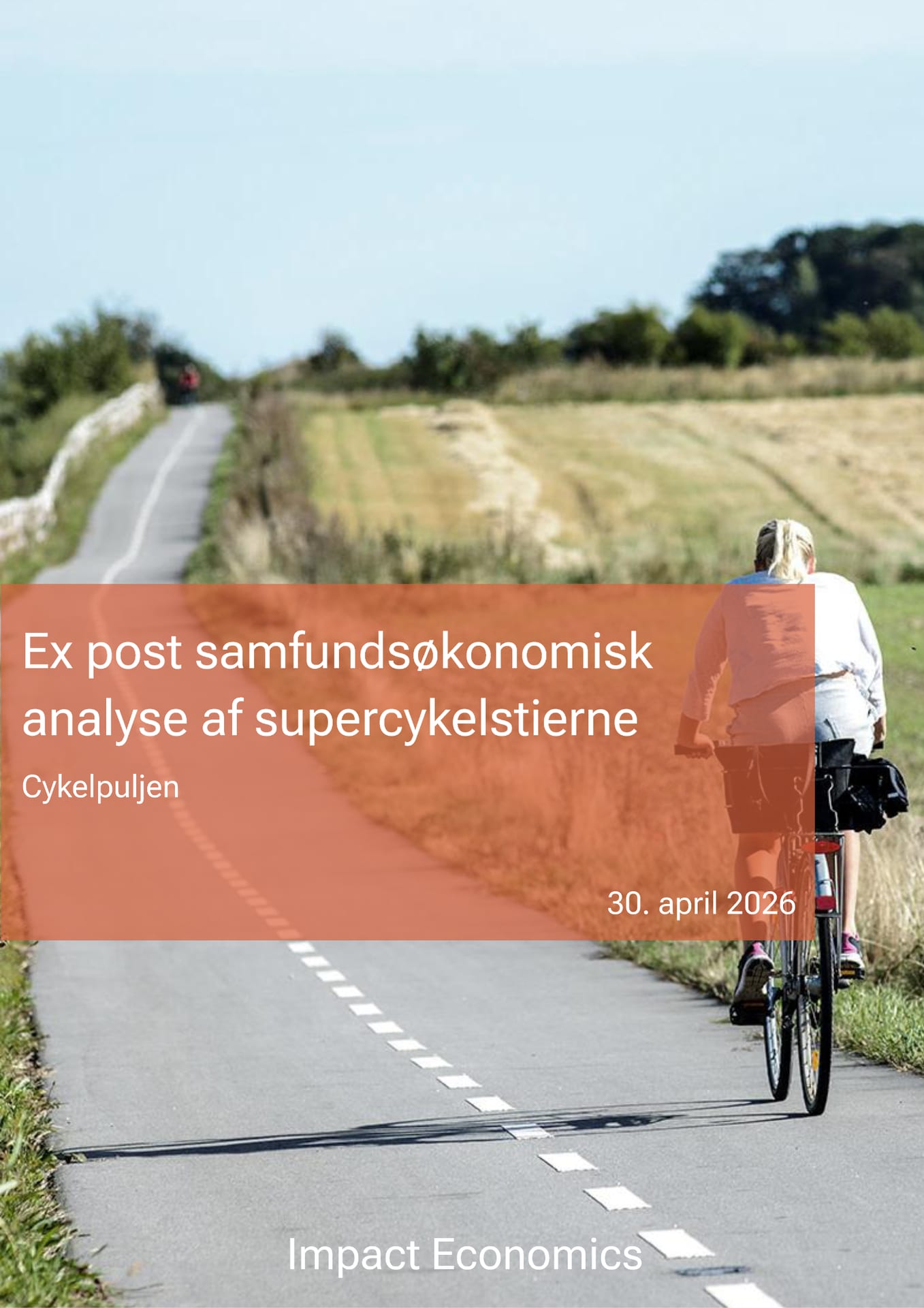
The Supercykelstier (super cycle highways) are commuter routes planned jointly by the municipalities of the capital region. Since 2012 they have built 16 routes covering 244 km, for DKK 387m in today’s prices. An ex-post analysis by Impact Economics in April 2026 put the net benefit to society at DKK 6.0bn, an internal return of 17%, with health gains worth DKK 3.9bn. The municipalities paid 53% of construction and 98% of upkeep, and end up DKK 0.3bn worse off, while the state gains DKK 2.6bn through taxes and health savings.
The cloudburst plan (skybrudsplan in Danish) was drawn up in 2012 and given a 20-year investment plan in 2015, with about 300 surface projects to protect the city from a 100-year rainstorm. National rules in force since 2021 cap what wastewater tariffs may fund, and in December 2024 the council cancelled most of the projects that could not start before 1 January 2027. About 58 will still be built to the old standard, and 23 are in use; new projects will be designed to the lower standard the rules allow. So far the work has cut flood risk by about 9–10%, protecting about 4,400 households and 750 business addresses. Tunnels by HOFOR are still to come.
The council decided in its 2019 budget to convert every bus line to electricity, and by 2025, 80% of bus operation was electric. By spring 2026 the city’s buses ran on electricity. After a winter of charging failures on line 2A, the council ordered eight gas buses to stand by there until 2029. During the charging plan for 2022 to 2025, the number of charge points on public streets rose from 1,141 to 4,126, not counting those in car parks or at shops. The plan narrowly missed one target, with 10.9 electric and plug-in hybrid cars per point against a ceiling of 10. It missed the other: no block of flats was to be more than 250 m from a point, but the average was 326 m and the farthest 705 m.
The City Data Exchange tested whether city data would sell. The city, the Capital Region and Hitachi opened the marketplace in 2016. Of its datasets, 25 were priced and 134 free, and Hitachi itself published 131. It closed in 2018, when the contract with Hitachi ended, for lack of demand. An evaluation report published that year set out what its users had learned.
K-AI, an assistant in the city’s own AI system, was tested in the Social Services Administration to draft letters to parents after a child-welfare report. Tested on fictitious cases, it sometimes added information or concerns that were not in the original report. The administration is now working out how it could run in daily use. A data-based maintenance model built with Sweco, an engineering consultancy, is in daily use for about 80 sports facilities, 30 culture buildings and over 45 artificial pitches. It steers DKK 500m of upkeep to 2034 and went into use in September 2026, too recently for results.
Copenhagen is now counting on a plant it cannot order. On the levers it holds, it keeps an honest score. Street chargers multiplied, though both charging targets were missed, and a smaller share of commuters cycled in 2025 than in 2024. The 2035 goal sits with others. The state’s DKK 28.7bn capture tender went to a cement works in Aalborg, and HOFOR and Elimini are looking for another way to build at Amagerværket. The city’s own status note says climate positivity needs a plant like that.
References
Statistics1Click on any number to see the source
Population & migration
From our libraries13
- CO2-regnskab for Københavns Kommune 2024 — Knowledge
- Mobilitetsredegørelse 2026 — Knowledge
- DTU - Technical University of Denmark — Organisation
- Digitaliseringsstrategi 2026–2027: Mennesker først. Fælles retning. Stærkere fundament. — Knowledge
- Copenhagen Solutions Lab — Organisation
- Københavns Kommune - Teknik- og Miljøforvaltningen — Organisation
- BLOXHUB — Organisation
- Gate 21 — Organisation
- Status på Klimastrategi 2035, klimabudget og styringsmodel for klima (Økonomiforvaltningen, 3 Jun 2026) — Knowledge
- Orientering om status på ARCs Carbon Capture projekt (Teknik- og Miljøforvaltningen, 1 Sep 2025) — Knowledge
- Orientering vedr. HOFORs CCS-projekt (Teknik- og Miljøforvaltningen, 6 Jan 2026) — Knowledge
- Ex post samfundsøkonomisk analyse af supercykelstierne (Impact Economics, 30 Apr 2026) — Knowledge
- Klimatilpasningsredegørelsen 2025 (Teknik- og Miljøforvaltningen, 6 Nov 2025) — Knowledge
Further sources21
- Mobilitetsredegørelse 2026 — Københavns Kommune · July 2026
- CO2-regnskab for Københavns Kommune 2024 — Københavns Kommune · Aug 2026
- København dropper mål om at blive CO2-neutral i 2025 — TV2 Kosmopol · 22 Aug 2022
- Borgerrådgiverens Beretning 2025 — note — Københavns Kommune · 21 May 2026
- Smart City Index 2026 — Copenhagen — IMD World Competitiveness Center · 2026
- Bredbåndskortlægning 2026 — municipal data — Digitaliseringsstyrelsen · 2026
- Answer on innovation to Emil Moselund Østergaard (B) — Københavns Kommune · 24 June 2026
- Sisse Marie Welling sikrer SF overborgmesterposten i København — Altinget · 19 Nov 2025
- Digitaliseringsstrategi 2026–2027 — Finance Committee item 7 — Københavns Kommune, Økonomiudvalget · 12 May 2026
- Digitaliseringsstrategi 2026–2027 — council item 6 — Københavns Kommune, Borgerrepræsentationen · 21 May 2026
- KF26 forudsætningsnotat: CCS — Klima-, Energi- og Forsyningsministeriet · 2026
- Line 2A: stand-by gas buses — council item 5 — Københavns Kommune, Borgerrepræsentationen · 21 May 2026
- Investigation of Copenhagen’s certificate project — Folketingets Ombudsmand · 16 Aug 2026
- Status på Klimastrategi 2035 — Københavns Kommune, Økonomiforvaltningen · 3 June 2026
- Orientering vedr. HOFORs CCS-projekt — Københavns Kommune · 6 Jan 2026
- Afgørende for klimamål: hvorfor kan CO2-fangst lykkes i Oslo, men ikke i København? — TV2 Kosmopol · 11 Apr 2023
- Ex post samfundsøkonomisk analyse af supercykelstierne — Impact Economics for the Supercykelsti secretariat · 30 Apr 2026
- Klimatilpasningsredegørelsen 2025 — Københavns Kommune · Nov 2025
- Case study: Copenhagen City Data Exchange — Greater Manchester Combined Authority
- K-AI: better communication with young people and parents about child-welfare reports — KL Videncenter
- Data skal sikre færre nedbrud og bedre vedligehold — Københavns Kommune · 9 Sept 2026