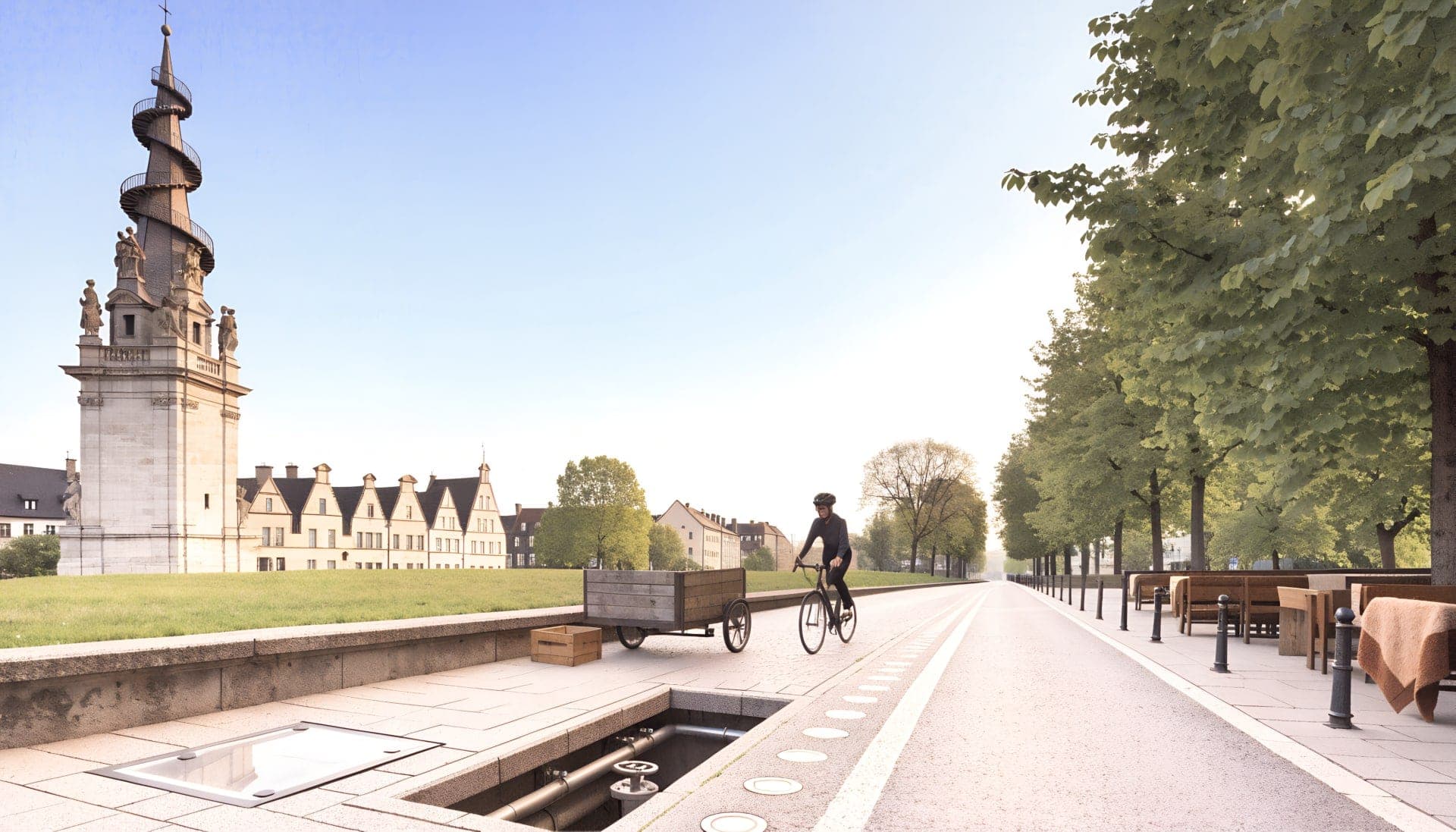
Digital Post by law, paper letters for one in 23
Denmark runs its welfare state through its municipalities. Since the 2007 structural reform, 98 of them, merged from 271, carry most of the tasks residents deal with directly, while five regions run the hospitals. On 1 January 2027 the Capital Region and Region Zealand merge into Region Østdanmark, leaving four.
The Climate Act of 2020 commits the country to emissions 70% below 1990 by 2030 and to climate neutrality by 2050 at the latest. Neutrality in 2045 and a 110% cut by 2050 are government goals, which the coalition formed in June 2026 has promised to write into the Act. The same coalition raised the 2035 goal to at least 85%, from the 82% its predecessor set in December 2025.
By 2024 emissions were 49% below 1990 on the EU’s common basis, which leaves out land use, against 38% for the EU as a whole. In February 2026 the Climate Council (Klimarådet), the independent advisory body the Act sets up, judged the government’s 2025 projection too optimistic. It expected higher emissions in 2030, because the carbon-capture tender would deliver less and farm emissions were underestimated.
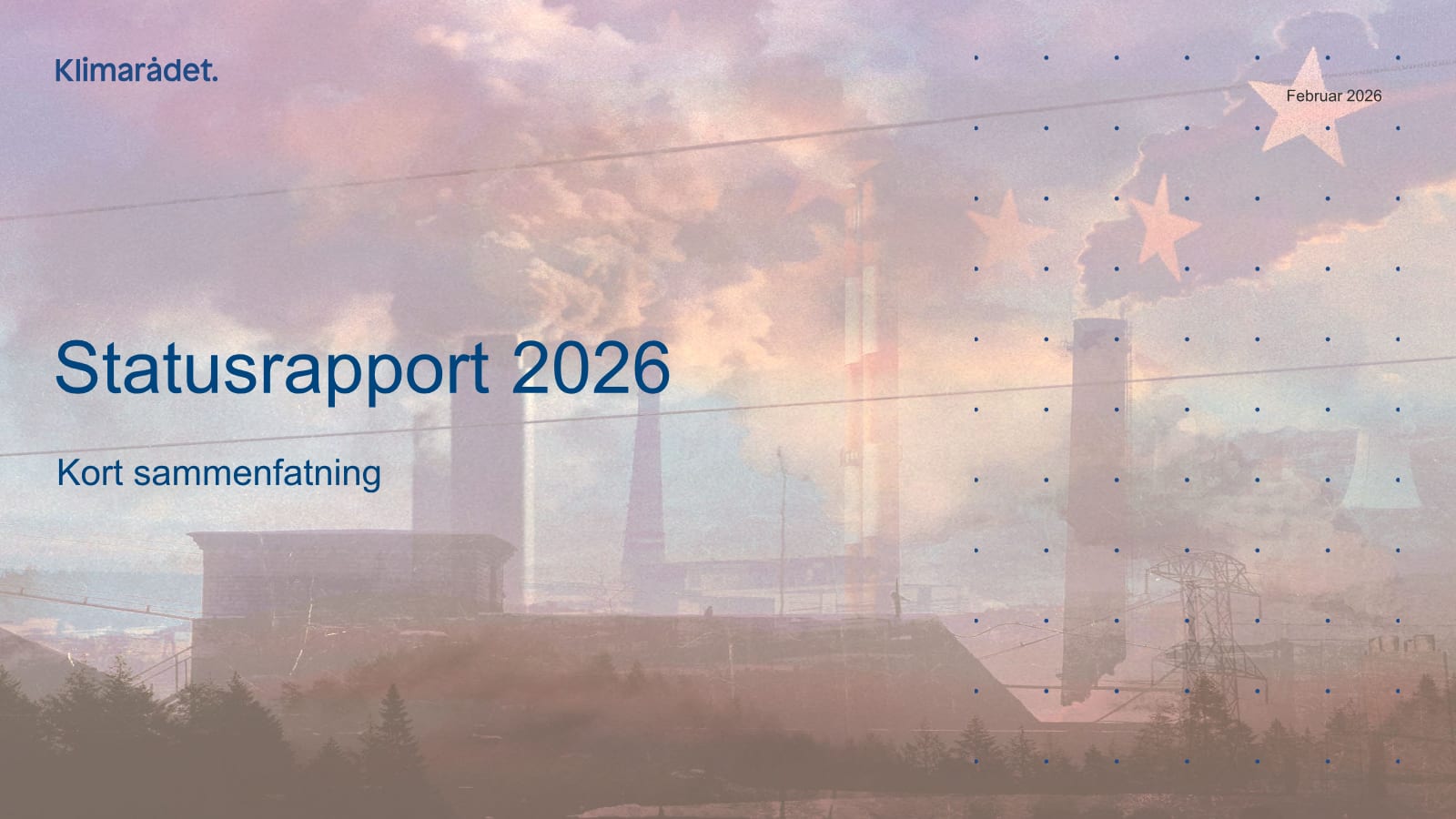
Lars Aagaard of the Moderates, a centrist party, then the climate minister, replied that “we are not in 2030, and the political work is not over”. The ministry’s next projection, published for consultation in May, estimates a 57% cut for 2025 on the national basis, inside the band the Act set for that year. It still has the 2030 target being met, with a margin of only 0.4 Mt.
index, 1990 = 100
Show the numbers
| Denmark | EU-27 | Climate Act path | |
|---|---|---|---|
| 1990 | 100.0 | 100.0 | — |
| 1991 | 115.0 | 97.8 | — |
| 1992 | 106.7 | 94.7 | — |
| 1993 | 110.0 | 93.1 | — |
| 1994 | 115.4 | 92.6 | — |
| 1995 | 111.4 | 93.7 | — |
| 1996 | 129.6 | 95.6 | — |
| 1997 | 116.3 | 94.0 | — |
| 1998 | 110.7 | 93.2 | — |
| 1999 | 106.9 | 91.6 | — |
| 2000 | 101.0 | 91.4 | — |
| 2001 | 103.1 | 92.4 | — |
| 2002 | 102.4 | 92.1 | — |
| 2003 | 109.3 | 93.7 | — |
| 2004 | 101.0 | 93.7 | — |
| 2005 | 95.0 | 93.2 | — |
| 2006 | 105.7 | 93.3 | — |
| 2007 | 99.0 | 92.2 | — |
| 2008 | 94.0 | 90.2 | — |
| 2009 | 90.3 | 84.1 | — |
| 2010 | 90.6 | 85.7 | — |
| 2011 | 83.2 | 83.3 | — |
| 2012 | 76.9 | 81.8 | — |
| 2013 | 79.4 | 80.0 | — |
| 2014 | 73.6 | 77.1 | — |
| 2015 | 69.9 | 78.0 | — |
| 2016 | 72.6 | 78.0 | — |
| 2017 | 69.4 | 78.5 | — |
| 2018 | 69.2 | 76.7 | — |
| 2019 | 63.8 | 73.4 | — |
| 2020 | 60.0 | 67.4 | — |
| 2021 | 61.4 | 70.9 | — |
| 2022 | 59.0 | 69.0 | — |
| 2023 | 54.3 | 63.5 | — |
| 2024 | 51.1 | 62.0 | 51.1 |
| 2025 | — | — | 47.6 |
| 2026 | — | — | 44.1 |
| 2027 | — | — | 40.6 |
| 2028 | — | — | 37.0 |
| 2029 | — | — | 33.5 |
| 2030 | — | — | 30.0 |
| 2031 | — | — | 28.5 |
| 2032 | — | — | 27.0 |
| 2033 | — | — | 25.5 |
| 2034 | — | — | 24.0 |
| 2035 | — | — | 22.5 |
| 2036 | — | — | 21.0 |
| 2037 | — | — | 19.5 |
| 2038 | — | — | 18.0 |
| 2039 | — | — | 16.5 |
| 2040 | — | — | 15.0 |
| 2041 | — | — | 13.5 |
| 2042 | — | — | 12.0 |
| 2043 | — | — | 10.5 |
| 2044 | — | — | 9.0 |
| 2045 | — | — | 7.5 |
| 2046 | — | — | 6.0 |
| 2047 | — | — | 4.5 |
| 2048 | — | — | 3.0 |
| 2049 | — | — | 1.5 |
| 2050 | — | — | 0.0 |
Greenhouse-gas emissions excluding land use and international aviation and shipping, indexed to 1990, for Denmark and the EU-27. The third line runs straight from 2024 through the Climate Act’s targets: 70% below 1990 by 2030 and climate neutrality by 2050 at the latest (drawn as zero, before any removals). The Act counts land use in its targets, so the path is indicative; the government’s 2035 and 2045 goals are not drawn because they are not law. One step on the axis is one year. Source: Eurostat, env_air_gge (greenhouse gases excluding land use and international transport)
The Climate Council delivers a crystal-clear warning: the government’s current course does not hold.The networks were built from below. Fibre to the premises passes 90.2% of homes, against 74.1% across the EU. A 2020 study for the Danish Energy Agency credits this mainly to utility companies, and names the energy group Norlys as the largest fibre owner. The state’s own broadband pool is small: its 2024 general round promised DKK 53.6m to 93 projects.
Denmark is above the EU-27 average on every indicator here, and furthest ahead on adults dealing with the authorities online. Coverage figures are for 2025, from the Commission’s Digital Decade report; use, skills and AI figures are Eurostat surveys for 2025; renewables are for 2024. 5G is left out: it covers all populated areas of Denmark. Source: European Commission, Digital Decade (DESI 2026); Eurostat (isoc_ciegi_ac, isoc_sk_dskl_i21, isoc_eb_ai, nrg_ind_ren)
In 2025, 91% of adults dealt with a public authority online, against 57.7% across the EU. Much of that contact is compulsory. Between 2012 and 2015 four “wave laws” made digital self-service mandatory in 89 areas of public administration. Digital Post, the public sector’s digital mailbox, has been compulsory for citizens since 2014, and 97.2% of residents over 15 hold MitID, the national digital ID.
The same rule leaves a group at the counter. In 2026, 225,120 residents, 4.4% of those over 15, were exempt from Digital Post and got their letters on paper. The agency says the exempt are mostly the oldest residents, and people without MitID are found mainly from the age of 69. Exemptions are granted at Borgerservice, the citizens’ service desk of each town hall.
Being enrolled is not the same as coping. In a 2024 national survey, 18.1% of people felt only partly or not at all able to deal digitally with the public sector. About 10% of those who used public digital services had needed help because the contact was digital. Many lean on family: in October 2024 about 250,000 people had given someone else access to read their Digital Post.
Ninety-eight councils that negotiate as one
- Money and building: each year the government and KL, the municipalities’ association, agree a budget frame for all 98, by agreement rather than by law. For 2027 it caps their combined construction spending at DKK 22.3bn.
- Broadband: private and co-operative operators build the networks. A rural council can co-fund residents’ bids to the state’s broadband pool: in the 2024 round, councils did so for 43 of the 93 projects, which were promised support for 1,135 addresses.
- Transport and roads: since the 2007 reform municipalities buy local bus services and own about 68,000 of the 72,000 km of public road. Regional transport companies run fares and timetables; the state runs the railways.
- Policing and cameras: the police are national, under the Police Act. They bought POL-INTEL, an analysis system built on Palantir software, in 2017, and a town has no say over it.
- Energy and heat: under the Heat Supply Act the councils carry out heat planning, and about two homes in three are on district heating. The power grid’s operator, Energinet, is state-owned.
- Planning and the coast: local plans and building permits are municipal, the building regulations national. Under the Coastal Protection Act (Kystbeskyttelsesloven) a council may charge the owners who benefit from a sea defence for part of its cost.
- Open data: the basic registers of addresses, buildings and maps are national. In 2019 the National Audit Office counted 921 open state datasets spread over 88 places, and found that several ministries had no overview of their own.
- e-ID and online services: MitID is owned jointly by the Agency for Digital Government (Digitaliseringsstyrelsen) and the banks, through their association Finans Danmark. The agency also runs Digital Post, which its own law makes compulsory. The town hall cannot opt out, and it must serve the people who cannot use them.
- Procurement and shared IT: EU and Danish procurement law, the Udbudsloven of 2015, applies to every town. KOMBIT, the municipalities’ own IT company, provides 30 nationwide systems, and SKI runs joint purchasing deals for the state and municipalities.
- Climate targets: the Climate Act binds the state, not the municipalities. Every council’s climate plan is voluntary.
A small town gets the same tools as the capital. Its residents log in with MitID and read their Digital Post through borger.dk, like everyone else’s. Heat is the lever the councils hold most firmly, because they plan it themselves.
Going alone is what is hard. Construction money is capped for all 98 together, and core case systems are bought once for everyone. Five joint IT-service organisations, plus Copenhagen’s own, are set up by 1 January 2027 and take over the councils’ servers and networks by the end of that year. The most contested uses of data are national, so arguments a city official abroad might expect at a town hall take place in ministries.
Three collectives do much of the towns’ work for them. KL negotiates for all 98 and co-signs the national digital strategy; since March 2026 its chair has been Peter Rahbæk Juel, the Social Democratic mayor of Odense. KOMBIT buys their systems. Realdania, a philanthropic foundation, launched the municipalities’ shared climate-planning programme in 2019. The fibre belongs largely to utilities and co-operatives.
The watchdogs are national too: the National Audit Office (Rigsrevisionen), the Climate Council, the Parliamentary Ombudsman and the Danish Institute for Human Rights. Outside the state, IT-Politisk Forening, a digital-rights association, follows surveillance bills, and Amnesty International has examined the welfare agency’s algorithms.
Joint strategies, unproven savings
Mette Frederiksen of the Social Democrats began her third term as prime minister on 3 June 2026, after the election of 24 March. Her minority coalition adds the Green Left (SF), a left-wing party, the Moderates and the Social Liberals (Radikale Venstre), a centrist party, to her own: 82 of the 179 seats. Samira Nawa of the Social Liberals is the climate minister.
The separate digital ministry created in 2022 became part of a portfolio for research, education and digitalisation under Christina Egelund of the Moderates. In 2018, for Liberal Alliance, she withdrew the backing that ended Gladsaxe’s child-risk project.
Digital policy is written jointly by the state, KL and the regions. Their seventh joint strategy, for 2026–2029, has 12 initiatives, from help for people who struggle online to digital sovereignty. The document sets no budget and no measurable targets.
Compulsory Digital Post was presented as saving about DKK 1bn a year. In 2016 the National Audit Office found that the state had cut its agencies’ budgets by only DKK 48m of the DKK 244m it had calculated for itself. The parliament’s auditors said the full saving had not been substantiated.
The AI programmes tell the same story. A national fund supported 40 AI “signature projects” in municipalities and regions in 2020–22. By their 2024 evaluation, 6 were in operation, 16 had ended without going live and 18 were still running; an unclear legal basis and poor data were the main reasons. Three national large-scale AI projects followed in December 2025, and the June 2026 coalition has promised an AI acceleration fund to roll out promising solutions.
The 2027 budget agreement promises one general legal basis for AI-supported decisions. In August 2026 the Parliamentary Ombudsman asked the ministry to account for the three projects, using his power to open general investigations.

Denmark’s recovery plan holds €1,626m in EU grants, 27% of it for digital aims. On 30 June 2026 the Commission found that Denmark had met every milestone of its plan, the first member state to do so. On 24 July it authorised the fifth and final payment of €359m. Aarhus, Copenhagen and Sønderborg are the EU’s Mission cities for climate neutrality in Denmark, and all three hold its label.
On sovereignty the state has moved in both directions at once. In June 2025 the digital minister announced a trial of the open-source office suite LibreOffice in her ministry. By December, 38 staff were testing it, with frustration, and it was to continue for months; no result has been published. Meanwhile the state renewed its Microsoft licences for DKK 4.2bn over five years.
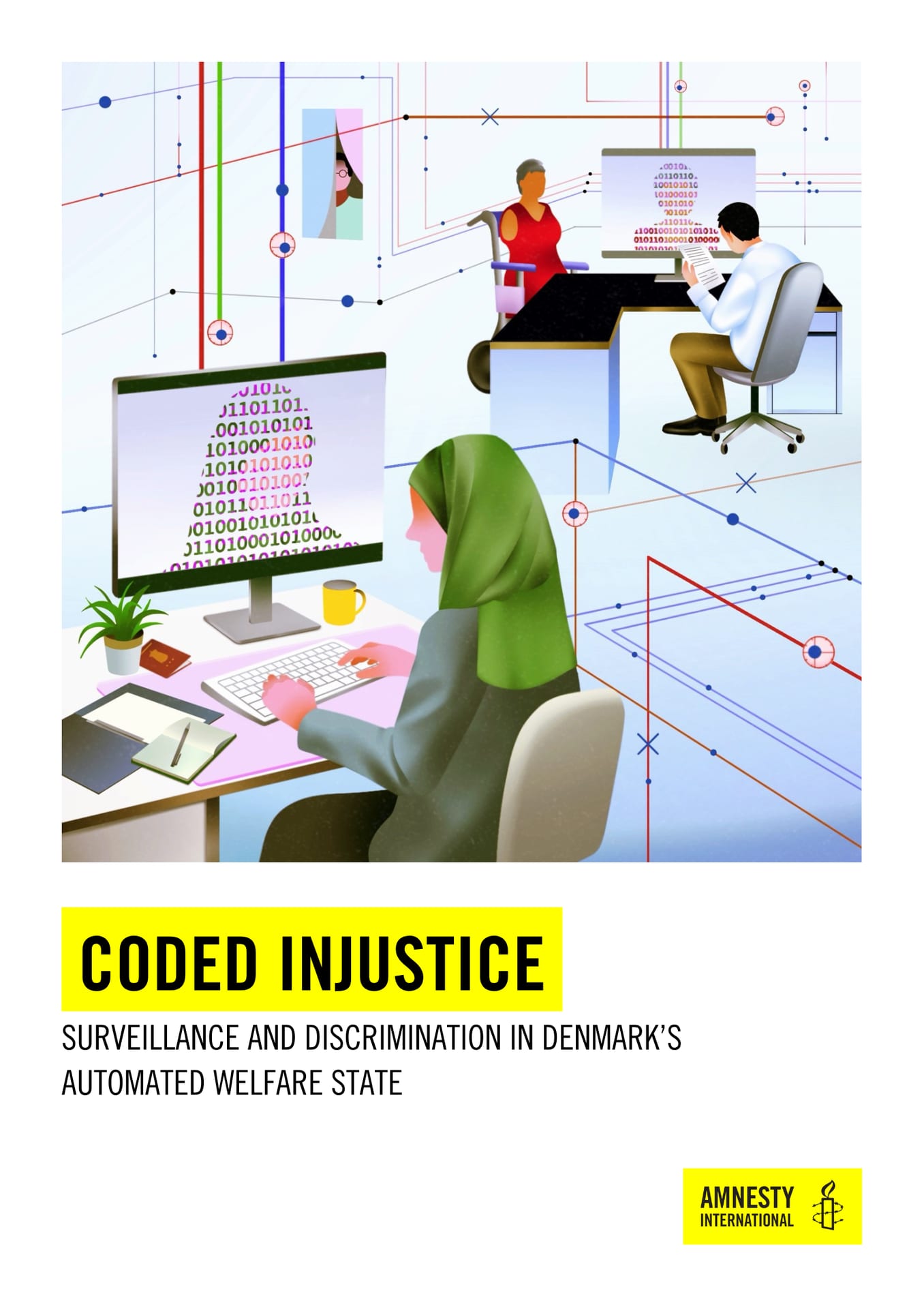
I want to lead from the front and try it myself. When the opportunity came, it would have been quite mad not to seize it.The state’s own algorithms draw the hardest criticism. Since 2013 Udbetaling Danmark, a national agency, has paid pensions, family benefits, maternity pay and housing benefit in place of the municipalities. With the pension fund ATP it runs up to 60 fraud-control models, according to Amnesty International. One, “Model Abroad”, flags “medium and high-strength ties” to countries outside the European Economic Area. The agency says its processing is legally grounded.
The way the Danish automated welfare system operates is eroding individual privacy and undermining human dignity.Police facial recognition is the second front. In February 2024 the Danish Institute for Human Rights, the national human-rights body, said there was “no clear legal basis” for it. A political agreement that year widened police use for serious crime without a dedicated law, which by November 2025 had still not been written.
Copenhagen’s residents, at least, seem less troubled. In IMD’s 2026 survey of how residents see their city, 74.6% there said they were comfortable with face recognition to lower crime. That is more than in Berlin (71.8%), London (68.4%) or Paris (66.4%).
- Jan 2007[source]
Structural reform
271 municipalities become 98, and 14 counties give way to five regions.
- Apr 2012[source]
OS2 founded
Five municipalities set up a body to own open-source software together.
- Jun 2012[source]
First wave law
Digital self-service becomes compulsory in the first areas of administration.
- Mar 2013[source]
Pensions and family benefits go national
Udbetaling Danmark completes its takeover of their payment from the municipalities.
- Dec 2017[source]
Gladsaxe refused
The interior ministry turns down the town’s request for an exemption to combine data on children.
- Jun 2020[source]
Climate Act
Parliament writes the 2030 and 2050 targets into law.
- Apr 2022[source]
Mission cities chosen
Aarhus, Copenhagen and Sønderborg are among the 100 picked by the Commission.
- Nov 2024[source]
Coded Injustice
Amnesty International publishes its report on the national benefits agency’s algorithms.
- Jan 2027[source]
Four regions
Region Østdanmark is created; the municipal IT-service organisations are set up.
- 2030[source]
Climate target
Emissions 70% below 1990, the Act’s binding milestone.
- 2035[source]
Government goal
At least 85% below 1990, set by the June 2026 coalition; not law.
- 2050[source]
Climate neutrality
The latest date the Act allows; the government aims for 2045.
From the reform that made the 98 to the targets the next governments inherit.
Who went first, and who followed
In Sønderborg, ProjectZero, a public–private partnership, measures the area’s emissions against 2007, and its 2025 accounts show them 79% lower. The next accounts, for 2026, are due in July 2027.
DK2020 took a different route. Realdania launched it in 2019 with C40, the global network of cities, the think tank CONCITO, KL and the regions, to bring C40’s planning method to the municipalities. By the end of 2024, 95 plans had come out of it, alongside Copenhagen’s own, and Glostrup adopted its plan in April 2025.
The plans aim for 76% below 1990 by 2030, but their measures add up to 73%. Municipal emissions in the national energy and carbon accounts fell from 47 to 38 Mt between 2018 and 2022, almost a fifth.
OS2, the municipalities’ open-source partnership, carries software the same way. Copenhagen, Ballerup, Sønderborg, Syddjurs and Ishøj founded it in 2012. An undated EU case study counted 20 of its products in use 394 times across the 98, maintained by 136 people from 48 municipalities, but gives no figure for the saving.
Syddjurs’s FleetOptimiser, which plans the use of municipal vehicles, was one of the 40 nationally funded signature projects. By 2024 it had been scaled to 12 organisations; no saving has been published.
Aarhus is trying the next step on its own. Its 2026 budget aims for at least a quarter of its office software to be open source by 2030, expecting a net saving of DKK 7m a year from 2029. Its culture and citizens’ services department has moved 60 systems from Microsoft’s Azure cloud to Hetzner, a German host, at a third of the price. The national strategy cites the move as its example of digital sovereignty, and Odsherred is studying the same.

Odense’s light rail opened in 2022 with a business case of 9.8m passengers a year. It carried 5.8m in 2023, above a forecast cut to 5.3m that August, and just under 7.4m in 2025. The company said it was short DKK 58m for 2023 and 89m for 2024.
million boardings a year
Show the numbers
| Boardings | Business case | |
|---|---|---|
| 2023 | 5.8 | 9.8 |
| 2024 | 6.9 | 9.8 |
| 2025 | 7.4 | 9.8 |
Boardings on Odense Letbane in its first three full years, against the 9.8m a year its finances were built on. In August 2023 the company cut its own forecast for that year to 5.3m, which 2023 beat. In January 2024 Christoffer Lilleholt, then Odense’s alderman for employment and social affairs, said the municipality pays the difference. Source: Odense Letbane (25 February 2026); TV2 Fyn (24 January 2024)
“If we do not reach 9.8 million next year, the municipality must pay the difference,” said Christoffer Lilleholt of Venstre, a liberal party, then Odense’s alderman for employment and social affairs, in January 2024.
Gladsaxe asked to go first and was stopped. In 2017 it applied for a frikommune (“free municipality”) exemption to combine health, address and other data to flag children at risk. The interior ministry refused that December, yet the government cited the idea in its 2018 plan against “parallel societies”. In December 2018 four PCs were stolen from the town hall, one holding about 20,000 civil registration numbers.
The leak had no direct connection to the project, but the press linked the two, and Liberal Alliance, then a governing party, withdrew its support. The project was shelved in early 2019 while still in development.
Vejle’s coast needs the state. Its town and harbour are among the first five areas in a DKK 900m national package for storm-surge defences; “the municipality cannot carry the costs alone”, its committee chair said. In October 2025 it was starting the first of three phases, to protect 7.8 km of shore by 2030.
A single Danish town goes first when the risk stays at home: Sønderborg with its carbon accounts, Aarhus with its servers, Odense with a light rail whose shortfall it pays. What reached nearly every town was built for all of them from the start. 97 of the 98 now have climate plans to C40’s method, at least 95 of them made through DK2020, and OS2’s code is in use 394 times. Gladsaxe needed the state’s permission to go first, and did not get it.
References
Statistics1Click on any number to see the source
Population & migration
From our libraries7
- Klimarådet — Statusrapport 2026 (kort sammenfatning) — Knowledge
- Sammen griber vi de digitale muligheder — Den fællesoffentlige digitaliseringsstrategi 2026-2029 — Knowledge
- Beretning om besparelsespotentialet ved obligatorisk Digital Post på ca. 1 mia. kr. om året (Rigsrevisionen 9/2015) — Knowledge
- Evalueringen af signaturprojekterne 2024 (AI-signaturprojekter i kommuner og regioner) — Knowledge
- Coded Injustice: Surveillance and Discrimination in Denmark's automated welfare state (EUR 18/8709/2024) — Knowledge
- Status på kommunernes klimahandling — Etablering af Klimaalliancens fælles monitoreringssystem (april 2025) — Knowledge
- Hvorfor Gladsaxemodellen fejlede – om anvendelse af algoritmer på socialt udsatte børn (Kenneth Kristensen, SiS vol. 37 no. 1, 2022) — Knowledge
Further sources27
- Kommuner og regioner – opgaver og finansiering — Økonomi- og Indenrigsministeriet · June 2014
- Lov om klima (Klimaloven), consolidated act — Retsinformation
- Det politiske grundlag for firkløverregeringen — Statsministeriet · June 2026
- Klimastatus og -fremskrivning 2026, part 1 — Klima-, Energi- og Forsyningsministeriet · May 2026
- Analysis of the Danish telecoms market in 2030 — WIK-Consult for the Danish Energy Agency · 2020
- Broadband pool 2024: distribution of funds — Digitaliseringsstyrelsen · Dec 2024
- Digital Post: tal og statistik — Digitaliseringsstyrelsen
- Hvem oplever udfordringer ved det digitale? — Digitaliseringsstyrelsen
- Obligatorisk digital selvbetjening i lovgivning og administration — Digitaliseringsstyrelsen · Jan 2026
- Om MitID — MitID
- Information om varme — Energistyrelsen
- Beretning 12/2018 on open state data — Rigsrevisionen · 2019
- Regeringen Mette Frederiksen III — Statsministeriet · 3 June 2026
- Denmark’s recovery and resilience plan — European Commission
- Despite frustration, the ministry will keep working with open source — Ingeniøren · 1 Dec 2025
- Tech independence: the state binds itself to Microsoft for billions — OPS Indsigt · 14 Aug 2025
- Denmark: mass surveillance and discrimination in the automated welfare state — Amnesty International UK · 13 Nov 2024
- Police use of facial recognition lacks a clear legal basis — Institut for Menneskerettigheder · 9 Feb 2024
- Hearing letter to the ministry on national AI projects — Folketingets Ombudsmand · 16 Aug 2026
- Klimatal — ProjectZero
- DK2020 has transformed the municipalities’ climate work — Realdania · 27 June 2024
- OS2: public collaboration on open source — Interoperable Europe (OSOR)
- Aarhus phases out the Microsoft package — HK · 22 Oct 2025
- Councillor: light-rail passenger numbers are disappointing — TV2 Fyn · 24 Jan 2024
- 7.4 million passengers on the light rail in 2025 — Odense Letbane · 25 Feb 2026
- Vejle selected for major support for storm-surge protection — Vejle Kommune · 24 Oct 2025
- Smart City Index 2026 — Copenhagen — IMD World Competitiveness Center · 2026