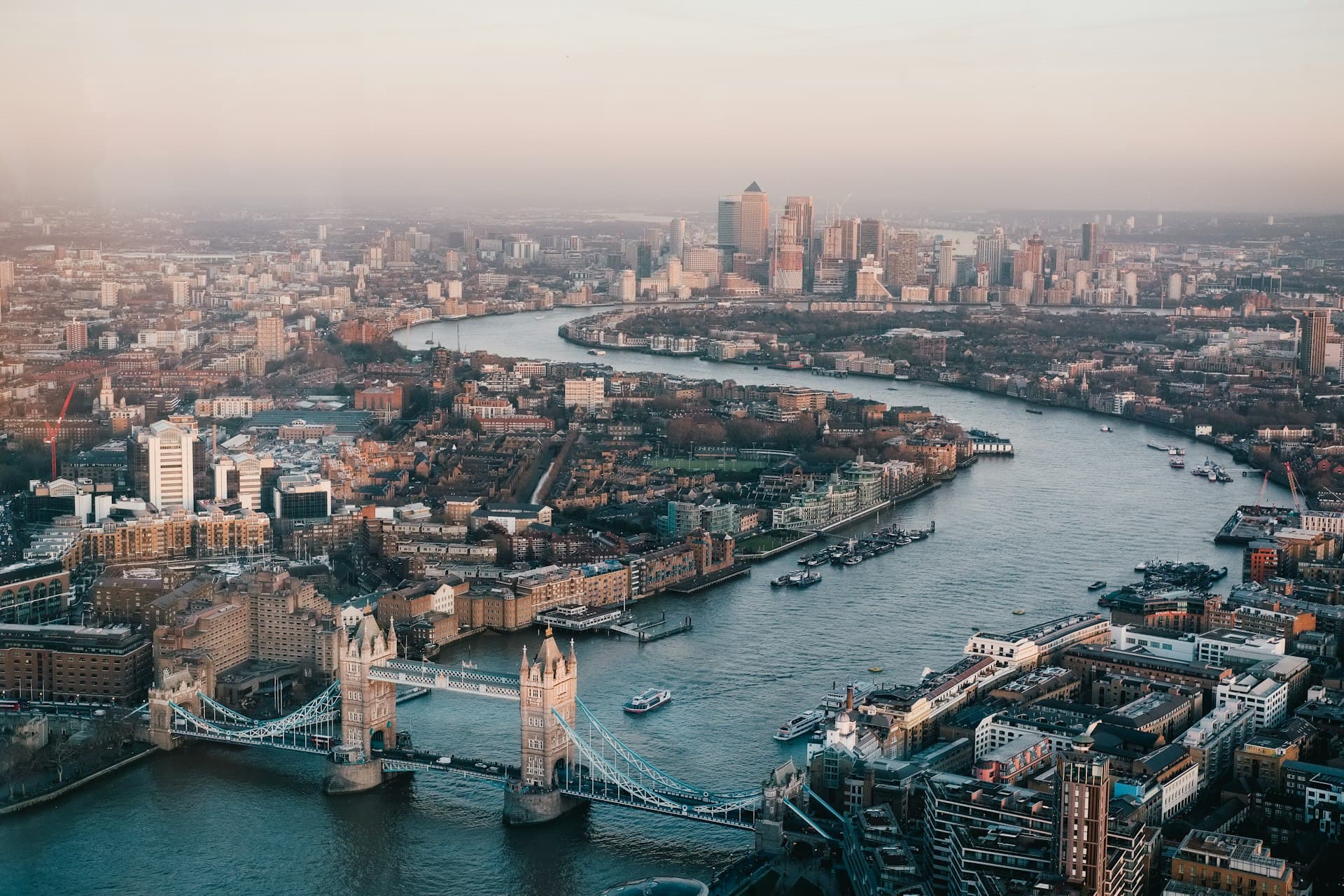
Net zero in seven years, 37% below 1990 so far
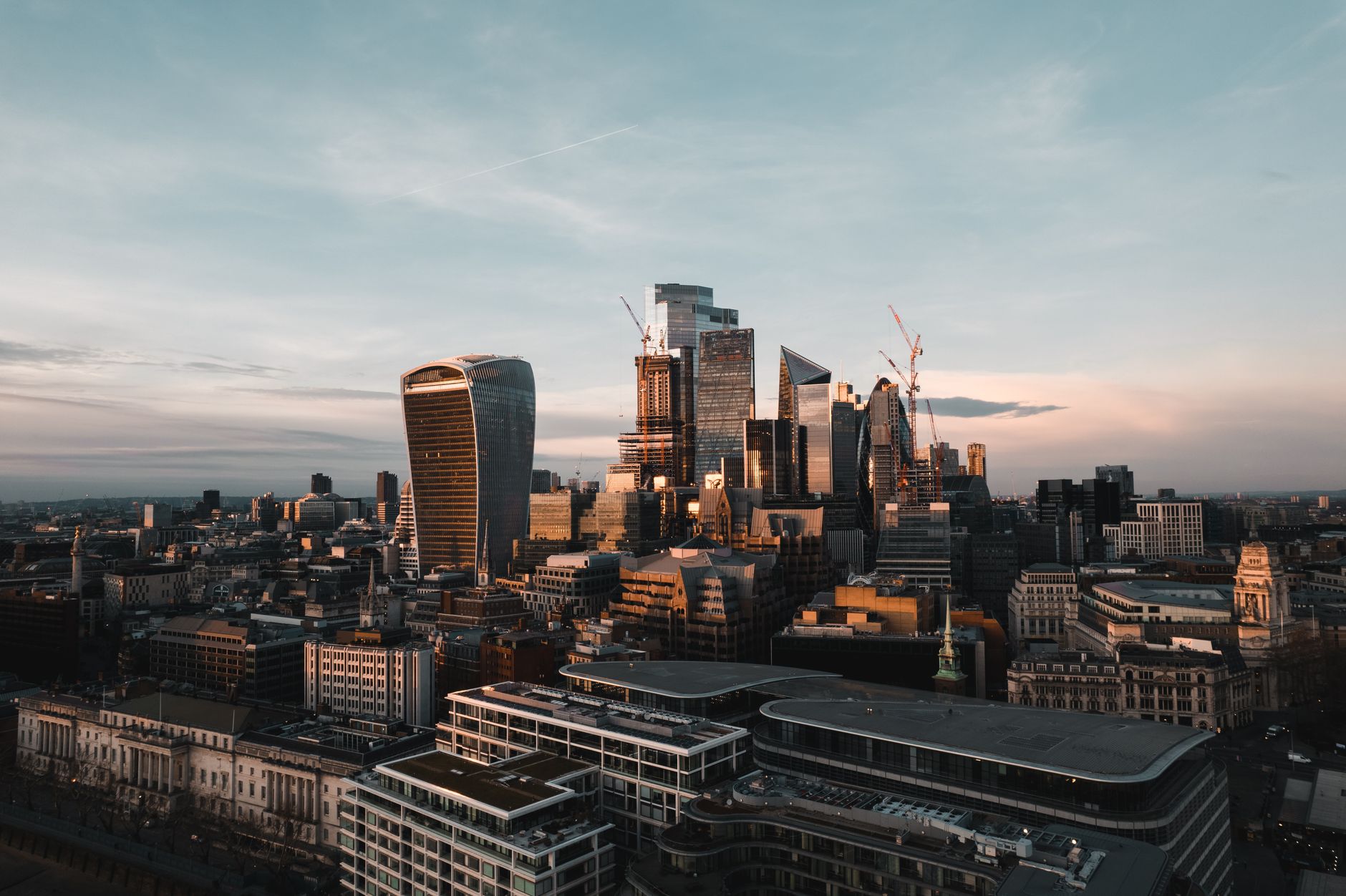
Greater London is made up of 32 boroughs and the City of London, each running its own services, under a Mayor and a 25-member Assembly that together form the Greater London Authority (GLA). The Mayor’s transport body, Transport for London (TfL), runs the Tube and the buses as well as the clean-air zone. The figures here are for that whole area, not the financial district alone.
London has stopped growing for now. The Office for National Statistics (ONS) puts the population at 9.12 million in mid-2025, 0.29% fewer than a year earlier and the first fall since 2021. More births than deaths and more arrivals than departures abroad were outweighed by the net number of people leaving for the rest of the UK. Housebuilding has slowed further: developers started 5,547 private homes in 2025, against 33,782 in 2015, according to the research firm Molior.
London residents leave the car at home for two trips in three. In TfL’s household survey for 2024/25, 68% of residents’ trips were on foot, by bike or by public transport. Almost half of households, 48%, owned no car: 64% in inner London and 36% in outer London. TfL’s better-known headline of 63.4% for 2024 counts all travel in London, commuters and visitors included. The Mayor’s target of 80% by 2041 is set on that wider measure.
Trips made by London residents on all days and for all purposes, 2024/25, from the London Travel Demand Survey of 8,210 households. TfL reports walking and cycling together as active travel. Source: TfL, Travel in London 2025 (London Travel Demand Survey)
The Mayor’s climate goal is net zero by 2030, brought forward by 20 years. It is a mayoral target, not a law. The GLA’s inventory puts London’s greenhouse-gas emissions at 28.6 million tonnes of CO₂-equivalent in 2023, 37% below 1990. The pathway the Mayor adopted after a 2022 study calls for 2.2 million heat pumps and about £75bn of investment by 2030.
The GLA’s split of Greater London’s 28.6 million tonnes of CO₂-equivalent in 2023. “Everything else” (waste, industrial processes, land use and other sources) is what remains after the two published shares. Source: GLA, State of London — Environment (London Energy and Greenhouse Gas Inventory 2023)
Heat already has a measured cost. The GLA estimates 317 excess deaths associated with five heat episodes in 2025. In the 40°C heat of July 2022, water use rose by half while reservoirs stood at a 30-year low, the London Climate Resilience Review reported in 2024.
On full fibre, London is below the UK average. thinkbroadband, which models coverage from operators’ data, finds it available to 82.49% of London premises in October 2026, against 86.0% across the UK. London has 31,371 public chargers for electric cars, 345.1 per 100,000 residents against 174.9 nationally. Few are rapid: 27.9 per 100,000, the second-lowest of the UK’s 12 regions.
The widest gap is between the connected city and the people outside it. The GLA estimates that over 270,000 Londoners are completely offline and around two million engage with digital services only in limited ways. Its answer, Get Online London, was due to fold into a national network in June 2025 for lack of City Hall money. A £300,000 grant from the Department for Science, Innovation and Technology (DSIT) kept it running to December 2026; the decision paper does not say what follows.
London rose to 4th of 148 in the IMD Smart City Index 2026, from 6th of 146, though its overall rating fell from AA to A. The index asks residents what they think. They rate internet speed and reliability at 73.9 out of 100 and free public wifi at 65.5, but an app for monitoring air pollution at 47.1. The statement that air pollution is not a problem scores 33.6.
Thirty-three councils and the team 27 of them share
At the Greater London Authority, digital work is led by Theo Blackwell, London’s first Chief Digital Officer, in post since 2017. His team runs the London Datastore, the GLA’s open-data portal since 2010, which lists 1,306 datasets. In July 2025 it launched the Data for London catalogue, which links to other bodies’ data and is due to replace the Datastore. It holds 22,516 records, but 16,903 of them, about 75%, come from a single borough, Croydon.
This is just the beginning, we are only going one way – there is no global trend towards less data.The boroughs pool part of their innovation work in LOTI, the London Office of Technology and Innovation, hosted by London Councils, the boroughs’ cross-party association. Set up in 2019, it had 27 member boroughs by January 2024, each paying £30,000 a year. An evaluation that LOTI commissioned from the GLA, which also funds it, found that it saves members time and money, including at least £300,000 on recruitment support. Collaboration across councils remains hard, the same report found.
TfL, with 27,000 staff, publishes free real-time transport data through one interface, its Unified API. It says more than 17,000 developers have registered for the feeds and that 42% of Londoners use apps built on them, figures it does not date. Under the streets, Boldyn Networks holds a 20-year concession from 2021 to bring mobile coverage into the Tube’s tunnels.
Breathe London, the GLA’s network of low-cost air-quality sensors, was run by Imperial College London under a 2020 contract. A consortium led by Vodafone, with the charity Global Action Plan and the sensor maker Airly, runs it now. The GLA has committed up to £1.4m to the network for 2024 to 2028.

Research sits close to City Hall. The Alan Turing Institute, the national institute for data science and AI, co-ran London Data Week in 2025. Stuart Coleman, a director at the Open Data Institute, sits on the Data for London advisory board.
London tech companies raised $17.7bn in 2025, according to Dealroom, a data firm, and the city counts 138 unicorns, start-ups valued at a billion dollars or more. That put London back ahead of Paris on Dealroom’s index of European hubs. Its figures do not say how much of the money went into urban technology.
Campaigners shape the arguments about what the city deploys. Big Brother Watch, a civil-liberties group, brought the latest court challenge to police facial recognition in London. Transport for All, an organisation of disabled people, says unregulated dockless bikes and e-scooters put disabled pedestrians in danger. The Good Things Foundation, a national digital-inclusion charity, delivers Get Online London for City Hall.
Who can say no: City Hall, TfL, 33 councils and Whitehall
Sir Sadiq Khan of the Labour Party won a third term as Mayor in May 2024; the next mayoral election is on 4 May 2028. His 2018 roadmap, Smarter London Together, set out to make London “the smartest city in the world”. No successor smart-city strategy could be found. The work now runs through Data for London and the London Growth Plan, launched by the Mayor and London Councils in February 2025, which aims to restore productivity growth to 2% a year.
A taskforce on AI and jobs, chaired by Baroness Martha Lane-Fox, a tech entrepreneur and member of the House of Lords, made three recommendations in 2026, from an early-warning system for jobs at risk to routes into work for young Londoners. In September the London Partnership Board was asked only to endorse exploring them further.
Since April 2026 part of the national government’s money has reached City Hall as one integrated settlement, the GLA’s first. It brings just over £500m a year, over £1.7bn across three years. It covers growth, skills, housing, health and the environment, and the GLA may not spend it on what TfL or the police do.
City Hall sets strategy, the London Plan and the climate target. TfL runs public transport and the clean-air zone, and publishes the transport data. The boroughs run most streets and pavements, council tax, housing and their own IT. A new law, the English Devolution and Community Empowerment Act 2026, makes TfL the licensing authority for dockless hire bikes, but only once ministers make the regulations.
The boroughs changed hands in May 2026. Labour’s share of the London-wide vote fell to 25.6%, from 40.3% in 2022. The Greens now lead six boroughs and hold majorities in Hackney, Lewisham and Waltham Forest, the first councils London voters have put them in charge of. Reform UK won Havering, its only London council. The 32 boroughs are now led by six parties, which LOTI and Data for London must work with.
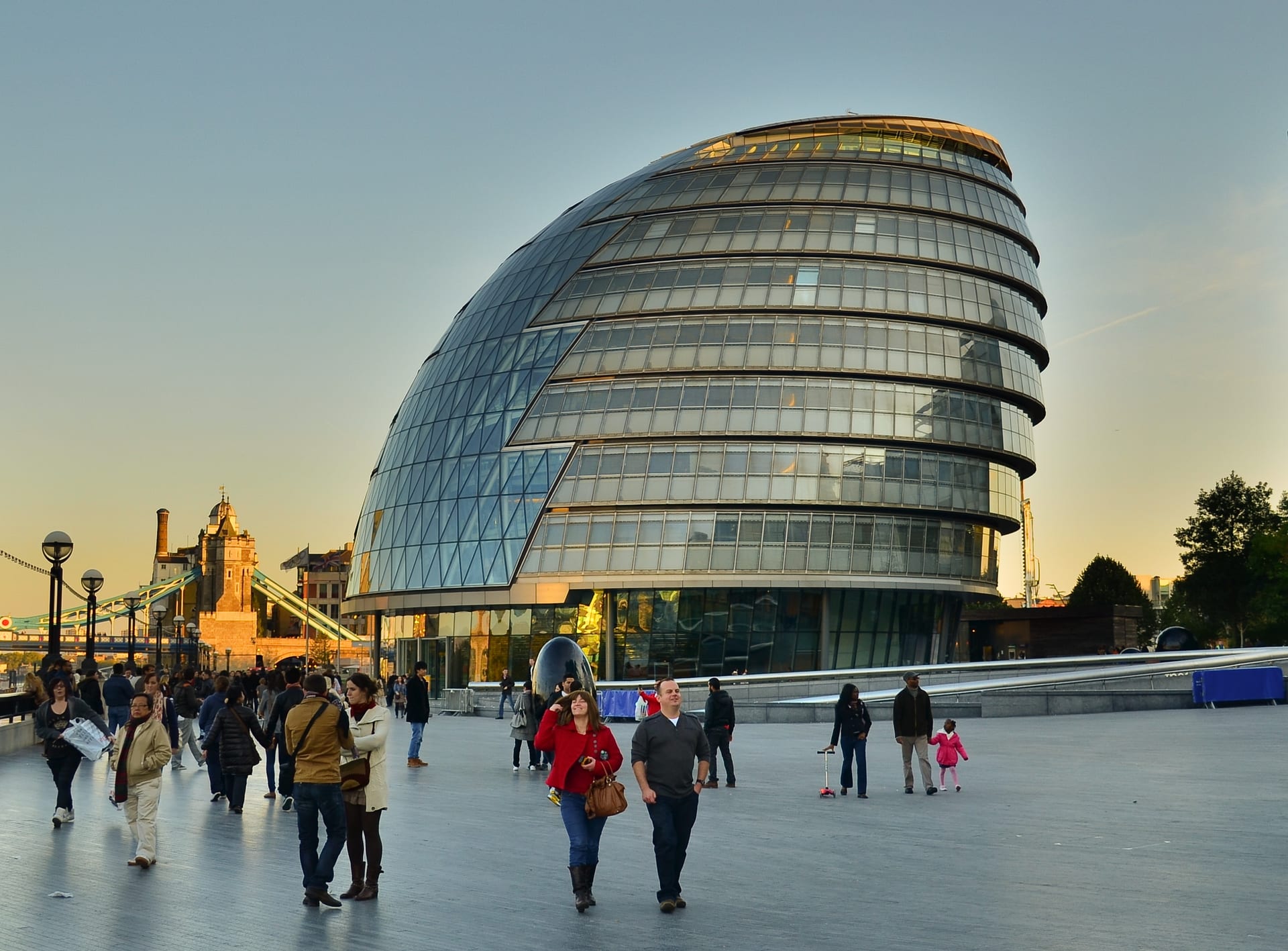
Policing money runs through MOPAC, the Mayor’s Office for Policing and Crime, which oversees the Metropolitan Police (the Met). In late May 2026 MOPAC refused a contract for Palantir, a data-analytics firm, to supply the Met with analytics for investigations and anti-corruption work. It was worth £25.3m for 2026-27, with an optional second year of £24.8m, and MOPAC cited procurement and value for money.
Sir Mark Rowley, the Met Commissioner, had counted on the software to help cut about 500 jobs and close a £125m gap. Without it, he said, the cuts would “directly hit the delivery of policing to London’s communities”. Palantir took MOPAC to the High Court. On 14 October 2026 the two sides settled: each withdrew its allegations against the other, MOPAC said its decision was not based on Palantir’s values or ethics, and the work will be re-tendered with Palantir free to bid.
The other argument is over cameras. Since October 2025 the Met has run fixed live facial-recognition cameras on Croydon High Street. It reported 173 arrests from 24 operations to March 2026, with one false alert. In the IMD survey, 68.4% of London’s respondents said they were comfortable with face recognition being used to lower crime.
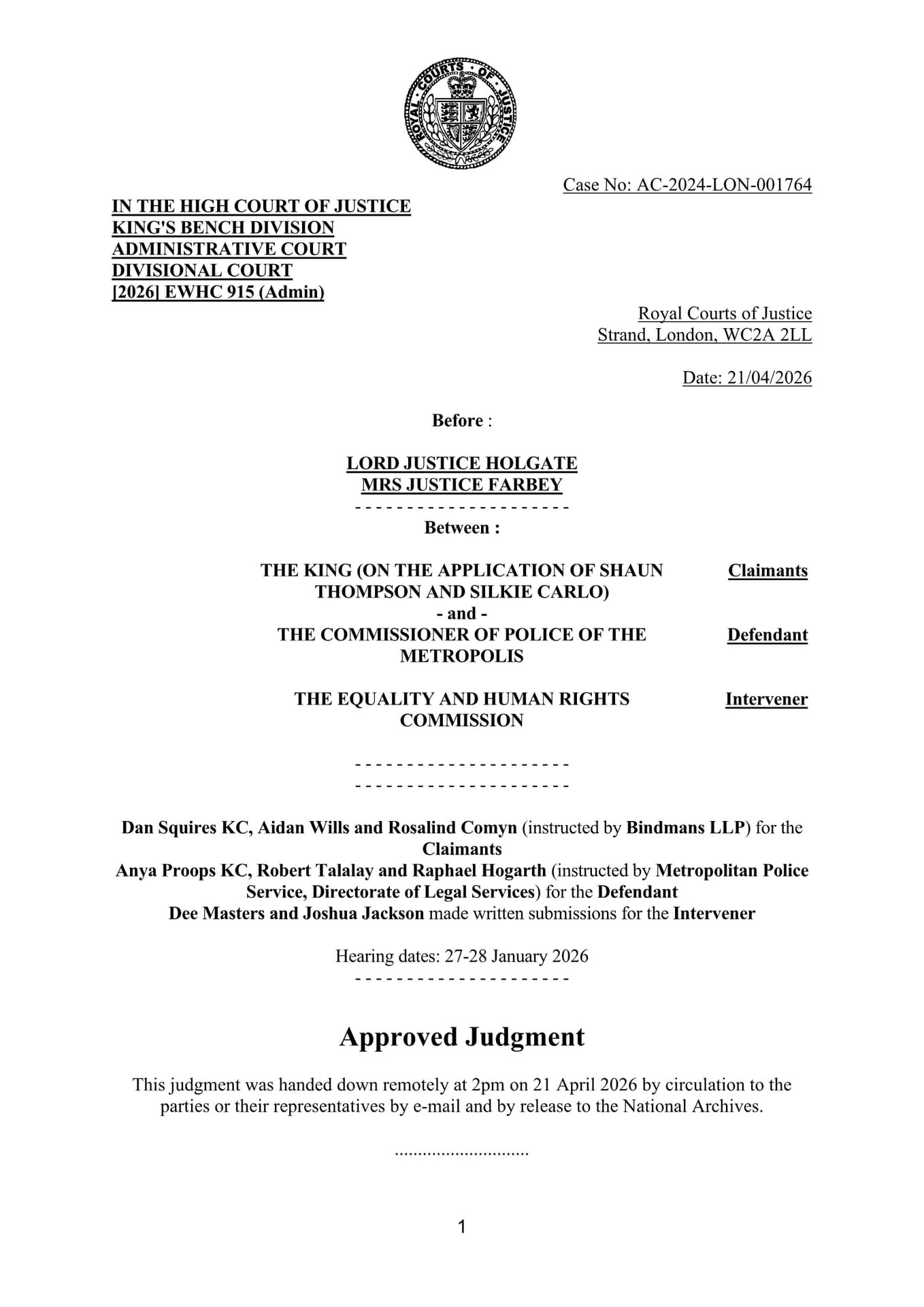
These results show why live facial recognition is such a powerful tool when it’s used carefully, openly, and in the right places.In April 2026 the High Court upheld the Met’s policy on the narrow question the claimants put, whether its use was foreseeable; it did not rule on whether it was necessary. Thompson has said he will appeal. The national rules are set out in the United Kingdom profile.
No one should be treated like a criminal due to a computer error.- 2010[source]
London Datastore
The GLA opens its open-data portal.
- Aug–Sept 2024[source]
TfL hacked
An intrusion leaves 148 TfL systems inoperable.
- July 2025[source]
Data for London
A catalogue due to replace the Datastore opens.
- Apr 2026[source]
Court ruling
The High Court upholds the Met’s policy on live facial recognition.
- May 2026[source]
Borough elections
Labour’s London-wide vote falls to 25.6%; the Greens and Reform UK win their first London councils.
- Oct 2026[source]
Palantir case settled
MOPAC and Palantir resolve their High Court proceedings; the Met contract will be re-tendered.
- Dec 2026[source]
Get Online London extension ends
The 18-month extension, paid for with a £300,000 DSIT grant, closes.
- 4 May 2028[source]
Mayoral election
The next election for Mayor and London Assembly.
- 2030[source]
Net zero
The Mayor’s target for a net-zero London, brought forward by 20 years.
- 2041[source]
80% sustainable travel
The Mayor’s aim for the share of all trips in London made on foot, by bike or by public transport.
From the first city data portal to a cyber attack, a court ruling and a police software dispute, and the dates City Hall has set itself.
From a map of buried pipes to a council-tax outage
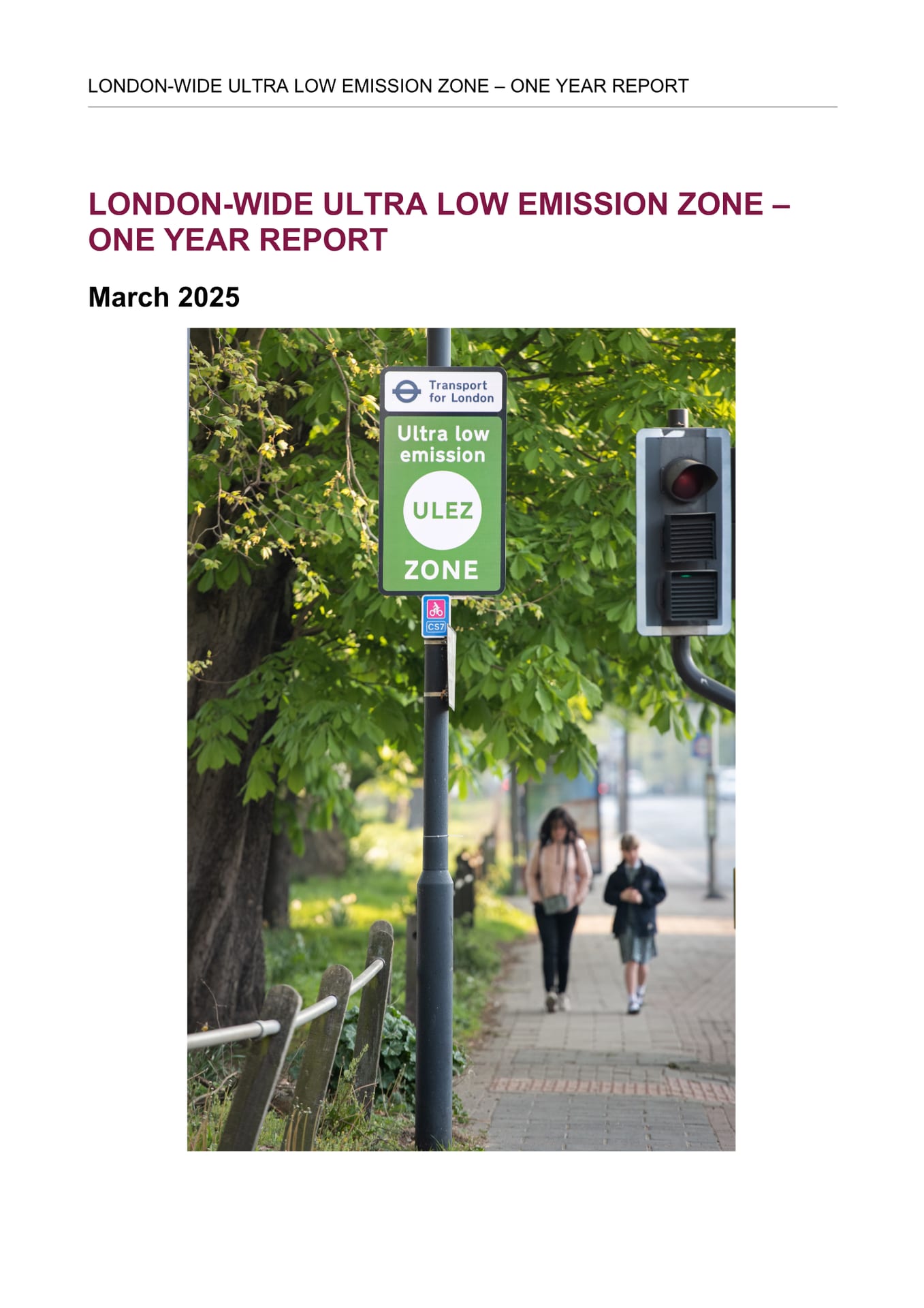
The Ultra Low Emission Zone (ULEZ), run by TfL, has covered all of Greater London since 29 August 2023. Drivers of older, more polluting vehicles pay £12.50 for each day they drive in it. By September 2024, 96.7% of vehicles subject to the standard met it, against 39% in February 2017. TfL’s modelled estimate puts roadside nitrogen dioxide 27% lower across London than in a scenario without the zone. All the zone’s phases together cut carbon dioxide by an estimated 2%. TfL’s one-year report of March 2025 is the latest published evaluation.
The National Underground Asset Register began as a London map of buried pipes and cables. The GLA ran a £1m pilot across six boroughs from May 2019 and a £1.4m second phase across 12, both paid for by the Geospatial Commission, part of the Cabinet Office. A third phase was to cover all 33 authorities by March 2023, with 60 asset owners taking part. The GLA’s decision paper expects the national register to bring £347m a year in benefits once it is running. London then became one of the three regions in the register’s first national version.
Get Online London, run by the GLA with LOTI and the Good Things Foundation, hands out devices, data and skills through community hubs. By March 2025 it had supported about 125,000 Londoners, refurbished more than 7,000 devices and given out almost 90,000 data packages. Its hubs grew to more than 1,100, from 90 in July 2022, on about £2.56m of GLA digital-inclusion money from 2021 to 2025. The extension to December 2026 aims to reach 108,000 more people and promises a full evaluation.
Mobile coverage on the Underground is being built by Boldyn Networks under its TfL concession. The whole Elizabeth line has had coverage since December 2024. By 14 January 2026, the latest count TfL has published that we could open, 62 of the Tube’s 121 underground stations were connected. TfL’s target is the whole network by the end of 2026.
Dockless e-bikes have no single regulator in London yet. Four operators, Bolt, Forest, Lime and Voi, run a reported 50,000 bikes, which TfL estimates made more than one in ten cycle journey stages in 2024. Each borough strikes its own deal, so the rules change at borough borders. The London Assembly’s transport committee met on the subject on 8 October 2026, while TfL waits for its licensing regulations.
Transport for London was hacked in August and September 2024. The intrusion left 148 systems inoperable, forced all staff to reset passwords in person, and disrupted Dial-a-Ride, the door-to-door service for vulnerable Londoners, along with refunds and children’s Oyster photocards. The National Crime Agency puts TfL’s loss and recovery costs at a reported £29m. Two leading members of Scattered Spider, an online criminal group, were each sentenced to five and a half years in July 2026.
Kensington and Chelsea, Westminster, and Hammersmith and Fulham share their IT, and an attack found on 24 November 2025 copied data from it. At the councils’ latest update, on 3 July 2026, the council-tax and business-rates system was still not fully running. In Hackney, a 2020 ransomware attack encrypted 440,000 files; the Information Commissioner’s Office, the data-protection regulator, reprimanded the council in 2024.
Sorted by who holds the lever, the record has a pattern. What TfL runs carries numbers: a zone almost every vehicle now complies with, and Tube stations connected one by one. What City Hall starts with Whitehall’s money can travel, as the buried-pipes map did, or nearly stop when City Hall’s budget runs short, as Get Online London almost did before a minister’s grant kept it going to December 2026. What the boroughs hold depends on agreement: 27 councils share LOTI, e-bike deals stop at each border, and three councils that shared their IT went down together. The police purse let City Hall stop one contract; which software the Met gets now rests on a tender Palantir may enter. The services residents use every week sit with 33 councils City Hall does not run.
References
Statistics1Click on any number to see the source
Population & migration
From our libraries13
- Travel in London 2025: The travel behaviour of London residents based on the London Travel Demand Survey (TfL) — Knowledge
- MD3355 Extension of the Mayor's Get Online London programme (GLA Mayoral Decision, 18 March 2025) — Knowledge
- Greater London Authority - Smart London — Organisation
- Mayor of London launches a next-generation city data platform to unlock the power of data for Londoners (GLA, 8 July 2025) — Knowledge
- LOTI - London Office of Technology & Innovation — Organisation
- Breathe London — Project
- The Alan Turing Institute — Organisation
- Open Data Institute — Organisation
- Statement: MOPAC and Palantir (Mayor's Office for Policing and Crime, 14 October 2026) — Knowledge
- London cops hail fixed facial recognition cams after suspects collared every 35 mins (The Register, 13 May 2026) — Knowledge
- The Legality of Police Live Facial Recognition Policy: The Scope and Limitations of Thompson and Carlo (Inforrm, 19 May 2026) — Knowledge
- London-wide Ultra Low Emission Zone – One Year Report (TfL, March 2025) — Knowledge
- Two sentenced for hacking Transport for London in UK's biggest ever cyber crime case (National Crime Agency, 16 July 2026) — Knowledge
Further sources24
- Population estimates for England and Wales: mid-2025 — Office for National Statistics · 29 July 2026
- Travel in London 2025: the travel behaviour of London residents (LTDS) — Transport for London · 2025
- Travel in London 2025: consolidated estimates of total travel and mode shares — Transport for London · 2025
- London Energy and Greenhouse Gas Inventory (LEGGI) 2023 — Greater London Authority · 2025
- State of London — Environment — Greater London Authority
- Broadband coverage statistics for London — thinkbroadband · 9 Oct 2026
- Electric vehicle public charging infrastructure statistics: July 2026 (EVCI0101) — Department for Transport · July 2026
- Smart City Index 2026 — London — IMD World Competitiveness Center · 2026
- MD3355 Extension of the Mayor’s Get Online London programme — Greater London Authority · 18 Mar 2025
- Mayor of London launches next-generation city data platform — Greater London Authority · 8 July 2025
- Evaluation of the London Office of Technology & Innovation — GLA City Intelligence · 11 Jan 2024
- London reclaims top European tech spot from Paris (Dealroom) — Reuters via Global Banking & Finance · 27 May 2026
- MD3486 Integrated settlement outcomes framework and allocations — Greater London Authority
- London borough elections 2026: the results — OnLondon · 30 June 2026
- Regulation of dockless hire bikes in London — London Assembly · 15 Sept 2026
- Statement: MOPAC and Palantir — Mayor’s Office for Policing and Crime · 14 Oct 2026
- Met Police and Palantir — Silicon UK · 2026
- London cops hail fixed facial recognition cams — The Register · 13 May 2026
- The legality of police live facial recognition policy — Inforrm · 19 May 2026
- London-wide ULEZ one-year report — Transport for London · March 2025
- MD3074 National Underground Asset Register — London region — Greater London Authority · 26 Jan 2023
- Two sentenced for hacking Transport for London — National Crime Agency · 16 July 2026
- Cyber security incident — FAQ — Royal Borough of Kensington and Chelsea · 3 July 2026
- London Borough of Hackney reprimanded following cyber-attack — Information Commissioner’s Office · 17 July 2024