The grid is full: what happens when a city's energy transition runs out of wire?
Dutch firms queue for a grid connection; in 2025 Ireland's data centres used 23% of its metered electricity, up from 5% a decade earlier. Meanwhile Dublin plans to heat Docklands homes from a waste incinerator and Zurich runs its own smart grid. The local energy transition now depends on wires, pipes and planning more than on targets. What cities are learning about the physical limits.
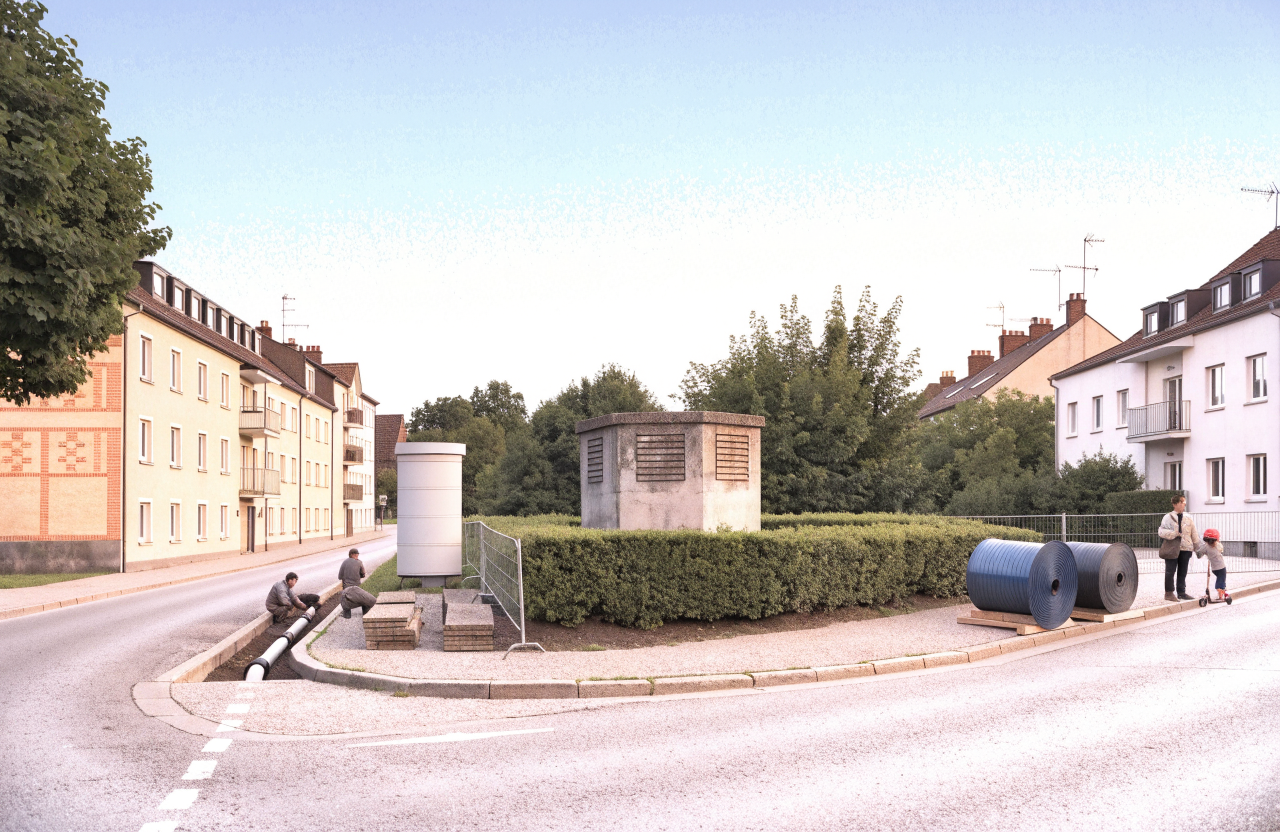
A queue for power: why are Dutch firms waiting for a plug?
In Oostzaan, a small municipality just north of Amsterdam, 271 applicants were waiting for the electricity grid to make room for them. The room was found rather than built: after what the government calls a deep analysis, 180 MW of capacity turned up on the network, enough to connect the whole local queue.
The story comes from a letter to the Dutch parliament of 30 June 2026 from Jo-Annes de Bat, the State Secretary for Climate and Green Growth. In Zeeland, a similar recalculation combined with more flexible use helped at least 173 large customers off the queue. The same letter is careful about what Oostzaan proves. Elsewhere in North Holland, it says, much work remains before the queues shrink, and in parts of North Brabant the situation is critical.
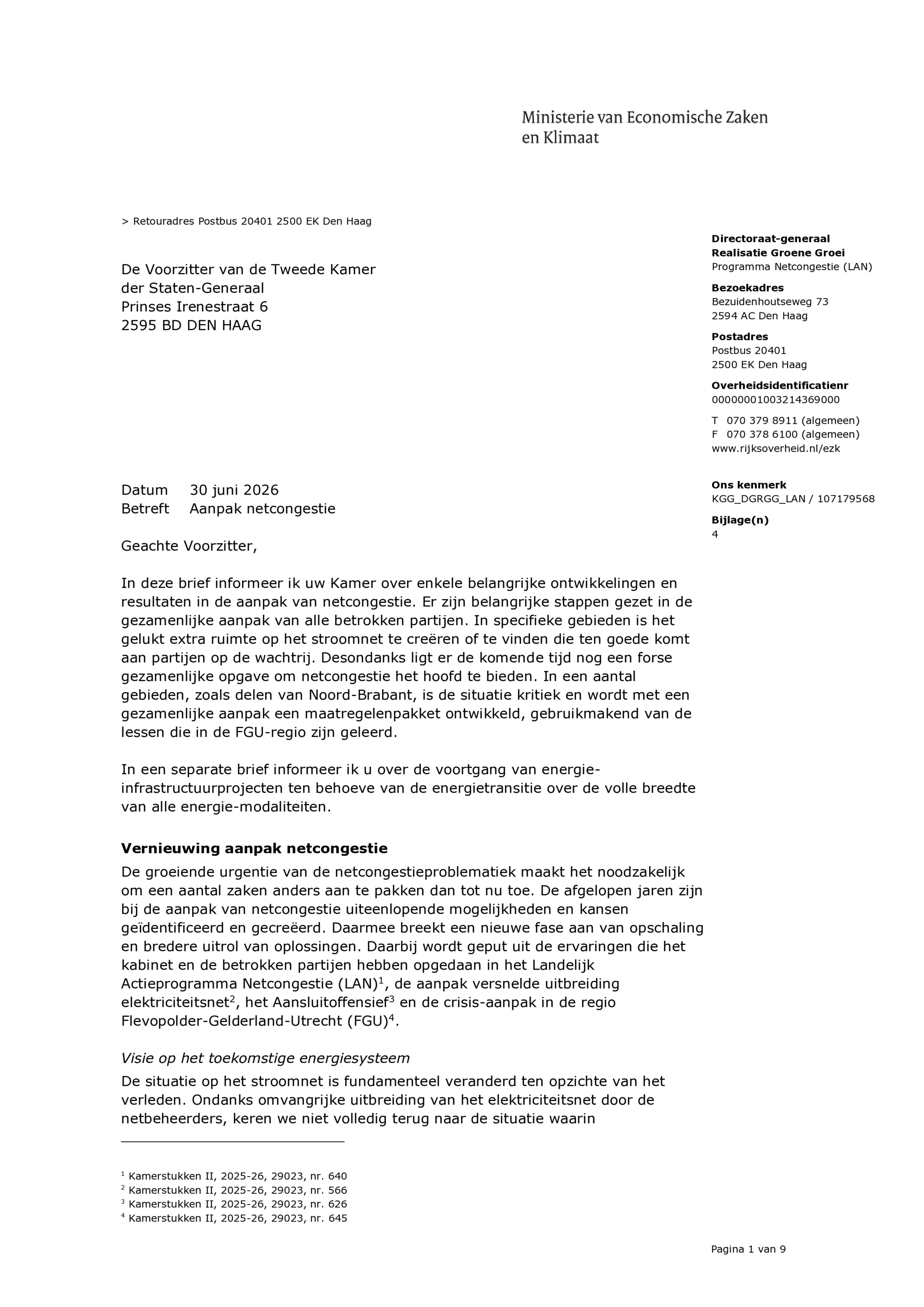
Despite a large expansion of the electricity grid by the grid operators, we will not fully return to the situation in which transport capacity for electricity was, in practice, always and everywhere infinitely available.The fixes fall into three kinds. The first is finding room, as in Oostzaan. The second is paying people to use power at other times: the grid operator Liander has started a tender for up to 750 MW of flexible capacity, contracts with large batteries have been signed in South Holland and Brabant, and households in Gelderland, Utrecht and parts of the Flevopolder and North Brabant can be paid up to hundreds of euros a year for letting their car chargers, home batteries and hybrid heat pumps be steered. The third is building, which is slow. A new high-voltage substation in the Zuidplaspolder opened at the end of May; it took more than ten years.
Households are asked to help too. Today every Dutch household pays the same fixed amount for the grid, which the letter calls unfavourable to people who use little power, such as a flat on a heat network. Tariffs that vary with the time of day are meant to reward using power off the peak. And research attached to the letter found that many homes can go fully electric on the single-phase connection they already have, cooking and heat pump included, so the cabinet advises asking an installer before asking the grid operator for more.
Read the timeline below for how much of this landed in a single year, and how much of it lands on the town hall.
- 4 Feb 2026[source]
A connection offensive
Parliament is told of eight selected “breakthroughs” to connect waiting customers faster; by June they are in operation.
- 1 May 2026[source]
Time-of-use grid tariffs proposed
Grid operators ask the regulator, ACM, for tariffs that vary with time and volume for small connections. A decision is expected at the end of the year.
- End of May 2026[source]
A new substation in the Zuidplaspolder
Built jointly by TenneT, Liander and Stedin in one of the first regions to fill up. The project took more than ten years.
- 1 Jul 2026[source]
A priority order for the queue
Free capacity is handed out under ACM’s prioritisation framework: the amount does not change, the order does.
- 1 Oct 2026[source]
Municipalities may ask ten years ahead
Councils can request capacity for planned housing and schools up to 10 years before completion, even before a developer is chosen.
National measures named in the June 2026 letter to parliament. Most free up or share existing capacity; only the substation adds new wire.
The last entry is the one that changes a planner’s job. Amsterdam’s new coalition agreement says plainly that a dark cloud hangs over its building plans: because of congestion, the city may not be able to build as much or as fast as it wants. It promises to invest in neighbourhood transformer kiosks, substations and smart energy systems. Congestion is local, and so are the fixes. The question for every city is whether anyone in the town hall knows where its own wires run out.
The data-centre question: what happens when one kind of customer keeps growing?
In 2015, Ireland’s data centres used 5% of all the electricity metered in the country. Ten years later they used 23%, according to the Central Statistics Office. That is not far behind every home in Ireland put together, urban and rural, at 28%.
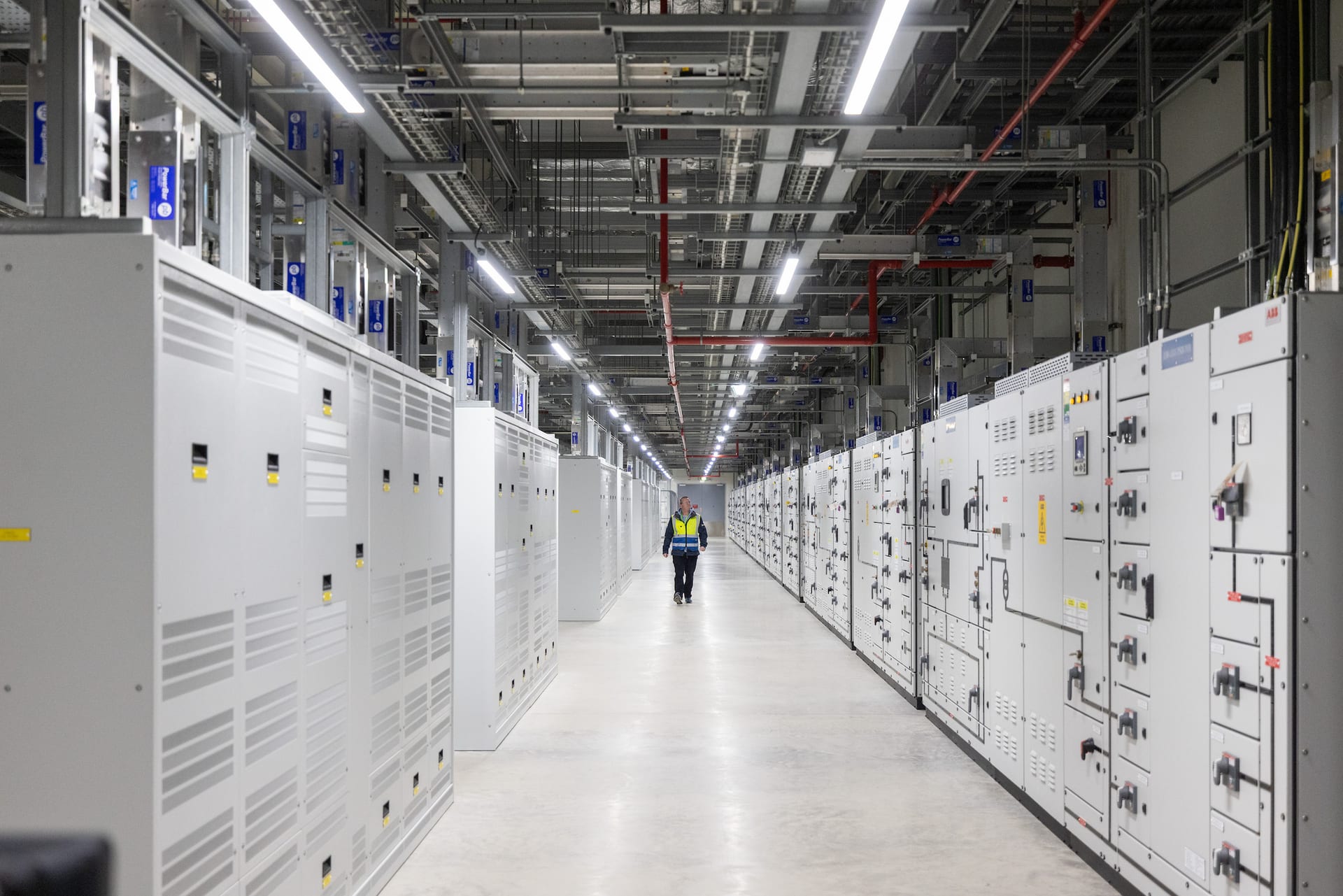
The growth has not slowed. Between 2024 and 2025 data centres’ consumption rose by 10%, from 6,973 to 7,663 gigawatt hours. All other customers together, households and businesses, used 2% more. Total metered use in Ireland grew by 34% over the decade, and data centres account for much of that rise.
Homes and data centres also draw power differently. Household use spikes every winter, for heat and light. Data centres’ use climbs quarter after quarter, from 291 GWh in the first quarter of 2015 to 1,991 GWh in the last quarter of 2025. Watch the slope of their share in the chart below: it never turns down.
% of total metered electricity
Show the numbers
| Data centres | |
|---|---|
| 2015 | 5 |
| 2016 | 6 |
| 2017 | 7 |
| 2018 | 8 |
| 2019 | 9 |
| 2020 | 11 |
| 2021 | 14 |
| 2022 | 18 |
| 2023 | 21 |
| 2024 | 22 |
| 2025 | 23 |
National figures for the whole of Ireland, not Dublin alone. The CSO identifies data centres itself, from operator names, industry reports and the sector of high-consumption customers, because its source data do not classify them separately. Source: CSO, Data Centres Metered Electricity Consumption 2025 (7 July 2026), Table 1
These are national numbers, and the CSO does not say where the servers sit. Dublin’s energy agency, Codema, does give a regional picture. In its Dublin Region Energy Master Plan, data centres account for 16% of the region’s energy-related emissions, close behind commercial buildings and ahead of the whole public sector.
Codema’s baseline for the Dublin Region, from the master plan’s summary document. Shares are of emissions, not of electricity use. Source: Codema, Dublin Region Energy Master Plan (summary document)
Codema’s requests of big consumers are practical. It asks them to minimise their impact on the grid, to generate on site and buy renewable power matched, preferably hour by hour, to their demand, and to make their waste heat available to district heating. Ireland already has a working example: since 2023, a scheme in Tallaght has piped heat from an Amazon data centre to the offices of South Dublin County Council and TU Dublin’s Tallaght campus.
Most cities will never host Ireland’s share of data centres. But any city can ask the same things before the next campus arrives. How much power will it draw at the peak, and who pays for the wire to bring it? Where will its heat go? And is there a network nearby that could take it?
Heat from what we throw away: who gets to use it?
Under the river Dodder, between Sir John Rogerson’s Quay and York Road in Ringsend, Dublin City Council wants to dig a tunnel for hot water. In September 2026 it published the planning notice for the Dublin District Heating Project, which would take heat from burning household waste at the Poolbeg incinerator and pipe it to 50,000 homes and buildings in the Docklands. A further 8.5km of pipe would be laid in residential streets on the north and south quays.
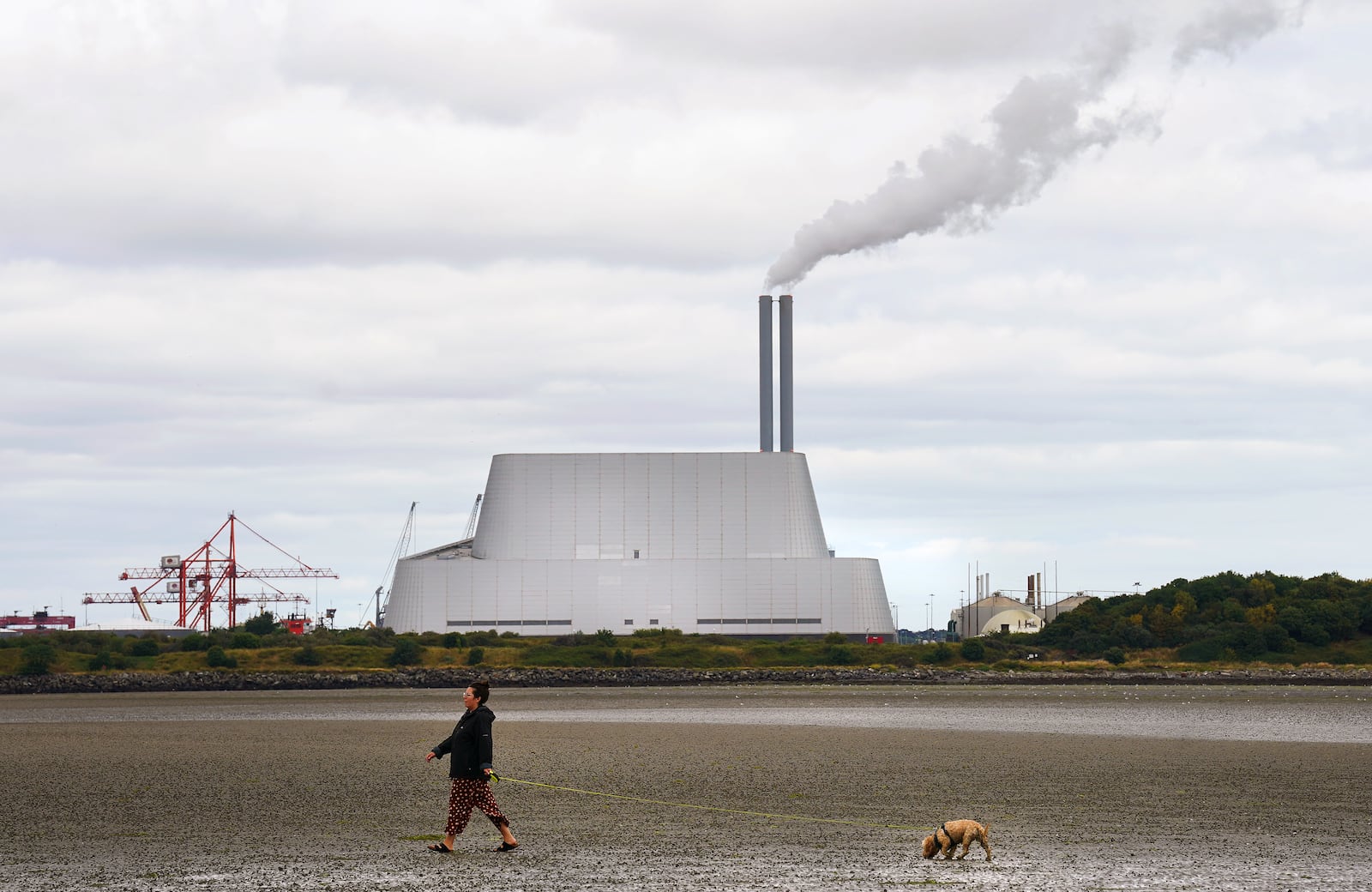
The case for it is simple, as the Irish Times explains: with a heat network, switching one source to renewable or waste heat decarbonises thousands of homes at once, instead of changing boilers house by house.
The idea is older than the plant. Read the timeline for the gap between the pipe and the heat.
- Early 2000s[source]
Planned as a heat source
The waste-to-energy plant at Poolbeg is envisaged as the source for a Dublin heat network.
- 2010[source]
A pipe under the Liffey
A section of pipeline linking the north and south quays is laid under the river, with no heat to carry.
- 2017[source]
The incinerator opens, late
Dublin Waste to Energy begins operating, using some of its heat to make electricity.
- 2023[source]
Ireland’s first scheme, in Tallaght
Heat from a data centre warms council offices and a university campus.
- Sept 2026[source]
Planning notice
Six weeks for public submissions; the public can ask the planning board to screen the scheme for environmental effects until 7 October.
- 2027–28[source]
First customers
Apartments on the former Irish Glass Bottle site first, then the north and south Docklands; the council hopes to have properties connected by 2028.
Dublin’s district heating scheme as the Irish Times told it in September 2026. The council is its own planning authority for this kind of scheme.
Codema’s master plan says district heating could supply 87% of Dublin’s heat demand by 2050, and that 3,579 MW of renewable and waste heat in the region is going unused today. Building the networks across Dublin would cost an estimated €7.7 billion by 2050, with most of it paid to local workers. The plan also notes that district heating is currently unregulated in Ireland, so customers will need protection on price and service.
That is where ownership comes in. Amsterdam’s coalition calls heat a basic service and wants a strong public heat company, built with Firan, EBN, neighbouring Diemen and other municipalities, with affordability and democratic control at its centre. Until enough sustainable sources exist, it will use leftover heat from the waste-to-energy plant and from data centres. It also admits it depends on national choices, including the government taking over private heat companies.
Denmark, where district heating is ordinary, shows what happens when take-up falters. In 2024, 30 of 75 municipalities reported a lack of progress on district heating projects, according to a status report by the think tank Concito. Fewer connections make each project costlier, which slows the network further. A pipe is only as good as the homes that agree to use it, and whoever owns the pipes decides on what terms they are asked.
Cities that run their own grid: what does owning the utility let a city do?
In 2008, Zurich’s voters were asked to commit their city to living on 2,000 watts of energy per person and to stop renewing its investments in nuclear power. 76% said yes. At the time the average Swiss resident used about 6,000 watts, so the target meant cutting primary energy use by roughly two thirds. In 2022 voters approved a net-zero target for 2040.
A promise like that is easier to keep when the city owns the company that sells the power. Zurich does: ewz, the city’s own electricity works, runs the city’s grid, and its smart-grid work sits in our library, though the page is still thin. The 2000-Watt Society idea, born at ETH Zurich in 1998, became building rules and planning policy; the first 2000-Watt Site certificate went to Greencity, a new district at Manegg. The city’s Strategies 2040 put climate-neutral energy under “stable livelihoods”, for a population projected to pass 500,000 by 2040.
Vienna is the fuller case, because its framework strategy spells out what it means to use the assets the city owns, from municipal housing to public utilities and transport, “in the common interest”. Since 2009 all of Vienna’s residual waste has gone to the city’s waste-to-energy plants rather than to landfill. The chart shows what those plants, a large heat pump and the solar arrays of Wien Energie, the city’s utility, already supply.
Figures as the city gave them in its revised Smart City Wien strategy (2022). Heat from what the city burns or wastes reaches far more homes than its solar panels do. Source: City of Vienna, Smart City Wien Framework Strategy (2022)
Owning the system lets Vienna plan the dull parts together: expanding the electricity grid for heat pumps and electric cars, extending district heating where heat demand is dense, and coordinating the digging for cables and mains with the redesign of the street above, trees included. It has set dates to end oil heating by 2035 and gas heating by 2040.
Berlin’s grid company, Stromnetz Berlin, and the city’s district heating network are in our library too, but as project pages with little yet to read, so this read draws no lesson from them. Evgeny Morozov and Francesca Bria noted in 2018 that campaigns to take grids, gas pipes and water back into public hands have often worked, and warned that a city can win back the pipes and lose the data that runs them. Ownership is a lever few cities still hold. The ones that do have something to teach the rest.
Planning the local system: what goes into a good energy plan?
France made local energy planning a duty ten years ago. Every group of municipalities above 20,000 inhabitants must draw up a six-year climate, air and energy plan, known as a PCAET, and 750 groups are obliged. By March 2025, 552 had adopted one, 73% of those obliged, and another 97 had done so voluntarily. Three in four people in France now live in an area with an adopted plan.

Writing the plan proved easier than paying for it. In 2025 the state created a €200 million climate fund for these plans, shared out mainly by population and spent without project-by-project vetting. Councils liked the method and spent the money, but on actions that were already ripe, because the deadlines were short. Terres d’Argentan in Normandy used part of its share on a study into recovering waste heat.
Planning is effective, because it is done at the level of the places where people live their lives, and it is essential.Switzerland pays for the planning itself. In its 2024/25 cycle the federal programme EnergieSchweiz supported 119 projects in 460 communes with CHF 3.55 million. Look at which bars are longest below.
Themes named in two of the programme’s three strands (54 projects in energy regions, 46 in cities and communes); the 19 Front Runner projects are grouped differently. Solar and electricity supply and storage gained ground on the previous cycle. Source: Swiss Federal Office of Energy, EnergieSchweiz für Gemeinden 2024/25 (Jan 2026)
Energy plans were the single biggest category in both strands. National outlooks explain the urgency. The Dutch planning agency PBL found in its 2026 outlook that the expected cut in emissions by 2030 has stalled for three years running, and that the Netherlands imported 77% of the energy it used in 2025.
Put the sources side by side and a good local plan contains a short list of things:
- A map of what should go where, street by street: which areas suit a heat network and which suit heat pumps. Codema built one for Dublin.
- A register of every installation and its grid connection, kept up to date, so progress can be tracked.
- Land reserved early for substations and cables in spatial plans, as the Dutch regional grid programme now asks.
- A simple energy statement with every planning application, giving the building’s peak demand for heat and power.
- One timetable for digging, so cables, heat pipes and new street trees go in together, as Vienna plans.
- Money that arrives on a known date, for more than a year at a time: the main lesson French councils drew from their climate fund.
Ask the cities that own their grid
Most of what decides whether a city’s energy plan works happens below the pavement and inside a grid operator’s spreadsheet. Oostzaan’s whole queue could be connected after a recalculation, Dublin’s pipe waited years for its heat, and Vienna plans its digging so a street is opened once. Little of this is published city by city: grid data are mostly national, and the utility pages in our library are thin.
That gap is one we can close together. Cities that run their own utilities, like Zurich and Vienna, have learned things that cities without them need: how to read a congestion map, how to price heat, how to ask a data centre for its waste heat before the permit is signed. If you work on a city’s energy system, start with Smart Grids & Renewable Energy, where the projects and plans in this read are gathered, and with the city profiles of Dublin and Amsterdam.
Then tell us what your city has learned. Join the community on the participate page and say where your grid runs short, and what freed it up. The next read on this subject should be able to name more places than these.
References
From our libraries18
- Kamerbrief Aanpak netcongestie (Staatssecretaris Klimaat en Groene Groei, 30 juni 2026) — Knowledge
- Jouw stad is mijn stad. Coalitieakkoord 2026–2030 PRO Amsterdam en D66 Amsterdam — Knowledge
- Data Centres Metered Electricity Consumption 2025 — Key Findings (CSO, 7 Jul 2026) — Knowledge
- Dublin Region Energy Master Plan (brochure), Codema — Knowledge
- Heat from Poolbeg incinerator to be piped under Dodder to homes in Dublin's Docklands (Irish Times, 11 Sep 2026) — Knowledge
- Status på kommunernes klimahandling — Etablering af Klimaalliancens fælles monitoreringssystem (april 2025) — Knowledge
- 2000-Watt Society — Knowledge
- ewz Smart Grid – Zurich Energy Networks — Project
- Greencity Zürich (Manegg) — Project
- Zurich Strategies 2040 — Knowledge
- Smart City Wien Framework Strategy (Revised 2022) — Knowledge
- Wien Energie — Smart Grid & Digital Energy — Organisation
- Stromnetz Berlin — Smart Grid Transformation — Project
- Vattenfall Wärme Berlin — Organisation
- Rethinking the Smart City: Democratizing Urban Technology (Evgeny Morozov & Francesca Bria, Rosa Luxemburg Stiftung New York, January 2018) — Knowledge
- PCAET : état des lieux 2025 — 10 ans de planification écologique locale (Intercommunalités de France, février 2026) — Knowledge
- Projektförderung – Förderprogramm von EnergieSchweiz für Gemeinden, Programmzyklus 2024/25: Zahlen und Fakten (BFE, January 2026) — Knowledge
- Klimaat- en Energieverkenning 2026 (PBL Planbureau voor de Leefomgeving) — Knowledge
Further sources3
- Jo-Annes de Bat, State Secretary for Climate and Green Growth, letter to parliament, 30 June 2026 — Jo-Annes de Bat, State Secretary for Climate and Green Growth, letter to parliament, 30 June 2026
- The Irish Times, Caroline O’Doherty (11 Sept 2026) — The Irish Times, Caroline O’Doherty (11 Sept 2026) · Early 2000s
- Jean Révéreault, vice-president for ecological transitions, Intercommunalités de France — Jean Révéreault, vice-president for ecological transitions, Intercommunalités de France