Project Overview
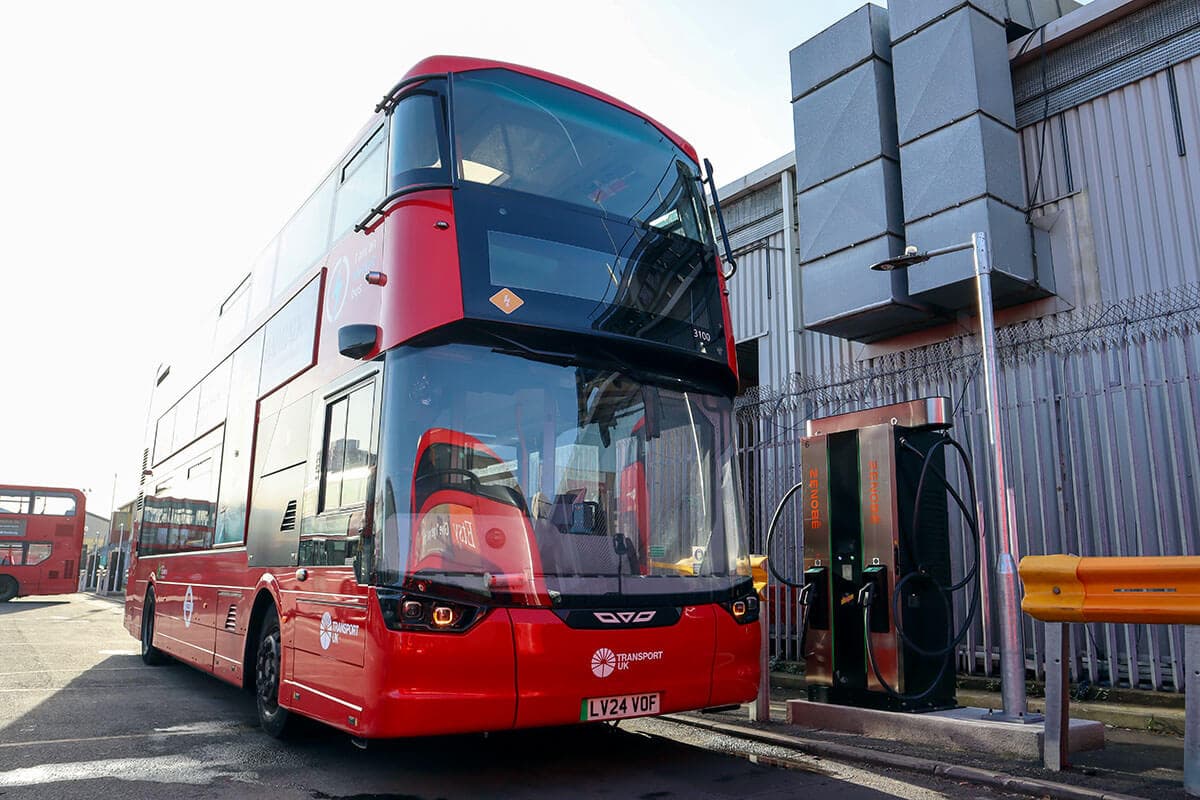
The case study, published by Zenobē, examines its September 2023 partnership with Transport UK London Bus (TUKLB), which developed a funding model that has enabled TUKLB to become one of the leading operators of fully electric buses in London. Tailored financing spreads the costs of vehicles, charging infrastructure, e-bus batteries and their replacement, and the study looks at delivering charging infrastructure, including the end-to-end electrification of TUKLB's Southall depot.
The Challenge
TUKLB set clear aims for its transition to electric: to grow its EV fleet to operate existing routes and secure new ones in London, provide sustainable infrastructure for future needs, and deliver a growth strategy with sustainable transport at its heart, supporting TfL and the Mayor of London's 2030 vision. The Southall depot sits in a constrained network area, so there was not enough local power to run the depot and charge the 25 electric vehicles being procured for TfL routes E5 and E7.
Grid Connection and Charging
Zenobē secured and financed a 500kVA grid connection for TUKLB, working with the DNO and ICP on its procurement and installation. A 1.2MW/1.2MWh battery supplemented the connection so all buses could be charged without a more costly grid upgrade. Zenobē then installed 13 x 150 kW Zerova DC chargers, all financed under a 14-year Charging Service Agreement.
Fleet Financing Across Two Depots
- Southall: 25 e-buses, including 12 Wrightbus Kite Electroliners (single deck) for route E7 and 13 Switch Metrocity (single deck) vehicles for route E5, financed under a 14-year battery managed service and master rental agreement that guarantees battery performance.
- Battersea: flexible financing by route. Route C3 has 10 Wrightbus Streetdeck (double deck) vehicles; Route 306 has 11 Streetdeck vehicles plus five Zerova chargers; Route 133 is a full electrification programme with 27 Streetdeck vehicles, on-board batteries, charging infrastructure and project management of a 5MVA grid connection.
Outcomes
Through the partnership, Zenobē completed the full electrification of the Battersea and Southall depots, integrated battery storage at Southall, and mobilised 89 fully electric Wrightbus Electroliner buses. Zenobē has financed 193 vehicles across 12 TfL routes for TUKLB and manages the batteries on all of them. The text says that since September 2023 TUKLB has doubled its full EV fleet, becoming London's first operator to energise all of its depots, and that over 30% of its fleet is now fully electric. This has removed around 200 diesel vehicles from London's roads.
Other Electric Fleet Projects
The same publisher's listing describes Brinks, which after a self-delivered 6-vehicle pilot partnered with Zenobē to scale to 25 vehicles in 12 months, projecting $800k in fuel and maintenance savings. It also describes 10 electric school buses financed with The Trans Group's Educational Bus Transportation for Copiague Public Schools, providing zero-emission transport for approximately 4,500 students.
Why It Matters for Fleet Electrification
The case study states that the project demonstrates the benefits of a fleet electrification partnership, from early power integration through to the long-term operation and financing of batteries and vehicles. It also shows the variety of vehicle types Zenobē can support with financing, aimed at transport operators seeking to electrify their fleets.