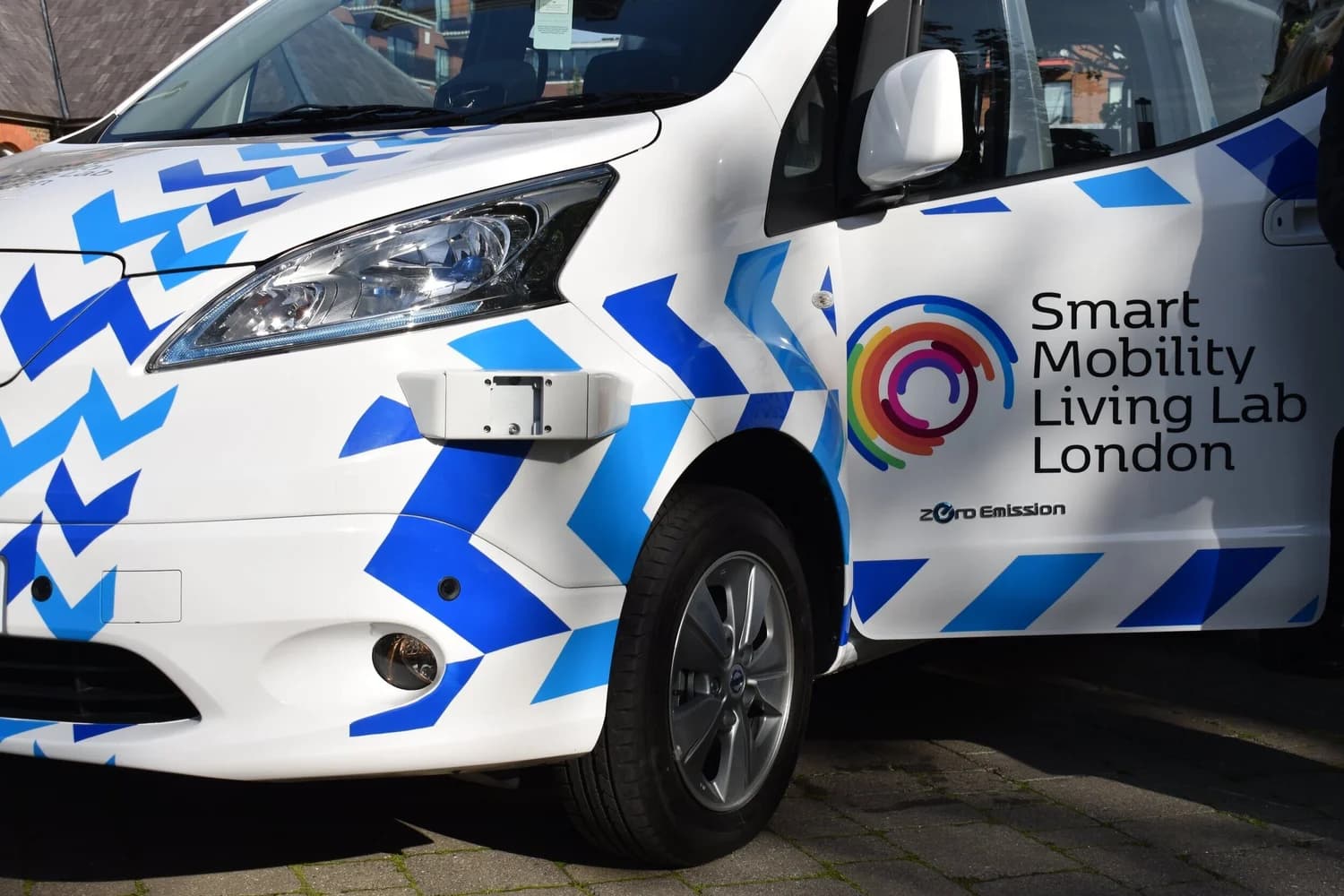
Smart Mobility Living Lab (SMLL) is a London-based testbed for future transport and mobility systems, using public and private roads in the city as a real-world research environment. The project is designed to help turn mobility concepts into deployable services by testing them under live traffic conditions rather than in a closed track alone. Its stated focus is on connected, automated, shared and electric mobility, with an emphasis on safety, reliability, accessibility and reduced environmental impact.
SMLL operates on three main pillars: Test, Simulate and Innovate. The test environment allows organisations to trial components, vehicles, code, connected applications and full service models in London’s streets. The simulate function uses a synthetic replica of the physical testbed to reduce development costs and speed up iteration. The innovation element brings companies together through a membership community to explore new transport approaches and value creation.
The lab is run by TRL, the transport research organisation, and was co-created through an industry-government joint initiative backed by multi-million-pound strategic investment in future transport. Its consultancy and operational support involve TRL, DG Cities and the London Legacy Development Corporation (LLDC), while Loughborough University is identified as the lead academic partner. The testbed is based across areas including the Royal Borough of Greenwich and Queen Elizabeth Olympic Park in Stratford, both chosen for their complex urban conditions.
One of the best-known use cases is ServCity, a project led by Nissan to trial an autonomous taxi service. SMLL positions London as a proving ground for technologies that must work in dense, mixed-traffic environments before wider deployment elsewhere.