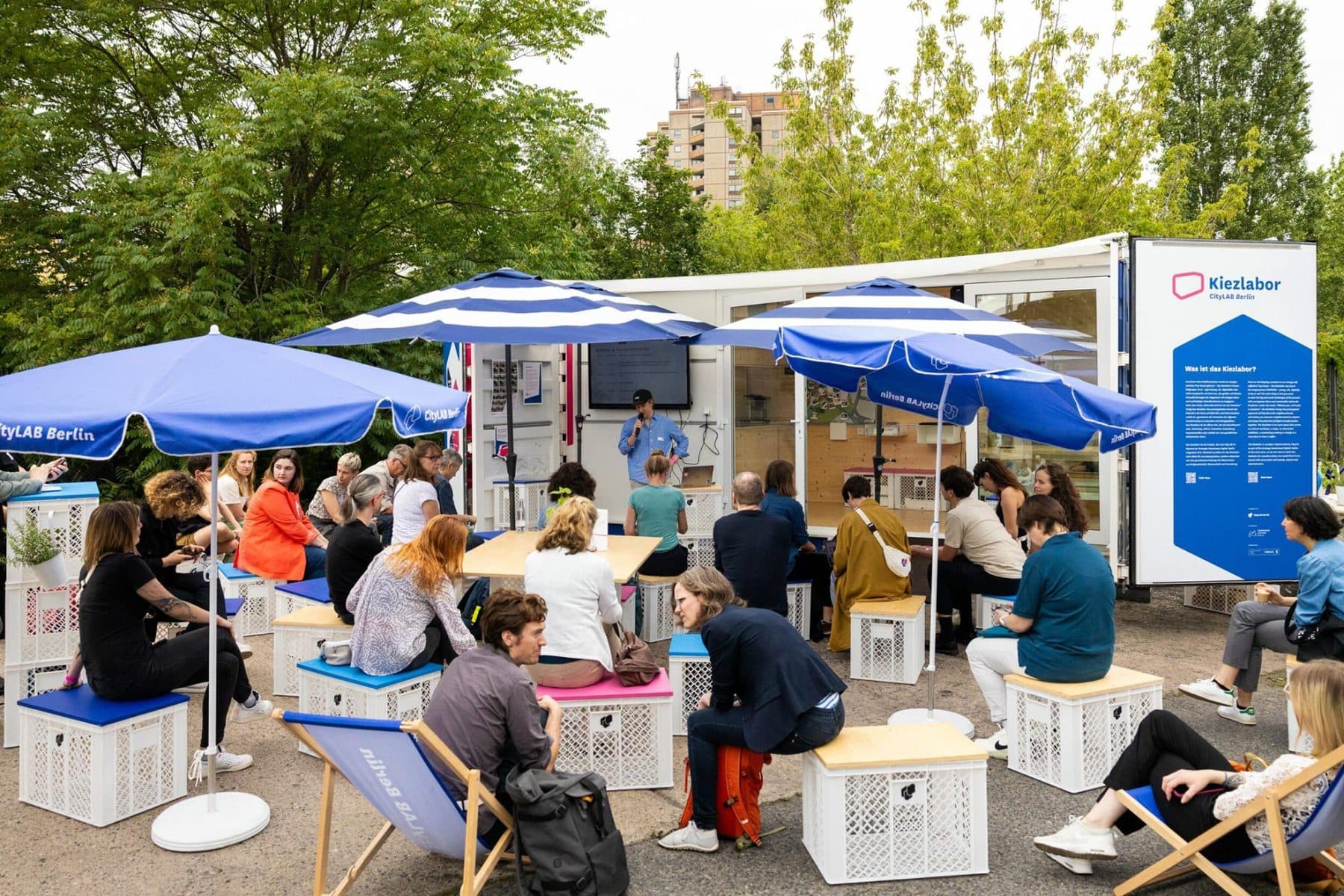
What the Project Is
The Kiezlabor describes itself as a mobile urban lab. Its stated aim is to strengthen collaboration between local communities and the Berlin administration through participatory approaches. The website states that it is an initiative of the Smart City and Digital Strategy Gemeinsam Digital: Berlin and is implemented by CityLAB Berlin on behalf of the Berlin Senate Chancellery. The Senate Chancellery also funds the Kiezlabor through CityLAB project funding. The text states that the Kiezlabor is not part of the Berlin state government or a district administration.
Who Runs It
The team is listed as part of CityLAB Berlin and is described as bringing together creative minds from political science, urban development, design, data analysis, administrative innovation and other disciplines. The contacts named are Sonja Spital (project lead), Henriette Närger and Sarah Lebkücher (project managers for urban innovation), and three working students, Stefan Beck, Hannah Mühlbach and Klara Marie Klappauf. The contact address is Platz der Luftbrücke 4, 12101 Berlin.
Mobile Formats and Equipment
Depending on the local theme, the team brings a toolkit of methods in an upcycled shipping container or on a cargo bike. The container is described with the following features:
- Self-sufficient through solar power
- Adaptable for indoor and outdoor use
- Modular seating options
- Interactive installations
- Presentation technology inside and out
How a Location Is Developed
Each location's programme is built around one or a few themes relevant to the local community. The team usually starts with a main partner, then engages other stakeholders and local residents to define core themes and first content ideas. Stakeholders named include district administrations, neighbourhood initiatives, community management, urban planning offices and municipal housing associations. The container usually stays at a location for several weeks, with programmes offered at selected times, while the cargo bike allows single-day visits. The two are sometimes combined in different phases of one location.
Lasting Results
The text states that the work on site is temporary, so the team aims to leave something lasting. It names three elements: participation processes, to which locations are often linked, with results processed to support ongoing planning; the Kiezlog, where outcomes are documented and kept accessible to partners and residents; and new structures that connect active stakeholders and encourage others to take part. Documentation for every past and future location is provided in the location overview.
Working With Partners
Members of the extended team are present on site as contact persons, and partner programme content is coordinated with them. The text notes that partners are in most cases also present, especially for workshops or information stands. Community members can suggest locations for the upcoming season, and open positions are listed on the CityLAB job page, alongside a support pool for on-site help.
Why It Matters for Community Participation in Berlin
According to the text, the project wants as many people as possible to take an active role in shaping their community. It creates accessible formats that offer local, temporary spaces for exchange and encounter, and it brings the Gemeinsam Digital strategy's knowledge directly into Berlin's neighbourhoods as places of co-creation and digital participation.