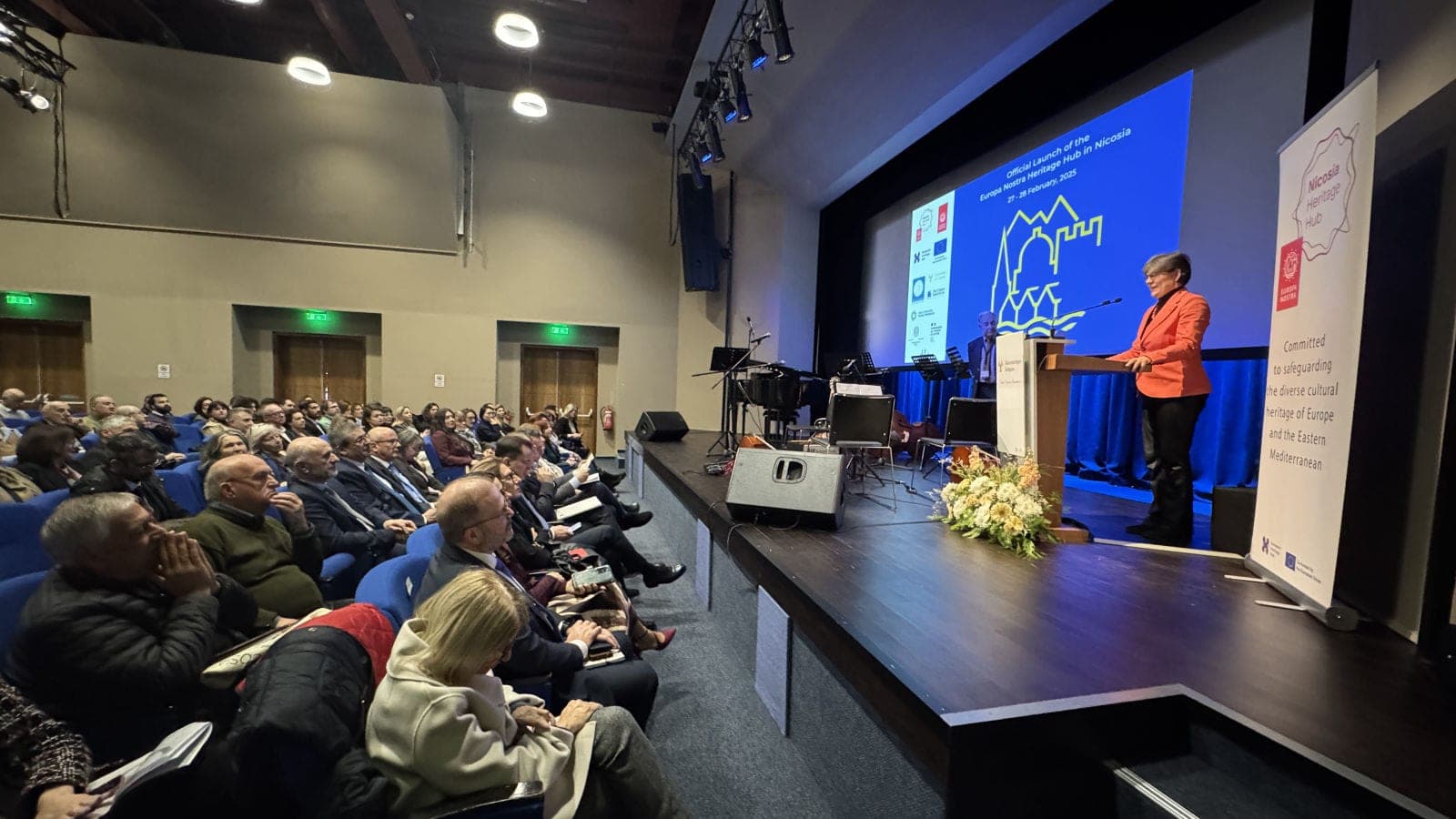
The European Heritage Hub began as a two-year pilot launched in May 2023, bringing together 20 partners under the leadership of Europa Nostra with European Union co-funding.28 Its purpose was to build a more coordinated heritage sector and lay the groundwork for a permanent, autonomous platform connecting organisations and initiatives across Europe.2
The Hub treats cultural heritage as part of three linked transitions: green, digital and social. Its work combines networking and knowledge-sharing with training, policy analysis and advocacy, aiming to strengthen cooperation among heritage actors and connect the sector with citizens and local communities.1712 Activities have included public forums, online meet-ups, peer-learning and study visits, alongside regional engagement through hubs and initiatives in cities including Athens, Krakow and Lisbon.6
The project’s reach extends beyond the European Union, particularly to neighbouring countries in the Western Balkans, the Caucasus, Ukraine and Moldova.26 One concrete result was a Small Grants Scheme that selected 14 civil-society-led heritage projects across 11 neighbouring countries; the scheme was run by Europa Nostra in consultation with consortium partners and co-funded by the ALIPH Foundation.11
The pilot has since been followed by a preparatory phase, and the Hub describes its current role as a permanent knowledge, networking and advocacy platform.1 Its consortium has also expanded: the Hub’s website lists 28 partners, including heritage institutions, civil-society organisations, universities and historic cities.1