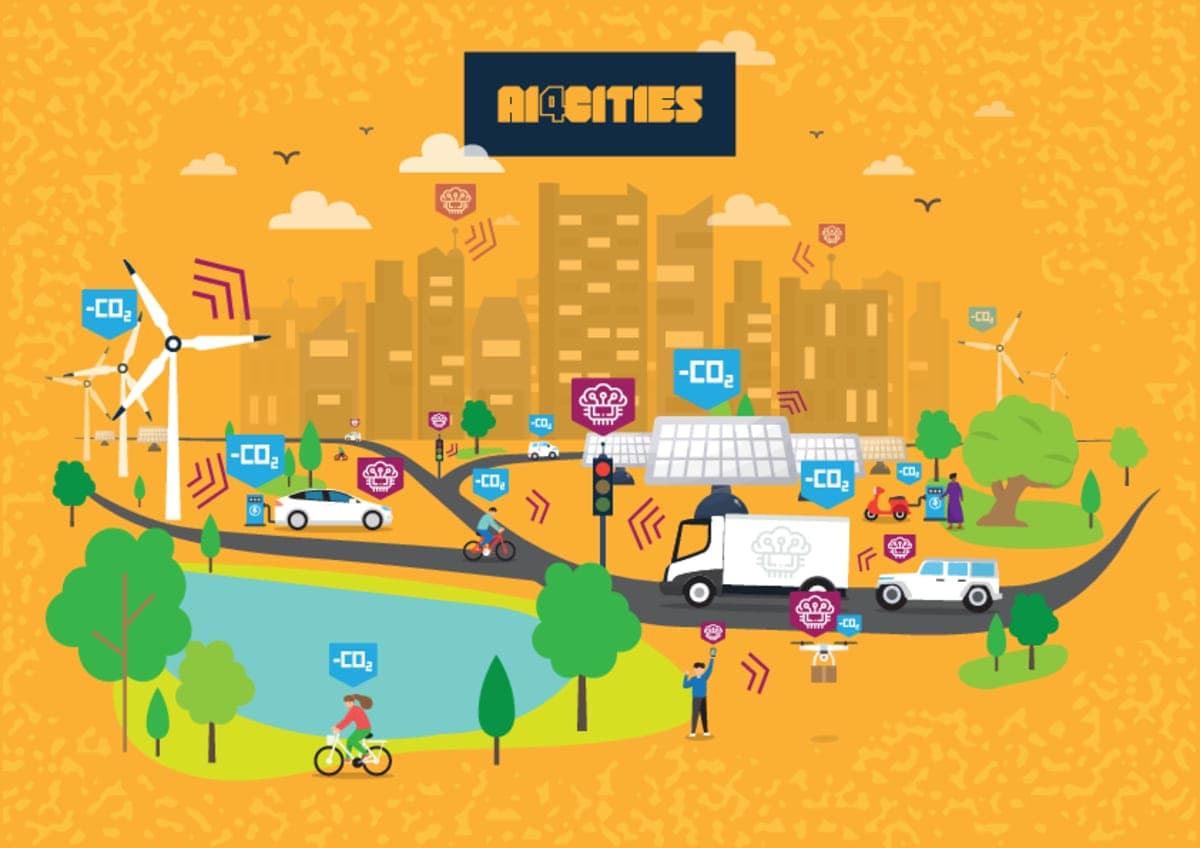
Copenhagen joined AI4Cities, a three-year EU-funded project that brought six European cities and regions together to find AI-based ways to cut emissions from energy and mobility. The project ran from January 2020 to December 2022; its participating authorities sought solutions that could support their climate commitments. 1
For Copenhagen, the work focused on municipal buildings: reducing energy use, improving indoor climate and managing buildings’ interaction with the energy network. 7 The city took part in a pre-commercial procurement (PCP), through which public authorities define practical needs and invite suppliers to develop solutions that are not yet market-ready. The process moved from solution design to prototype development and testing, with €4.6 million available across the participating cities and regions. 17
The procurement invited startups, small and medium-sized businesses, larger companies and other relevant stakeholders to apply AI and related technologies, including big data, 5G, edge computing and the Internet of Things. 1 In April 2022, the European Commission reported that seven AI-based prototypes had been selected for testing across the six participating cities; four addressed energy, with pilots planned in Copenhagen and other locations. 6 The project’s Buyers Group included the City of Copenhagen alongside Forum Virium Helsinki, the City of Amsterdam, Cap Digital, the City of Tallinn and the City of Stavanger. 9
Copenhagen’s participation connected the procurement to its ambition to become carbon neutral, while testing whether digital tools could help the municipality manage building energy more effectively. 79