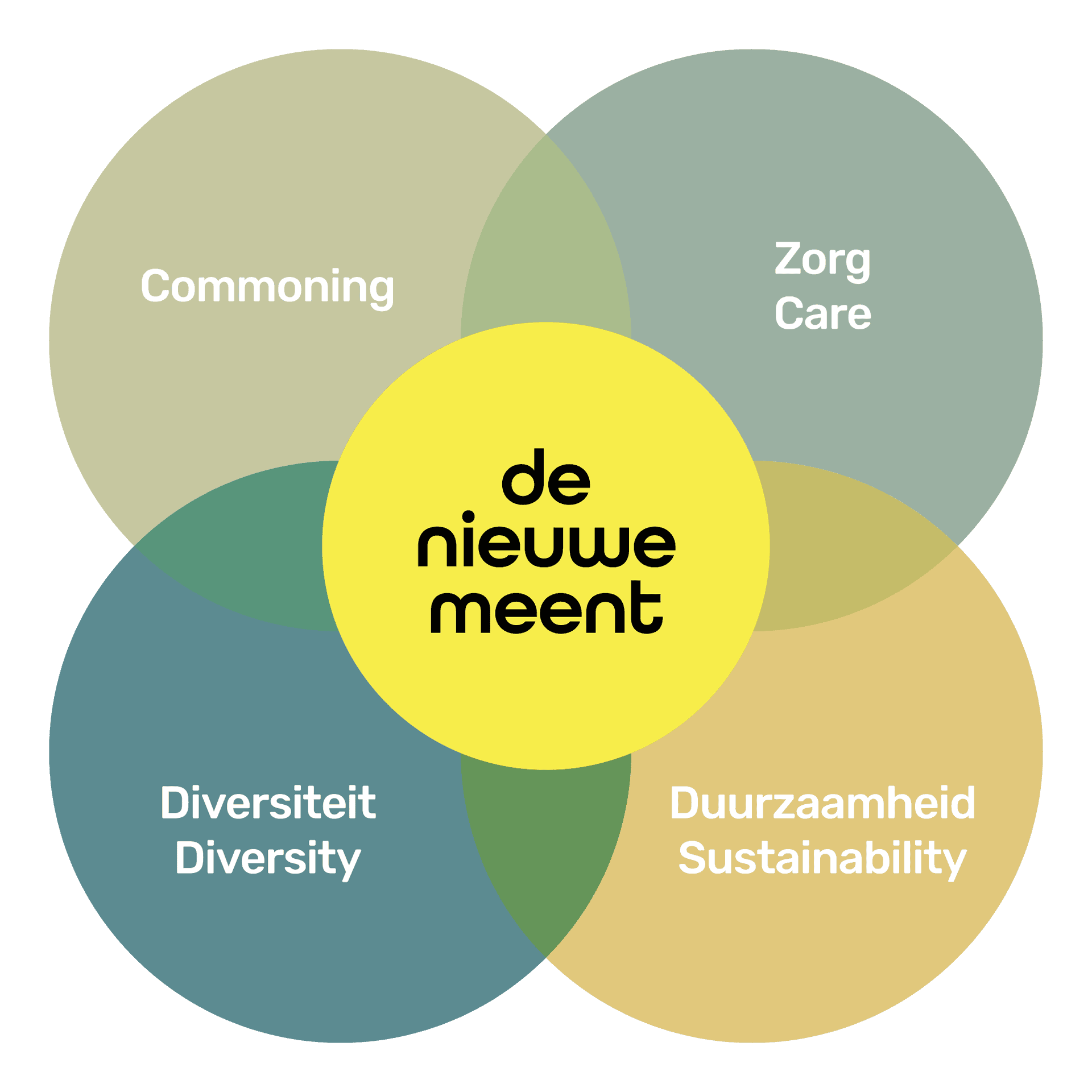
de Nieuwe Meent is a housing cooperative in Amsterdam that was founded in 2018 around a clear premise: homes should be for living, not for profit. The project is rooted in the housing rights movement and is built on the idea of “commoning” — shared use and collective management of resources. In practice, that means combining affordable housing with shared living, social care and a solidarity-based financial model.
The cooperative’s main project is a seven-storey wooden building in Amsterdam designed to house around fifty people. According to the organisation, the building is intended as a self-built, non-profit housing model that removes homes from the speculative market. Residents do not own units individually; instead, they rent from the cooperative and take part in the governance of the whole project.
de Nieuwe Meent is part of Amsterdam’s broader experiment with housing cooperatives and is described as one of the first pilot projects initiated by the City of Amsterdam. The project also aims to influence similar cooperative initiatives in the city and beyond. Its scope is therefore primarily local, but with an explicit ambition to serve as a model for other urban commons and housing cooperatives.
The cooperative emphasizes affordability, shared facilities and community life. Its planned building includes common spaces and is presented as a response to the city’s housing shortage, especially for people who struggle to find housing that fits their needs. Beyond the building itself, the organisation works on contracts, statutes, member participation, and legal coordination with the municipality and advisers.