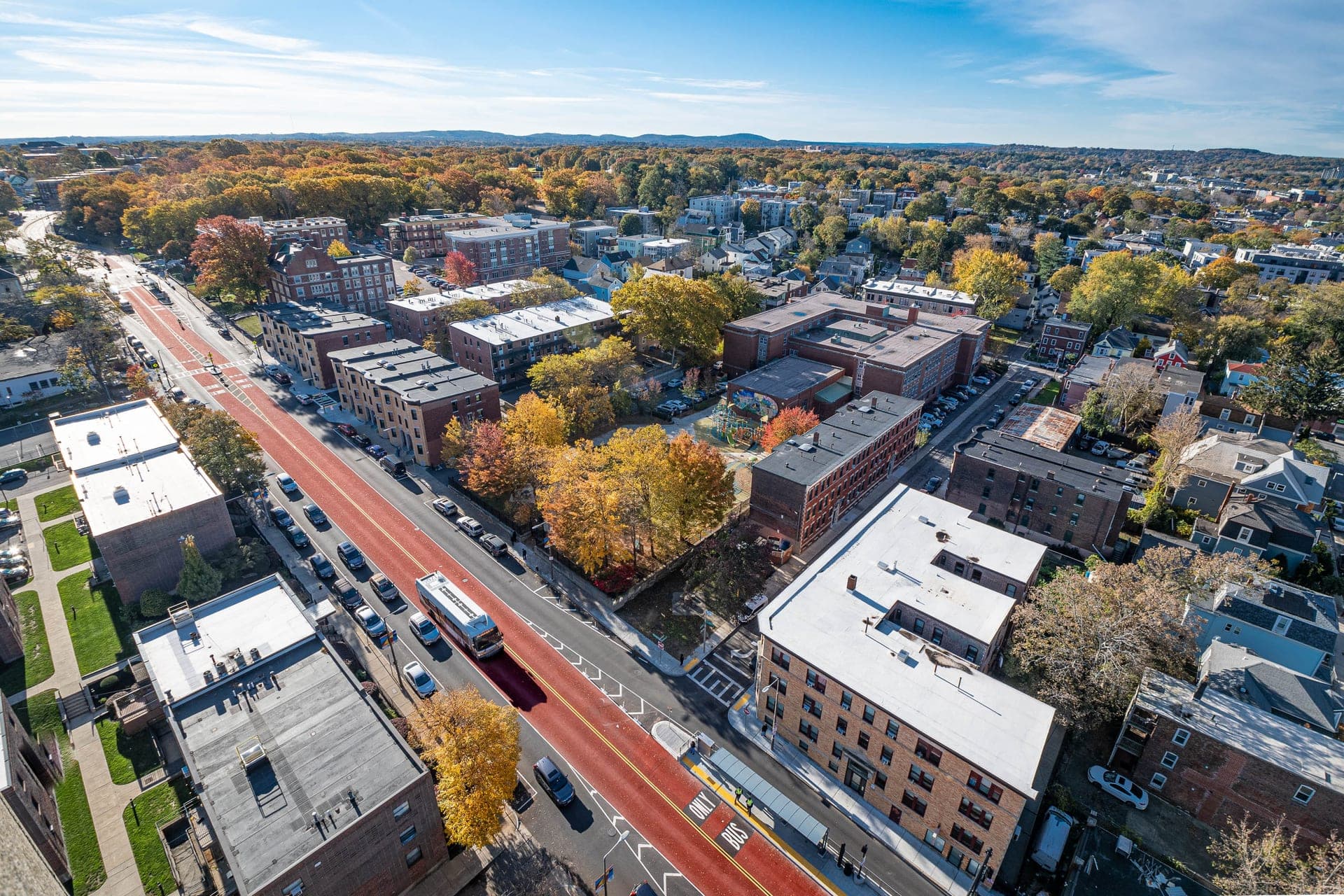
The MBTA Transit Priority Strategy is a Greater Boston effort to make bus journeys faster and more dependable by changing how streets are designed and operated. The Massachusetts Bay Transportation Authority (MBTA) says buses are often delayed by traffic, making trips longer and service less predictable. Its approach combines street design and infrastructure with policies and traffic operations, including dedicated bus lanes, queue jumps and transit signal priority. Projects are developed with municipalities and communities, with safety for pedestrians and people cycling included in the design. 12
The strategy focuses on 26 congested corridors identified in the MBTA’s Transit Priority Vision. Together, they account for only 10 to 15 percent of the bus network but carry 80 percent of its riders; the agency estimates that improvements there could benefit 220,000 daily riders. The vision and interactive map track locations where measures are already installed, projects in progress and places planned for future work. Many projects also support the MBTA’s Bus Network Redesign. 1
The MBTA Transit Priority Group was created in 2019 with support from the Barr Foundation. A concrete example is Columbus Avenue in Boston, where the MBTA and the City of Boston worked with community stakeholders. The first phase opened in October 2021, introducing New England’s first center-running bus lanes, along with boarding platforms and pedestrian-accessibility improvements. A city evaluation reported that the lanes save bus riders about three to four minutes during rush hour; the city also reported fewer roadway injuries after installation. These are results from one corridor, not a system-wide evaluation of the strategy. 2911
The MBTA’s FY2026–30 capital plan includes $213 million for bus-priority investments, including transit signal priority and projects supporting the Transit Priority Vision. 12