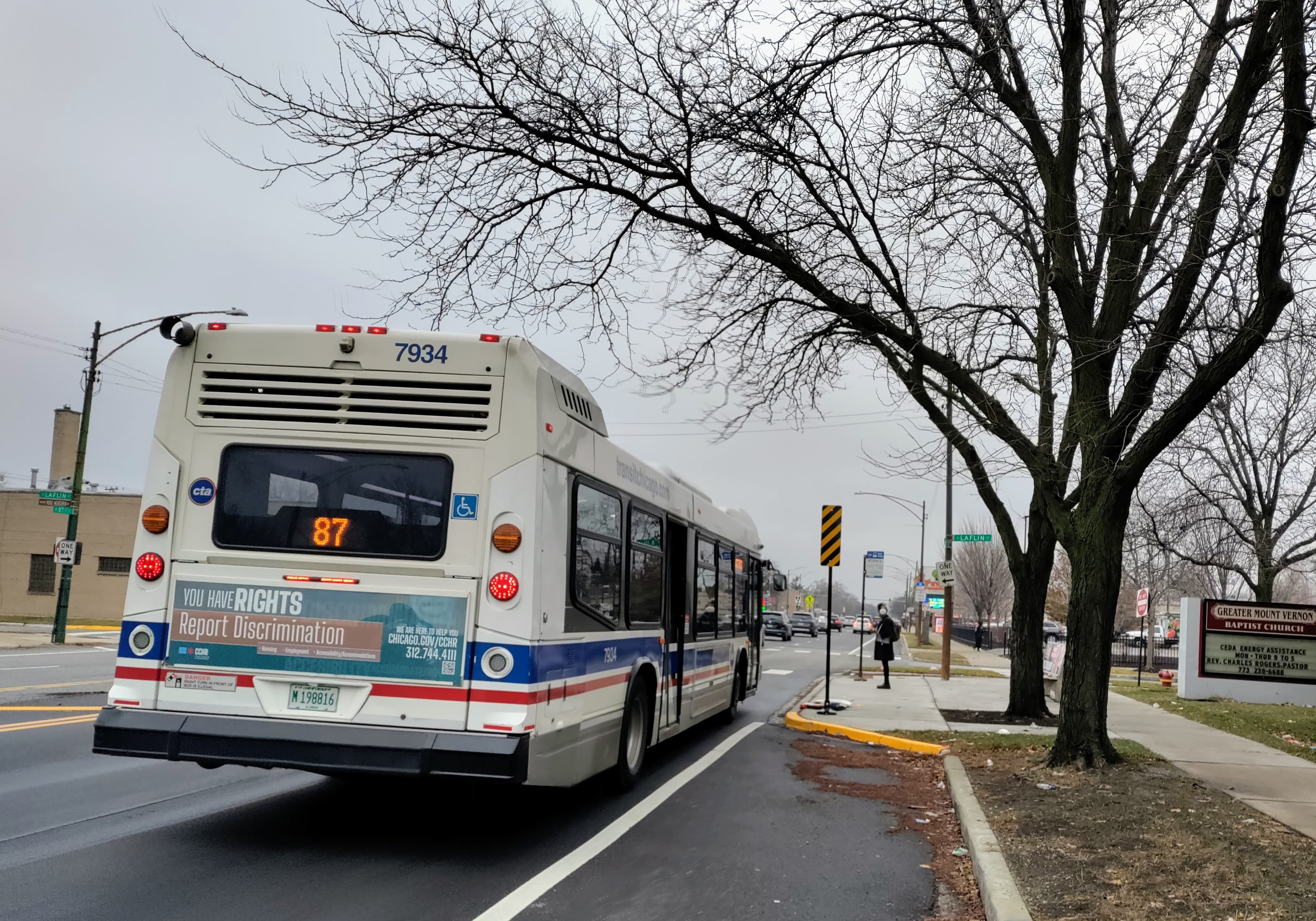
Chicago’s Smart Streets pilot uses cameras on city vehicles and Chicago Transit Authority (CTA) buses to document parking and standing violations that can obstruct bus and bike lanes. The city says the program is intended to encourage safer driving, improve compliance and reduce crashes and deaths involving pedestrians and cyclists, while helping buses move more efficiently. 16
The City Council authorized the pilot in 2023. Chicago’s Departments of Transportation and Finance announced its launch in November 2024, and the city began issuing violations in December that year. The initial deployment used cameras on eight city vehicles; the CTA later added automated bus-lane enforcement equipment to six buses on priority routes. The Finance Department reviews evidence and issues citations. 368
The pilot’s enforcement area has expanded beyond its initial downtown focus. The city’s current description sets its boundaries at Lake Michigan, Irving Park Road, Ashland Avenue, Archer Avenue and 26th Street. Covered offenses include blocking bus or bike lanes, parking in bus stops, street-cleaning violations, expired meters and certain commercial-loading-zone violations. 12
By October 2026, the city reported 140,000 warnings and violations since launch; three-quarters were warnings without fines, and 84% of drivers who received such a warning did not later receive a fine. The city also reported that bike-lane incidents’ share of total violations in pilot areas had fallen by 25%. These are city-reported results, not an independent evaluation. 2 The pilot is currently set to expire in December 2026. 1