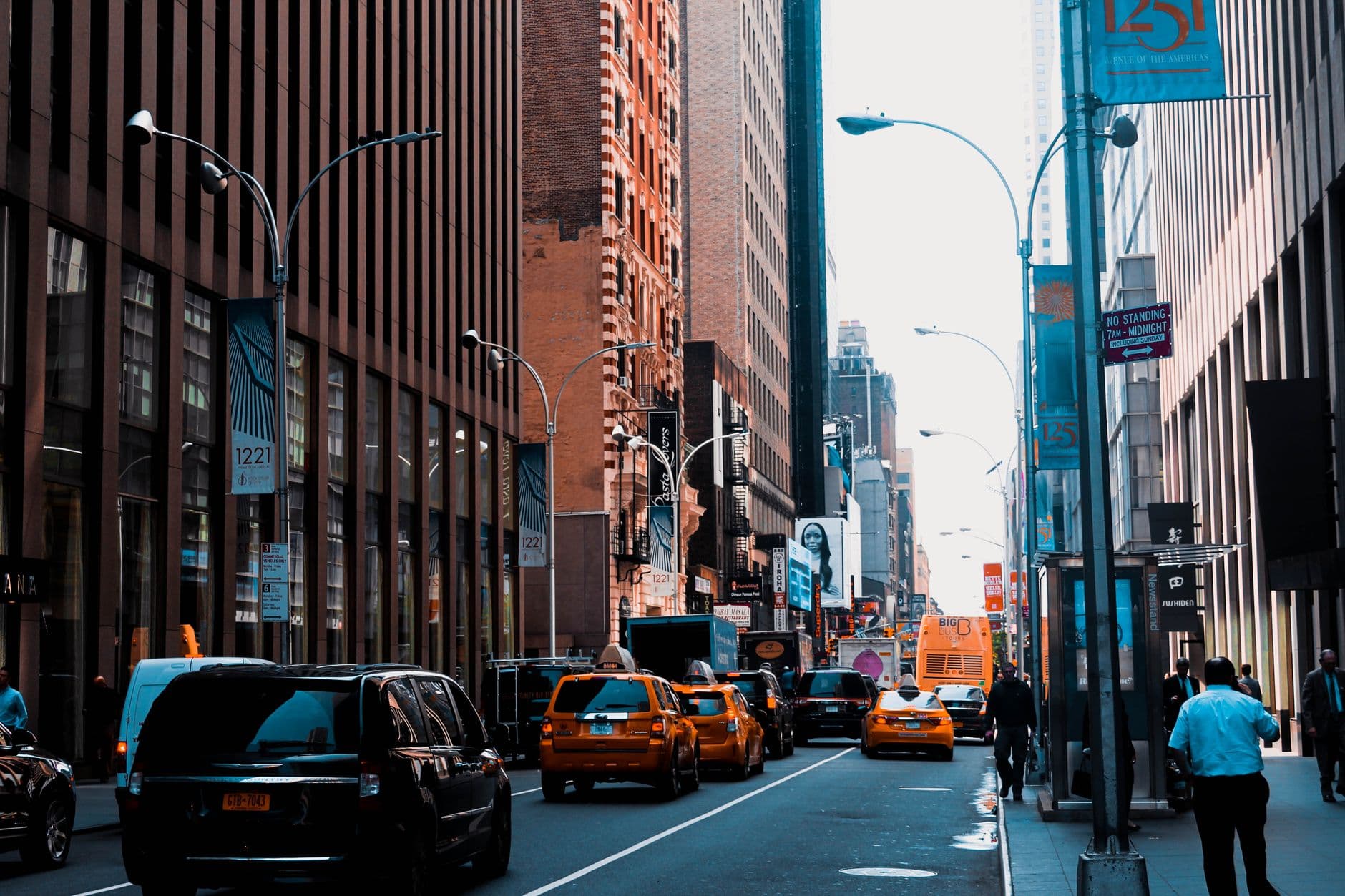
The NYC Connected Vehicle Pilot Deployment tested whether vehicles and roadside equipment could exchange timely safety information in New York’s dense, busy streets. Led by the New York City Department of Transportation (NYCDOT), the project supported the city’s Vision Zero goals: reducing crashes and their severity, and helping drivers keep to legal speeds.28
The deployment covered three areas: a four-mile stretch of FDR Drive in Manhattan, several Midtown Manhattan corridors, and 1.6 miles of Flatbush Avenue in Brooklyn.12 It equipped about 3,000 city fleet vehicles with onboard devices and installed 450 roadside units to support vehicle-to-vehicle and vehicle-to-infrastructure communications.12 The system delivered warnings for hazards including red-light violations, unsafe lane changes and excessive speed on curves.6
The pilot was part of a U.S. Department of Transportation program. NYCDOT received an $18.6 million federal award for the design, build and test phases, following an initial planning phase.11 More than 20 city agencies, the Metropolitan Transportation Authority, New York University, the PASS Coalition, technology suppliers and contractors were involved.12 The project’s operational phase began in 2021; the city’s transition plan set out a shutdown beginning January 4, 2022.24
Federal program reporting found that the Red Light Violation Warning application reduced red-light running by 41%, Lane Change Warning reduced the unsafe lane-change rate by 46%, and curve-speed alerts lowered average speeds by 8.75 mph.6 The pilot has concluded, according to the NYC DOT page excerpt supplied for this research.