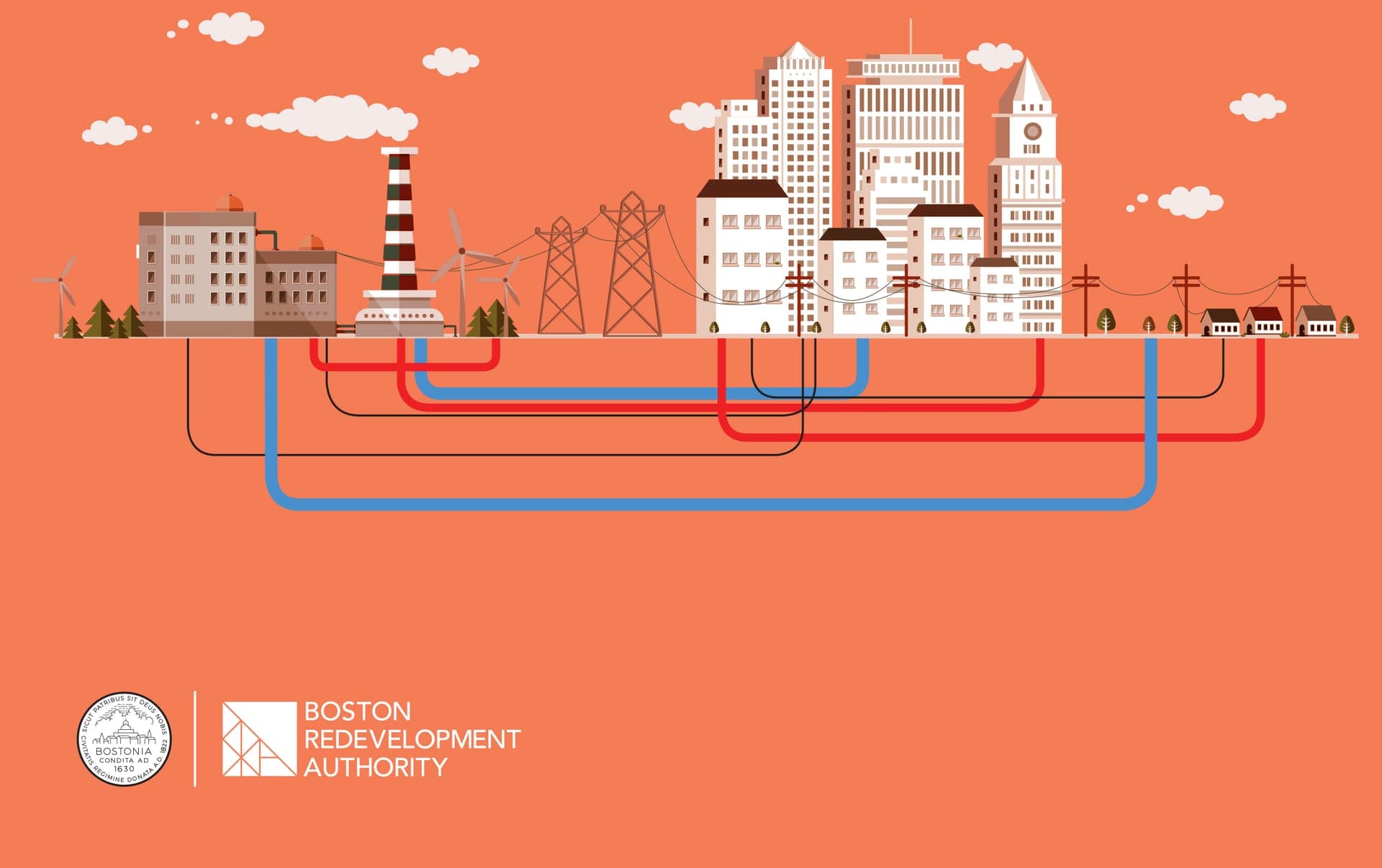
Boston’s Smart Utilities Program grew out of a citywide effort launched in 2015 by the Boston Planning & Development Agency (BPDA) and the City of Boston to improve how utility infrastructure is planned and coordinated. Its aim is to make services more affordable and equitable, strengthen infrastructure against flooding and heat, and reduce the disruption and expense of repeated street works.1011
The program’s main implementation tool is a policy for projects reviewed under Article 80, Boston’s development review process. The BPDA Board adopted the policy in June 2018 and updated it in October 2020; it calls for five smart utility technologies to be considered in qualifying new developments.10 Those technologies cover advanced energy systems, green infrastructure, traffic, transit and pedestrian systems, smart streetlights, and fiber and telecommunications equity.2 The policy sets requirements according to project size, with the Smart Utilities team reviewing submissions for compliance.2
In practice, the approach links infrastructure planning across energy, water, transportation, and telecommunications. Measures include district energy microgrids, stormwater-absorbing green infrastructure, coordinated traffic signals, smart streetlights, and shared underground telecommunications conduits.11 The program was approved as a two-year pilot in 2018, with goals that include reducing utility costs, preparing infrastructure for climate impacts, and limiting congestion and road construction.3
The work is interdepartmental and led by the BPDA, with City departments and utility companies involved in coordination.89 The available sources describe the program’s policy framework and technologies, but do not provide a consolidated, current account of citywide outcomes.