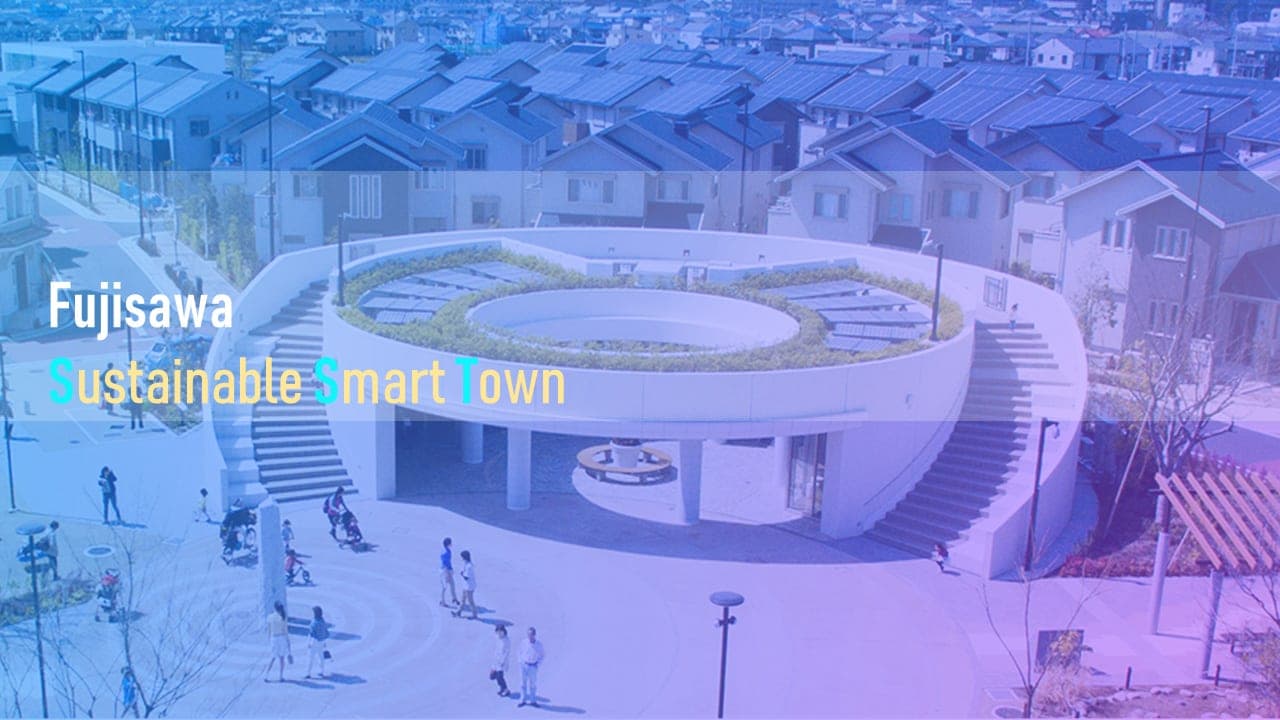
Fujisawa Sustainable Smart Town (Fujisawa SST) was conceived as a long-term effort to make a former Panasonic factory site in Fujisawa, Kanagawa, into a town shaped around residents’ everyday needs rather than technology alone. The project’s basic concept was agreed with Fujisawa City in 2010; residents began moving in and the town opened in 2014.411 It is a public-private collaboration involving Panasonic, Fujisawa City and partner organisations, with residents, businesses, government and universities participating in co-creation activities.26
The approach combines housing and community services with renewable energy, resilience measures and trials of urban solutions. The project has hosted more than 100 demonstration experiments and marketing initiatives, including mobility work, and reports that 10 new businesses have emerged from these activities.61 Its stated environmental results include a 70% reduction in CO₂ emissions against 1990 levels, a 30% reduction in household water use against a 2006 equipment-standard baseline, and renewable energy use above 30%. The town also reports that essential lifeline infrastructure can be maintained for three days during an emergency.1
More than a decade after opening, Fujisawa SST remains a working test site for how technology and services can support daily life and community priorities. Panasonic reported in March 2025 that about 2,000 people lived in 566 dwellings; the town had also received more than 41,000 study-tour visitors from 60 countries.1 Project leader Harumi Tanaka, a manager in Panasonic Operational Excellence’s Smart City Group, has described the aim as creating a new town and contributing to the local community, not simply redeveloping the factory site.1