CERIS, short for Civil Engineering Research and Innovation for Sustainability, is the research unit for civil engineering at Instituto Superior Técnico (IST), University of Lisbon, in Lisbon, Portugal. It is an FCT-registered unit working on the built and natural environment, with a profile that combines engineering research, innovation and knowledge transfer. The organisation says it focuses on six thematic strands, supported by six research groups and more than 12 laboratories.
Founded in 2015, CERIS was created through the merger of three older Lisbon-based research centres: CEHIDRO, CESUR and ICIST. That consolidation brought together expertise in hydraulics and water resources, urban and regional systems, and structural engineering, territory and construction. The unit now presents itself as a multidisciplinary platform covering the built and natural environment in an integrated way.
CERIS has a substantial research community. According to its website, it involves more than 200 PhD researchers and includes international students and researchers working across complementary scientific areas. In addition to its main base at DECivil of IST in Lisbon, CERIS also operates through three hubs: CERIS NOVA, CERIS Coimbra and CERIS Aveiro. This gives it a wider territorial reach within Portugal and connects it to partner institutions beyond the capital.
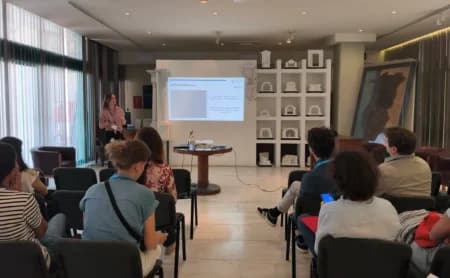
Its activity spans fundamental and applied research, postgraduate training, specialised services and consulting, and the dissemination of scientific results. Among its visible public-facing activities are seminars, PhD competitions, scientific communication initiatives and awards linked to continuous training and skills development. Recent highlights on the website include events on ethohydraulics and fish behaviour, a Jubilee Lecture on water, and doctoral student recognition in the ULisboa 3MT competition.