Document Context
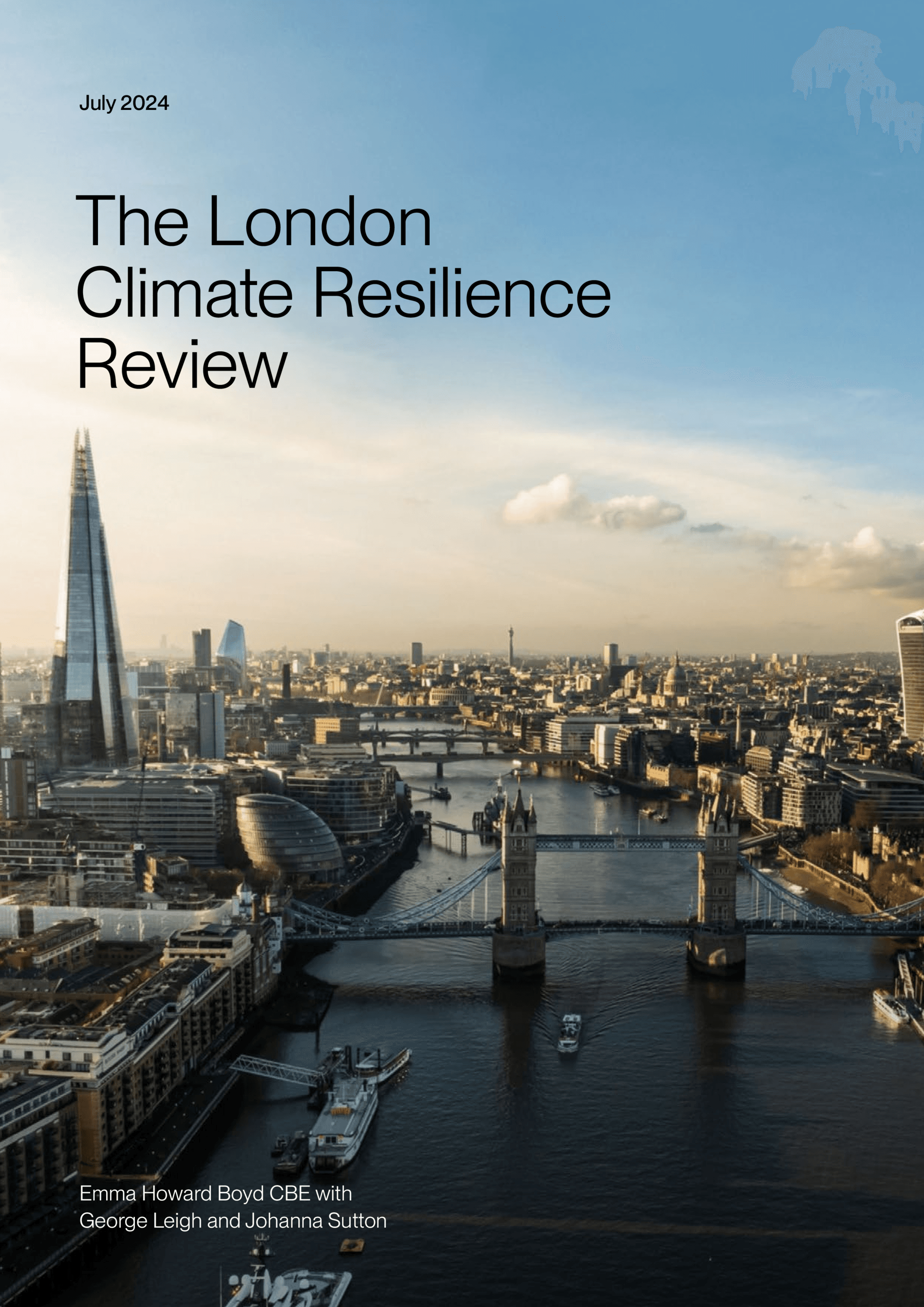
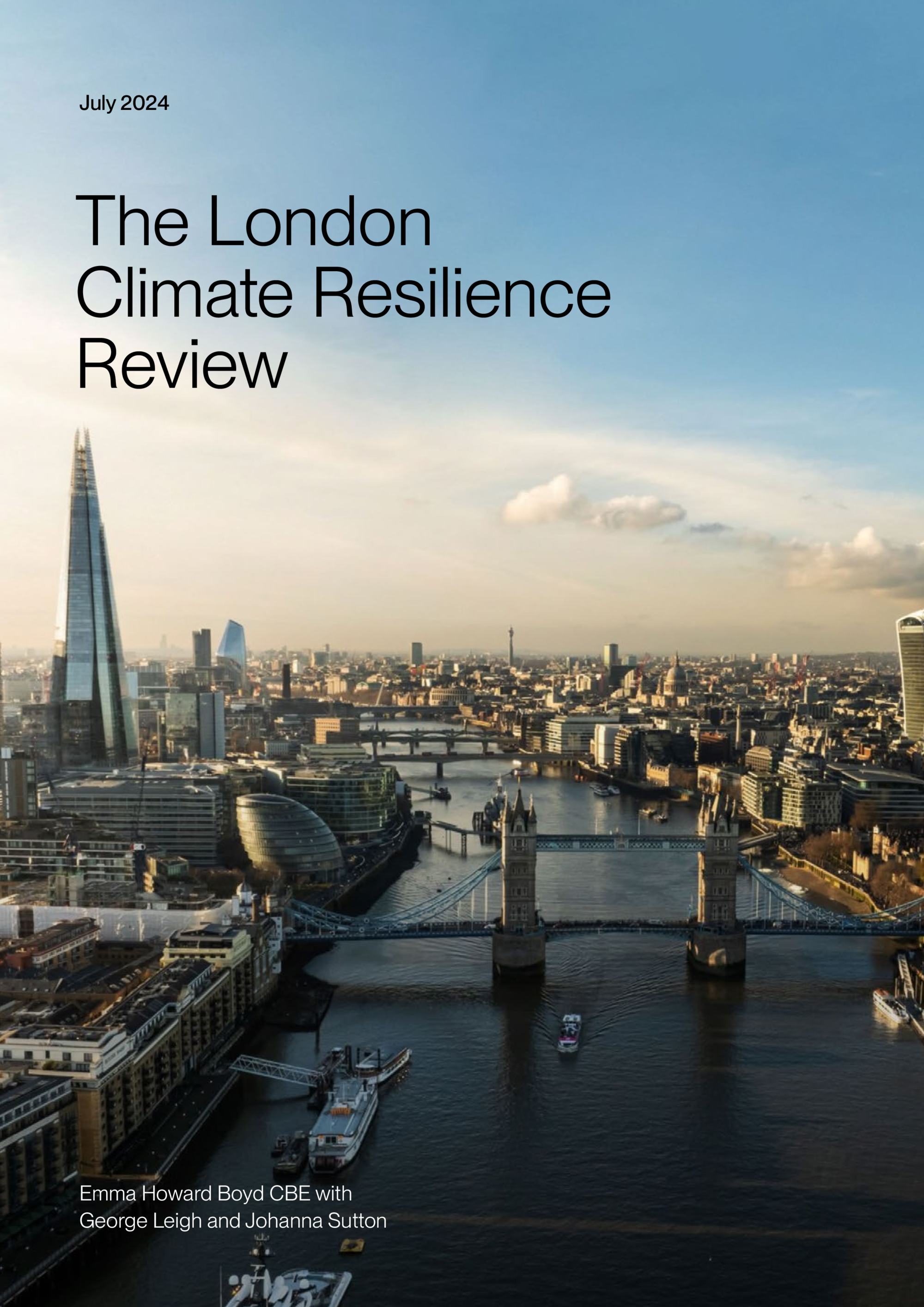
The London Climate Resilience Review is an independent final report commissioned by the Mayor of London in mid-2023 and published in July 2024. Authored by Chair Emma Howard Boyd CBE alongside George Leigh and Johanna Sutton, the document assesses the city's preparedness for worsening climate hazards and puts forward 50 recommendations across governance, communities, the built environment, and the economy.
London's Climate Risks
The report outlines severe climate hazards affecting London, including extreme heat, drought, surface water flooding, sea level rise, wildfires, and subsidence.
- London reached 40°C in July 2022, causing the London Fire Brigade its busiest day since World War Two, melting road surfaces, buckling train lines, and leading to 387 heat-related deaths in London (and 3,271 across England).
- In England, public water supply faces a shortfall of nearly 5 billion litres per day by 2050 without intervention, with unmitigated water shortages estimated to cost London's economy £500 million daily.
- Rising sea levels in the Thames Estuary are projected to reach around 1.15 metres by the end of this century; only 7% of the 126 kilometres of flood defences upstream of the Thames Barrier are tall enough to last past 2050.
- Approximately 43% of London properties are expected to be affected by subsidence by 2030, accelerated by clay-rich soil and drought.
Key Findings on Impacts and Governance
- The UN projects a 2.5–2.9°C global temperature rise this century, a trajectory the report argues London must use for planning.
- Climate change is projected to cut London's GDP by 2–3% annually by the 2050s, while typical annual productivity losses from heat are already valued at £577 million.
- Local public spending on open spaces decreased by more than 30% to £159 million in the decade leading to 2019, alongside a £4 billion reduction in core funding for London local services.
- Climate vulnerability is uneven: low-income, older, and ethnic minority Londoners reside disproportionately in flood-prone areas and housing susceptible to overheating.
Methodology and Evidence
The review carried out extensive cross-sector engagement, integrating testimony and data from local authorities, anchor institutions like the National Health Service and Transport for London, utility companies, and environmental bodies. It incorporates analysis from academic papers, municipal climate plans across all 32 London boroughs and the City of London, roundtables hosted by bodies like AtkinsRéalis and Better Buildings Partnership, and findings from the Review's January 2024 interim report.
Six Areas for Urgent Attention
The report highlights six critical action points:
- Formulating a London-wide strategic action plan on heat risk.
- Enhancing preparedness for severe surface water flooding, noting that over 2,000 properties flooded during intense July 2021 downpours.
- Analysing cascading risks and system interdependencies, particularly between power, water, and transport networks.
- Unlocking public and private resilience investment, capitalising on adaptation cost-benefit ratios between 2:1 and 10:1.
- Involving citizens, neighbourhood groups, and voluntary organisations in climate decision-making.
- Establishing a coordinated regional vision and delivery framework spearheaded by the Mayor.
Why It Matters for Urban Governance
The Review provides a strategic delivery roadmap for national government, the Greater London Authority, London boroughs, emergency responders, and infrastructure providers. It argues that proactive climate adaptation must be embedded as a statutory and operational priority across all public investment and procurement—leveraging the £19 billion annual public procurement spend in London—to avoid recurring economic downtime, safeguard critical systems, and protect vulnerable residents.