About the Document
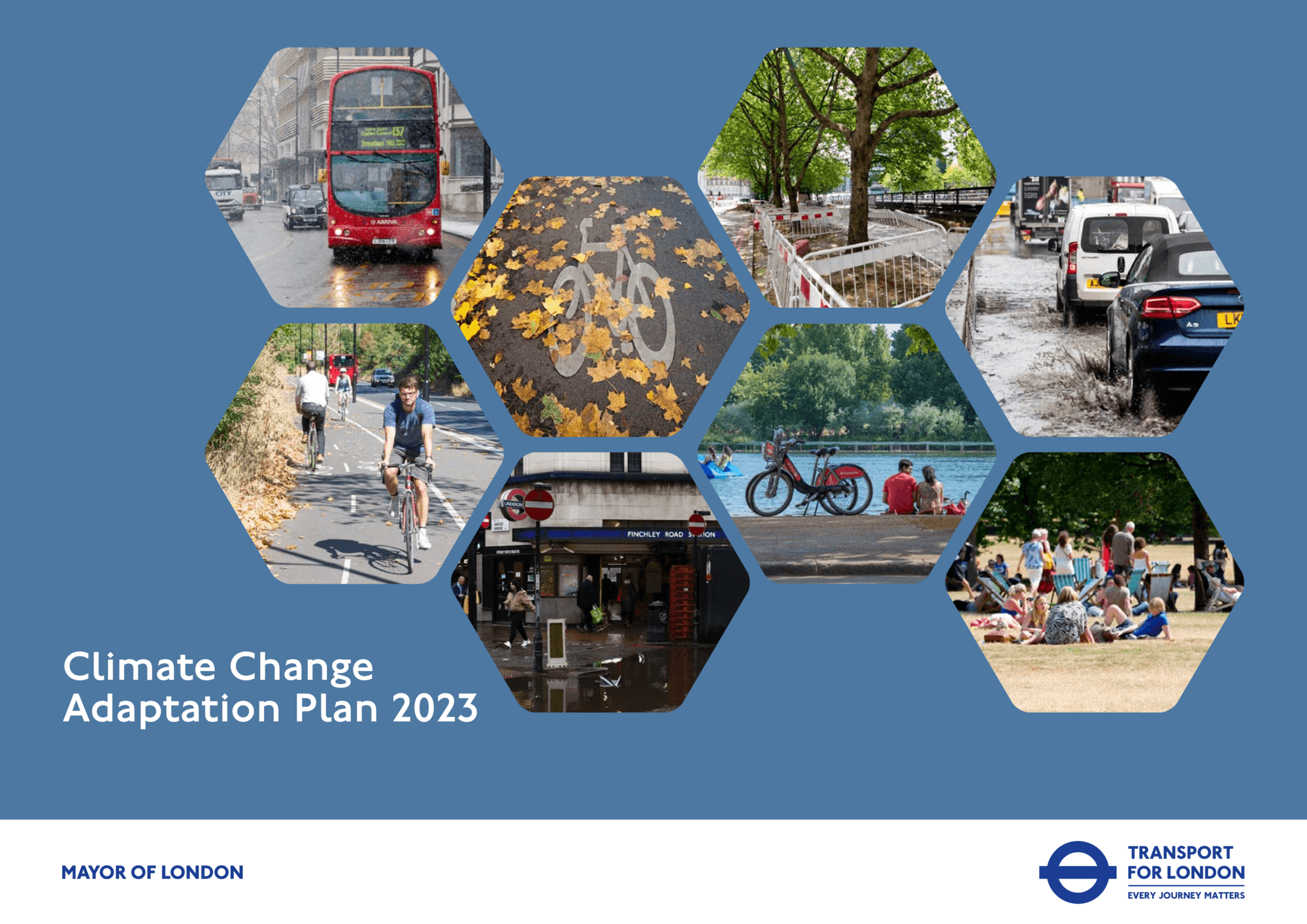
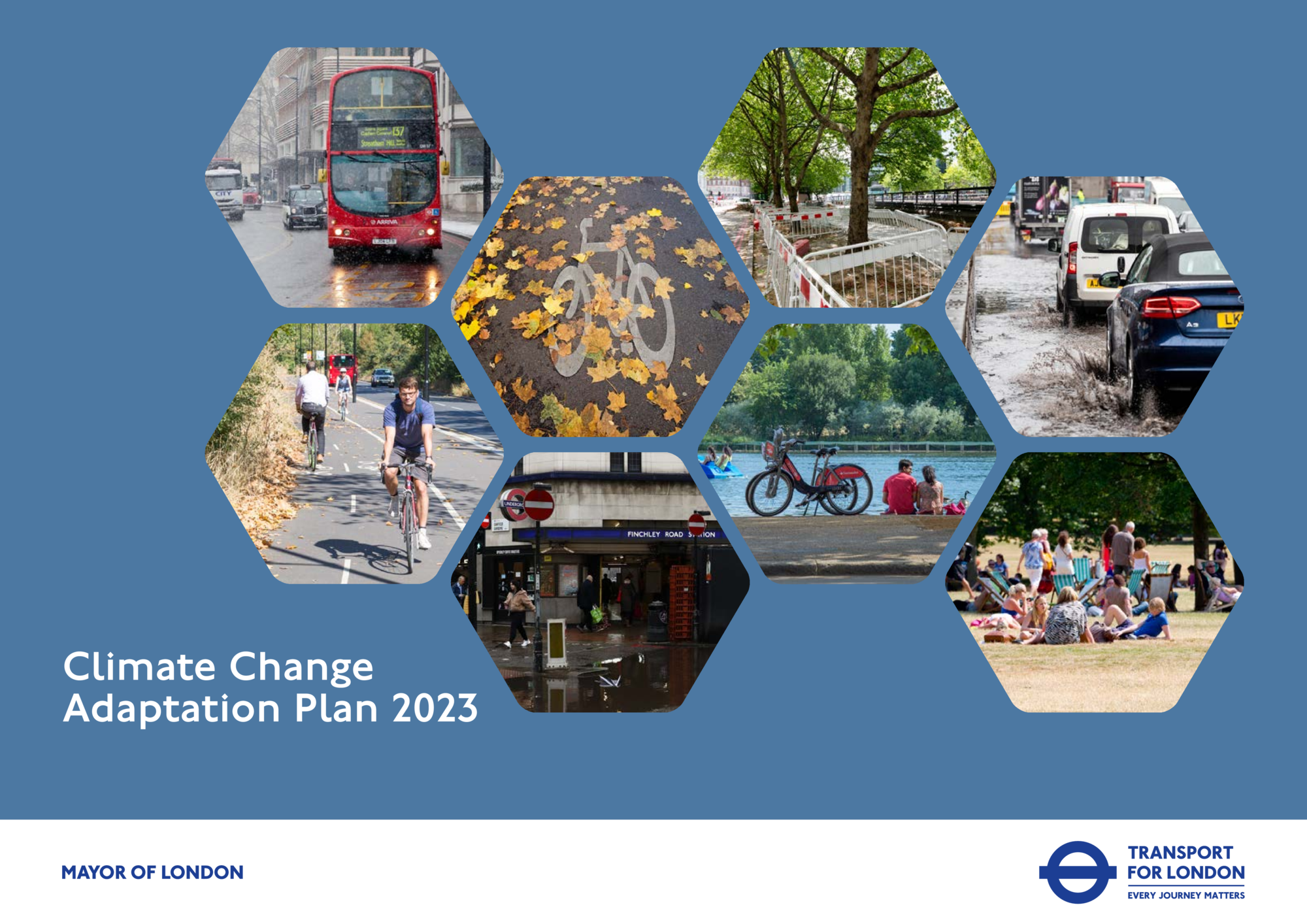
The TfL Climate Change Adaptation Plan 2023 is a plan published by Transport for London (TfL), the integrated transport authority for London, in March 2023. It relates to the Corporate Environment Plan 2021 and the Sustainability Report 2021, and is part of the Greater London Authority family led by Mayor of London Sadiq Khan. The foreword is signed by Lilli Matson, Chief Safety, Health and Environment Officer. Its subject is how TfL will make its network adapted and resilient to climate change.
Climate Context and Recent Impacts
The plan reports that climate change is already affecting the network. In July and August 2022, UK temperatures exceeded 40 degrees Celsius for the first time on record, causing cancellations, speed restrictions and trackside fires. Severe rainfall on 12 and 25 July 2021 closed 30 stations, and the 12 July flood alone resulted in approximately 197,128 lost customer hours, a financial loss of almost £2m. In February 2022, three named storms hit within one week.
Methodology and Climate Projections
TfL states it has completed its most comprehensive climate risk assessment to date, identifying risks to people and assets in 2022, 2050 and 2080. It uses Met Office emissions scenarios: a medium-high scenario (RCP6.5 90th percentile) as the base for assessing risk, and a high scenario (RCP8.5 90th percentile) to stress-test long-lifespan assets. The assessment identified 333 climate risks, with precipitation the hazard with the most risks. Five risks to people were scored as major or above today, rising to 11 in the 2050s and 13 in the 2080s.
Action Plan Structure
The action plan is organised around six interlinked thematic areas: leadership and governance, organisation and people, risk management, information management, capital and operational delivery, and collaboration, communication and reporting. Three aims run across them: an efficient and reliable network, protection of staff, contractors and passengers, and reduced financial impact of climate change. Each area sets short-term (by end of 2023), medium-term (by end of 2026) and long-term (by end of 2030) actions and outcomes.
Key Measures and Commitments
The plan commits to making sustainable drainage systems (SuDS) the default in projects, and to delivering 5,000 square metres of SuDS each year. It notes that TfL manages roughly five per cent of London's roads by length on the strategic road network. TfL reports that 80 per cent of trips should be made by walking, cycling or public transport by 2041, and that over 500 colleagues had been trained on carbon literacy as of February 2023. It also commits to mandatory TCFD reporting from 2023.
Collaboration and Interdependencies
The document identifies dependencies on digital technology, contractors, regulators such as the Department for Transport and the Environment Agency, emergency services, boroughs, energy suppliers and water companies. It names forums including the Infrastructure Operators Adaptation Forum and the pan-London Surface Water Flooding Strategic Group as channels for joint work.
Why It Matters for London's Transport Network
The plan states that it is an invitation to the organisations TfL works with to come together, and that adapting to climate change will make the network more reliable, attractive and safe for staff, customers and Londoners. It is addressed to TfL's stakeholders and partners, and sets out how progress will be monitored through the Executive Committee Sustainability Group and reported to the TfL Board.