About the Document
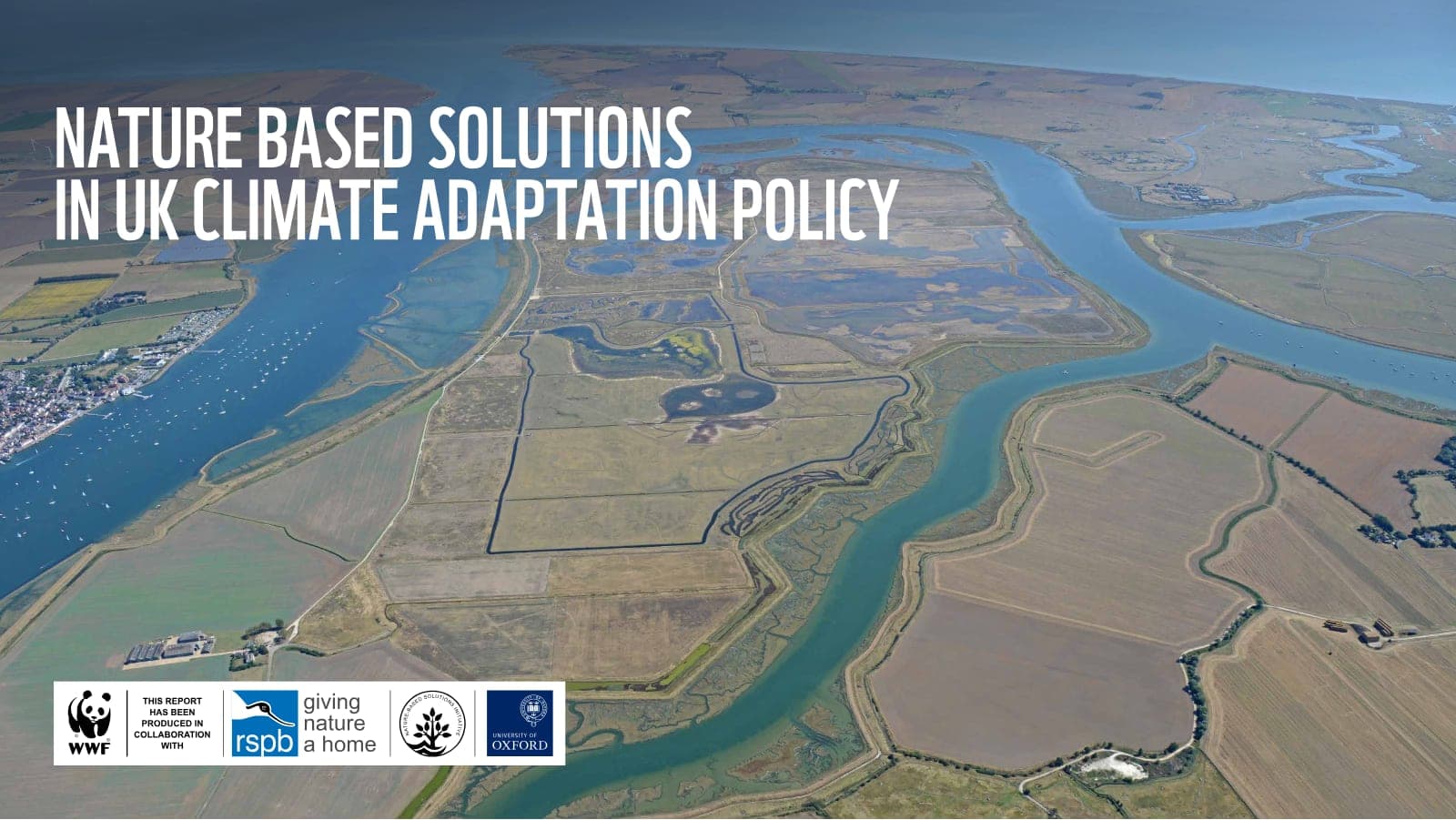
This is a policy report titled Nature Based Solutions in UK Climate Adaptation Policy, authored by A. Smith and A. Chausson (2021) and prepared by the Nature-based Solutions Initiative at the University of Oxford. It was published in September 2021 by WWF-UK and RSPB, with a steering group drawn from both organisations. Its subject is how nature-based solutions (NbS), defined as people working with nature to address societal challenges, can help the UK adapt to climate change.
Scope and Methodology
The report summarises evidence on how NbS address climate impacts in the UK and explores barriers and enabling factors for their wider uptake. It draws on a review of key literature and in-depth discussions with policymakers, researchers and practitioners, and builds on an earlier policy brief from November 2020 and a British Ecological Society report. It also draws on a systematic global review of NbS for adaptation.
Key Climate Risks Addressed
The report states that NbS can help address 33 of the 34 risks requiring more action identified in the third Climate Change Risk Assessment (CCRA3). It notes that the UK is likely to see a further 0.5°C rise in average temperature by 2050, and that 126,000 people in the UK are at significant risk of coastal flooding.
Main Findings on NbS Benefits
- The report finds that NbS are generally more affordable than engineered options when co-benefits are counted, citing a 2014 Royal Society study.
- Saltmarsh, dunes and seagrass are described as protecting against coastal flooding and erosion.
- Natural flood management and river restoration are reported to reduce flood peaks, such as a 30% reduction at Eddleston Water in Scotland.
- Peatland restoration is described as protecting water supplies, which the report says supply 70% of the UK's drinking water.
Urban and Farmland Measures
The report describes trees, green roofs and sustainable drainage systems as cooling cities during heatwaves and reducing urban flooding. Agroforestry and agro-ecology are presented as protecting soils and food security on farmland. Case studies include Medmerry in West Sussex and Greater Easterhouse in Glasgow.
Barriers and Recommendations
The report identifies barriers including a lack of information on NbS costs and effectiveness, limited accessible finance, governance challenges, and regulation and procurement that fail to recognise multiple benefits. Its five recommendations cover integrating NbS into the next National Adaptation Plans, mainstreaming them across policy, funding high quality NbS, setting standards, and measuring delivery.
Why It Matters for UK Adaptation Policy
The report addresses UK governments and devolved administrations preparing their third National Adaptation Plans, and it argues for transforming how NbS are integrated into UK and devolved policy.