About the Document
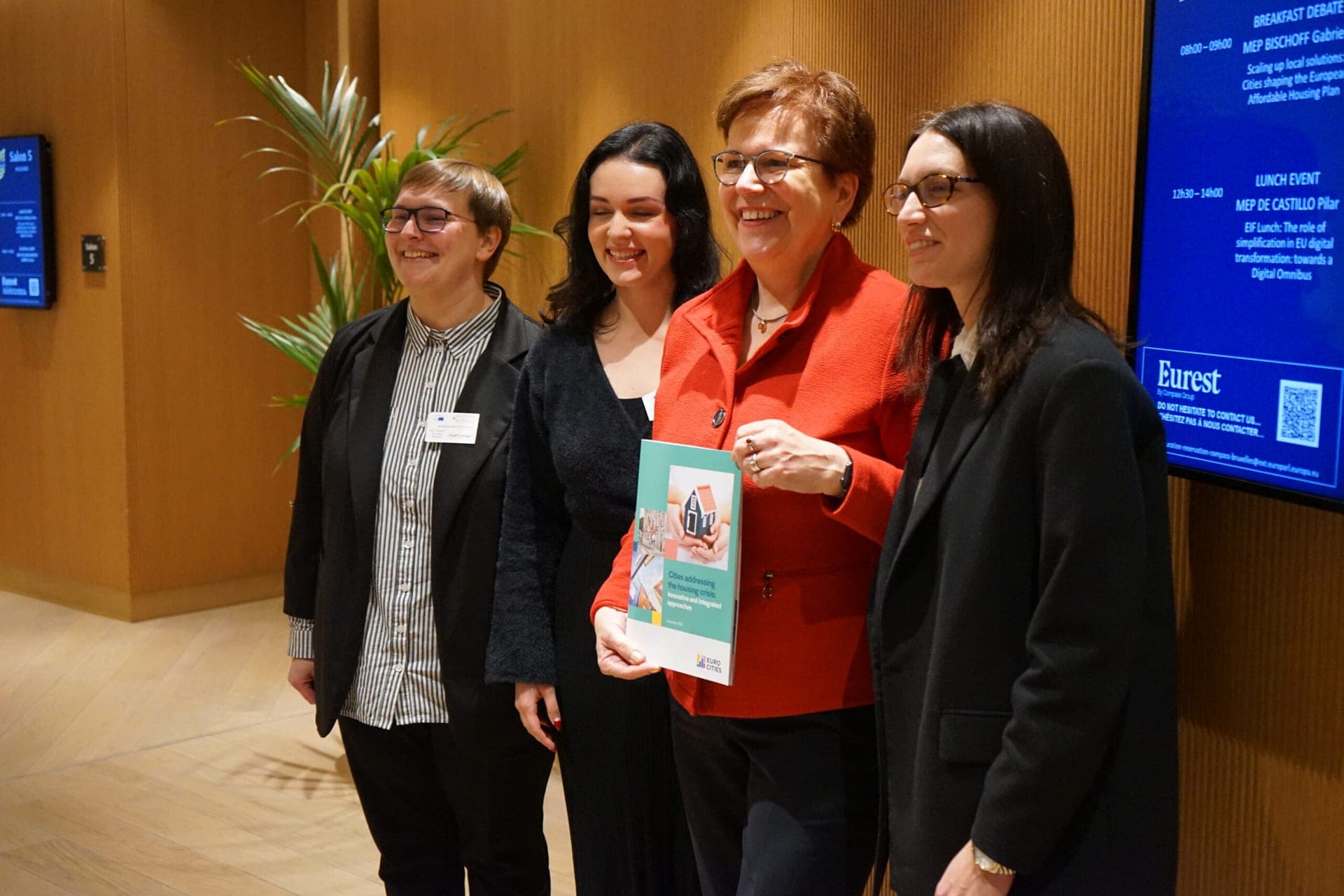
This is a news article published on 3 December 2025 on the Eurocities website, authored by Gabriele Bischoff. It reports on a new thematic report by Eurocities, Cities addressing the housing crisis: Innovative and integrated approaches, presented at a breakfast debate in the European Parliament. Its subject is the housing crisis in European cities and what local authorities are doing about it.
The Housing Crisis in Cities
- According to Eurostat, in many metropolitan areas one in ten residents spends more than 40% of income on housing.
- In Berlin, nearly a third of households spend over 30% of income on housing.
- In Florence, average prices reached around €4,200 per square metre as residents were pushed out by tourism and speculative investment.
- Between 2019 and 2023, apartment prices in Zagreb rose by 55%, while wages and benefits did not keep pace.
- Key workers, families with children, young people and older people each face distinct difficulties in finding affordable, suitable homes.
Expanding Social and Affordable Housing
In Utrecht, the city has a shortage of almost 30,000 homes and prices have more than doubled in the past decade. Rennes Metropole aligns housing growth with sustainable planning, with 65% of new housing in dense, well-connected areas. Vienna relies on limited-profit housing companies, which can access city loans and develop on public land in exchange for long-term affordability guarantees.
Land and Planning Tools
Cities such as Rennes and Florence use planning obligations, density bonuses and anti-displacement measures. To counter tourist pressure, local authorities use registration systems, night caps on short-term rentals and zoning restrictions. Vienna's Dr Bernd Riessland suggested that when agricultural land becomes buildable, at least two thirds of the surface should have a regulated price.
Urban Regeneration in Łódź
Łódź launched a large-scale revitalisation programme in 2014, reusing vacant and dilapidated stock. The city combines physical renovation with social support, tenant protections and affordable housing provision. Aleksandra Trzcińska stated that even in a shrinking city, the only source of affordable housing is the municipality, not private owners.
Cities' Expectations of the EU
Cities ask for more flexible, direct EU funding, reforms to state aid rules, and housing affordability indicators embedded in the European Semester. They also call for housing policy aligned with climate and energy renovation targets, and for legal backing to regulate speculative investment and platform-based rentals. On the EU side, Agnese Papadia of the European Commission said the EU and cities need to work together on implementation.
Why It Matters for EU Housing Policy
The report and debate are presented as a contribution to the forthcoming European Affordable Housing Plan. André Sobczak, Secretary General of Eurocities, said the Plan will be judged by whether it responds to local realities and that cities are ready to contribute, asking whether EU policies and resources will match their ambition.